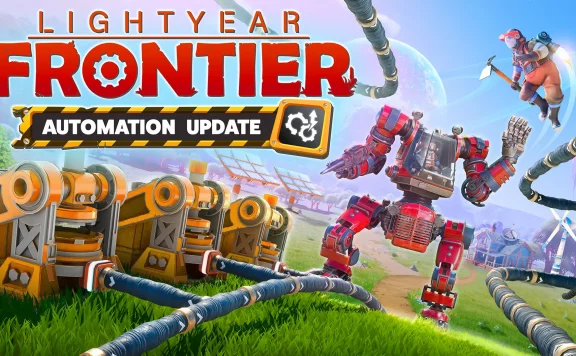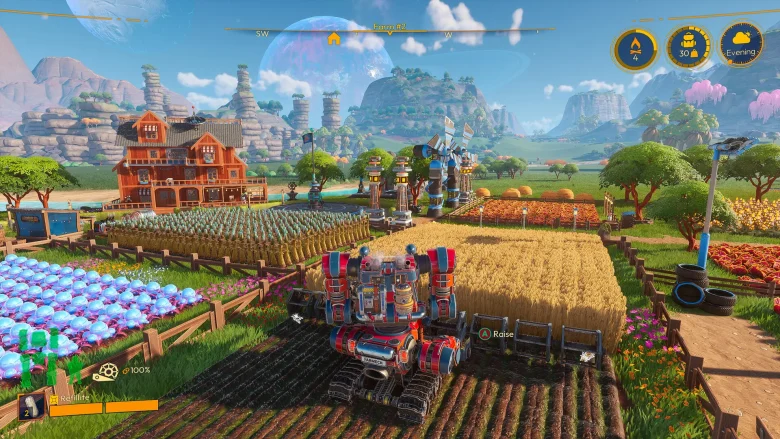
The crafting and farming genre is undoubtedly a bit bloated right now, and I think we’re at the point where a good entry needs to have that “just one more day” feeling along with a unique hook to keep me coming back. Lightyear Frontier has been around in Early Access for a while now but, other than a quick dabble when it originally released, I’ve not really paid it too much attention. Playing the 1.0 version though I’m pleased to say it’s very moreish, and while the hook of farming in a mech isn’t quite as special as I’d hoped, it’s still one of the most noteworthy entries in the genre in a while.
You’re dropped into the world of Lightyear Frontier with little more than the clothes on your back and a banged up Farmech, a hulking great frame that looks more attuned to fighting giant insects than watering crops. Through exploration and industrialisation though you start to carve out your own little slice of this alien world, and despite the appearance of your mech, this is a very gentle and relaxing take on the farming game.
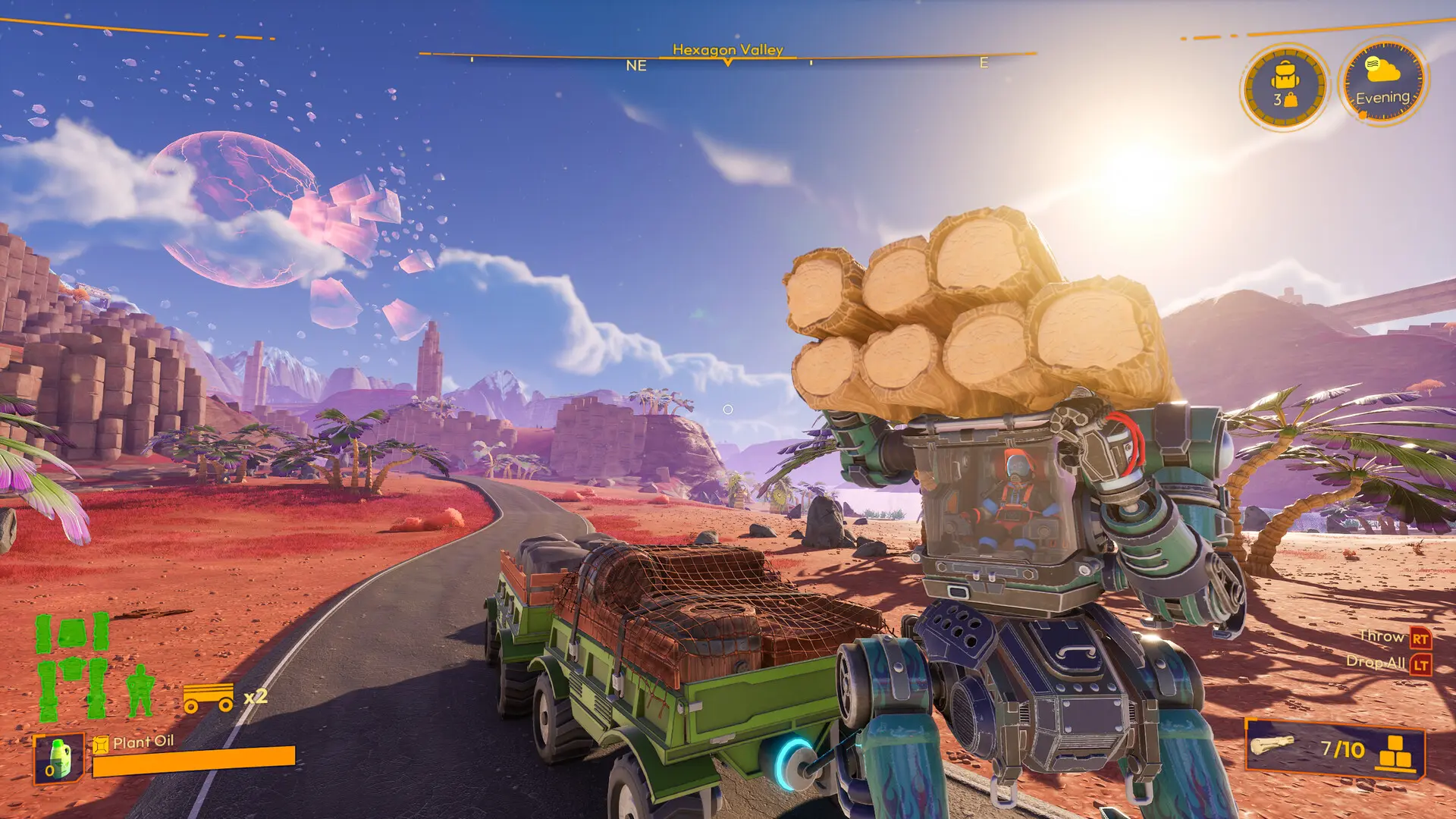
Your mech is obviously the main differentiator between Lightyear Frontier and other games in the genre. While you can walk around on your own two feet tilling the land one square at a time or using your multi-tool pickaxe to slowly chop down trees, it’s much faster, more efficient and more satisfying to use your mech. It’s equipped with a multitude of tools that make carving through minerals a breeze, with each punch of your hammer feeling suitably weighty. It immediately becomes the default way to do anything in the game: why plant and water seeds one-by-one when your mech has guns that fire seeds into the ground at pace and allow you to water whole fields in a few seconds? Each of these tools is really satisfying to use, and all can be upgraded to improve their functionality or outfitted with mods that improve performance. Yes, you’re still doing all the usual things you do in these games, so the mech perhaps isn’t quite as revolutionary as I thought it might be, but it’s a very enjoyable alternative to farming by hand.
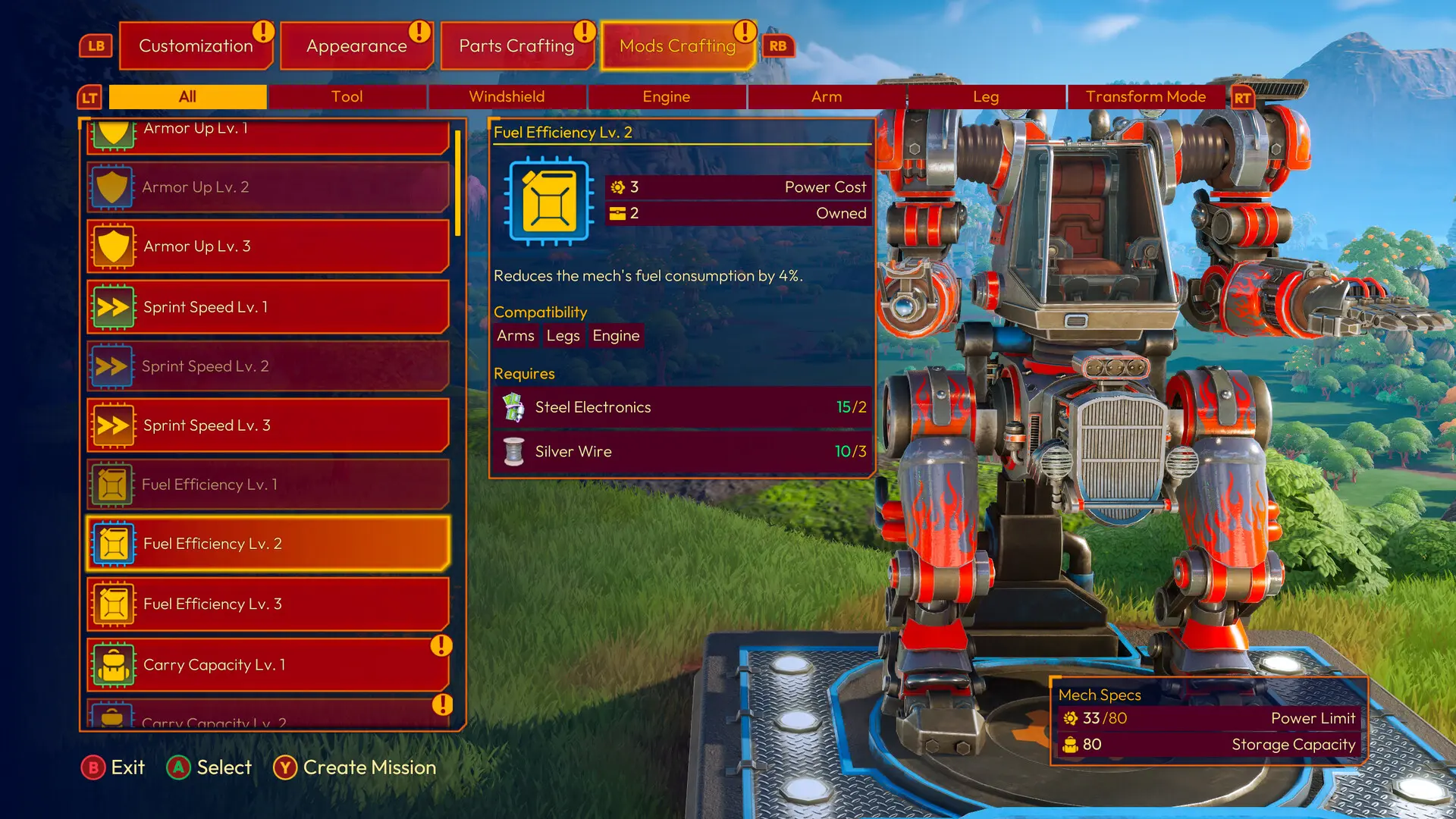
Your mech also has access to multiple modes which really allow you to scale up your farmstead, providing you’ve levelled it up enough to expand your footprint. These modes make the game feel like a far more forgiving (and fun) version of Farming Simulator, as you transform into a plough or a combine harvester, hoovering up dozens of crops in a matter of seconds. The map is huge, with multiple biomes and places to explore, and your mech is your ticket to exploring that great big world. With a couple of mods/upgrades in place you’re able to sprint at a decent pace, and coupled with a leap forward using your jet boosters, you can quickly build up momentum so you can tear across grasslands, plains and other terrain in no time. These were my favourite moments with the mech, and it’s easy to get into a hypnotic rhythm of sprinting, jumping and transferring your momentum so you keep moving. While exploring I quickly found certain routes through the world that I liked taking, so I used the mech’s paving mode to start mapping out roads for me to follow, like a cuter, less weird Death Stranding. This helped me build up my own understanding of the map and made navigating around it more enjoyable.
Your farmstead is your base in all this, and the game is kind enough to let you set up additional bases and outposts across the world too. There’s a great sense of progression in the early days, as the game clearly gives you objectives to work towards that help you learn about the local flora, fauna and minerals and gradually doles out blueprints for machines to harvest and use them more effectively. The farming equipment, in particular, is important and you’ll be using them regularly to generate more seeds or turn crops into oil for new projects, or just to power your mech on long trips. There’s a real satisfying loop to each day which makes the game so very moreish – I’d wake up each morning, tend to my crops, set my machines to work (resources are made using real-life timescales) and then use the rest of the day to explore. Sometimes I’d be out aimlessly seeing what I could find, which sometimes ended with collecting some new plants I could bring home and collect seeds from, but often just led to exploring cool areas of the map. There are logs dotted around that give a bit more context to the world, and while I didn’t really find these to be of much interest, the locations you find them in are usually more compelling as they show remnants of times gone by.
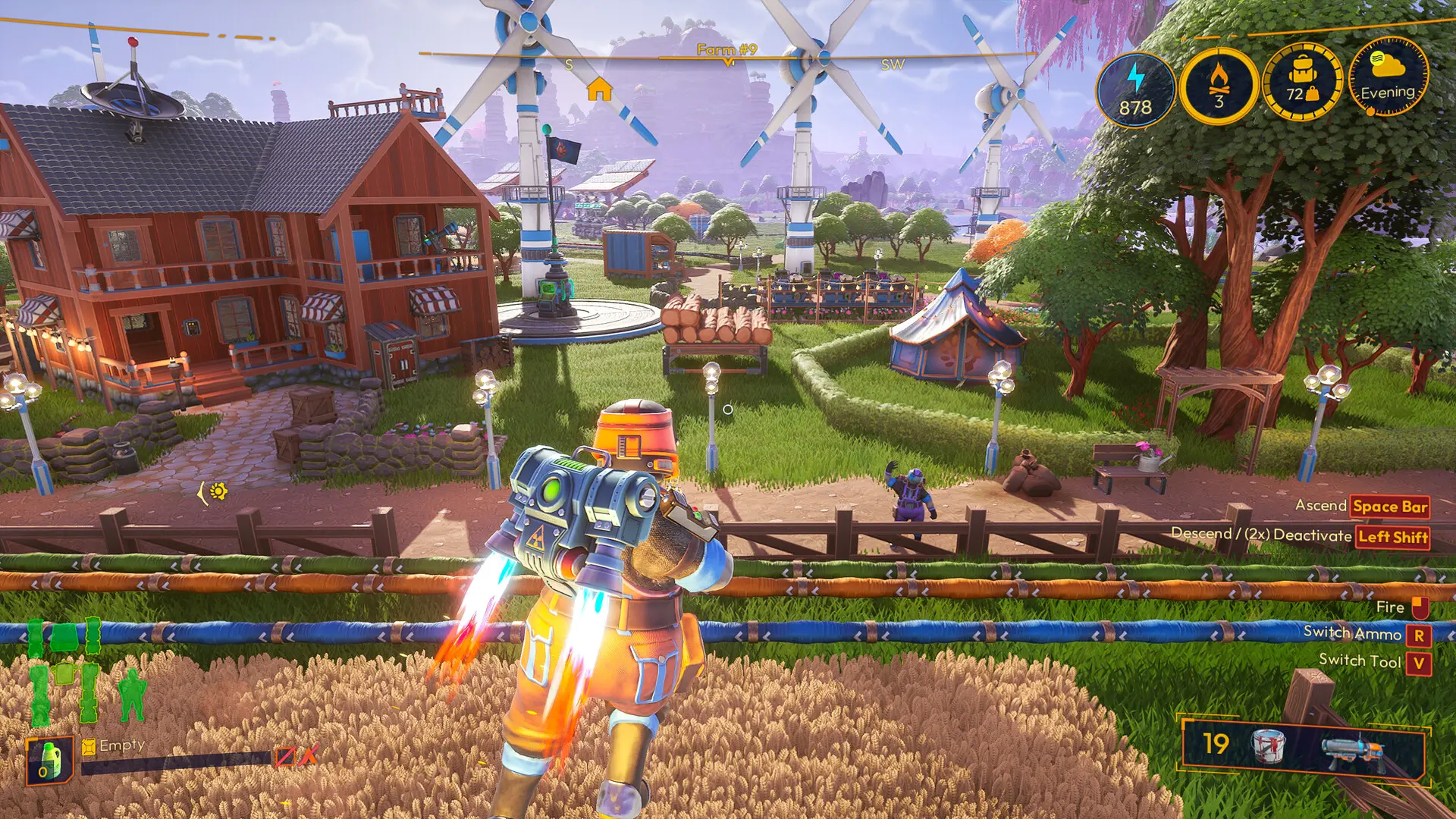
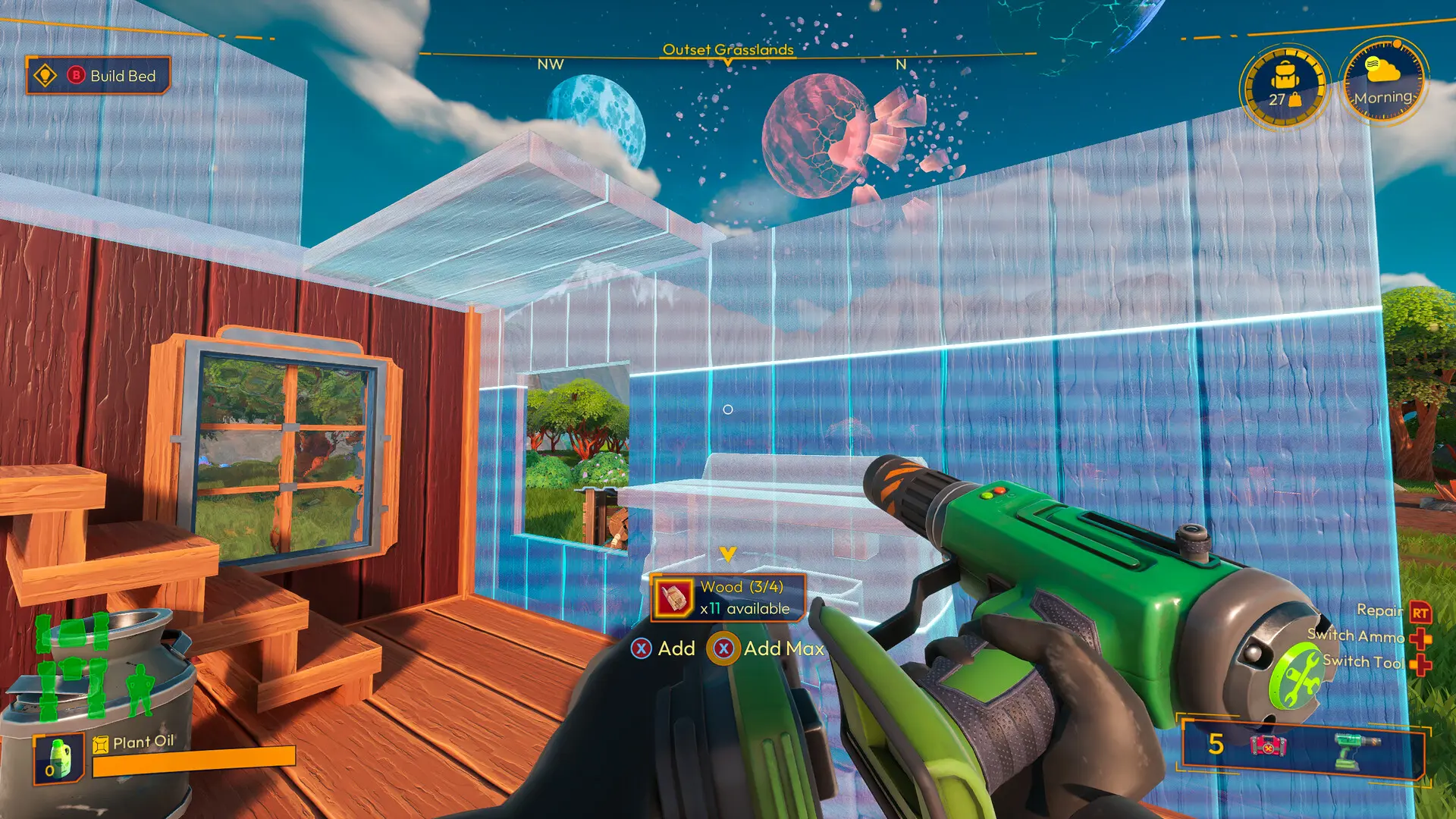
While I’m not normally one for customising my base, Lightyear Frontier even managed to get me tinkering with my home too. There’s a mechanical reason you’ll want to do this – a more comfy settlement comes with additional perks like being able to move around it more quickly. I genuinely found the act of building in Lightyear Frontier quite relaxing though, and on days where I didn’t fancy exploring, I’d spend some time fine tuning my house. I built myself a quaint two-storey home with a roaring fireplace and some cosy lighting around my bed, and while it’s nothing special compared to the stuff I’m sure others will create, I was content with it and quite pleased that the game made building a home so enjoyable.
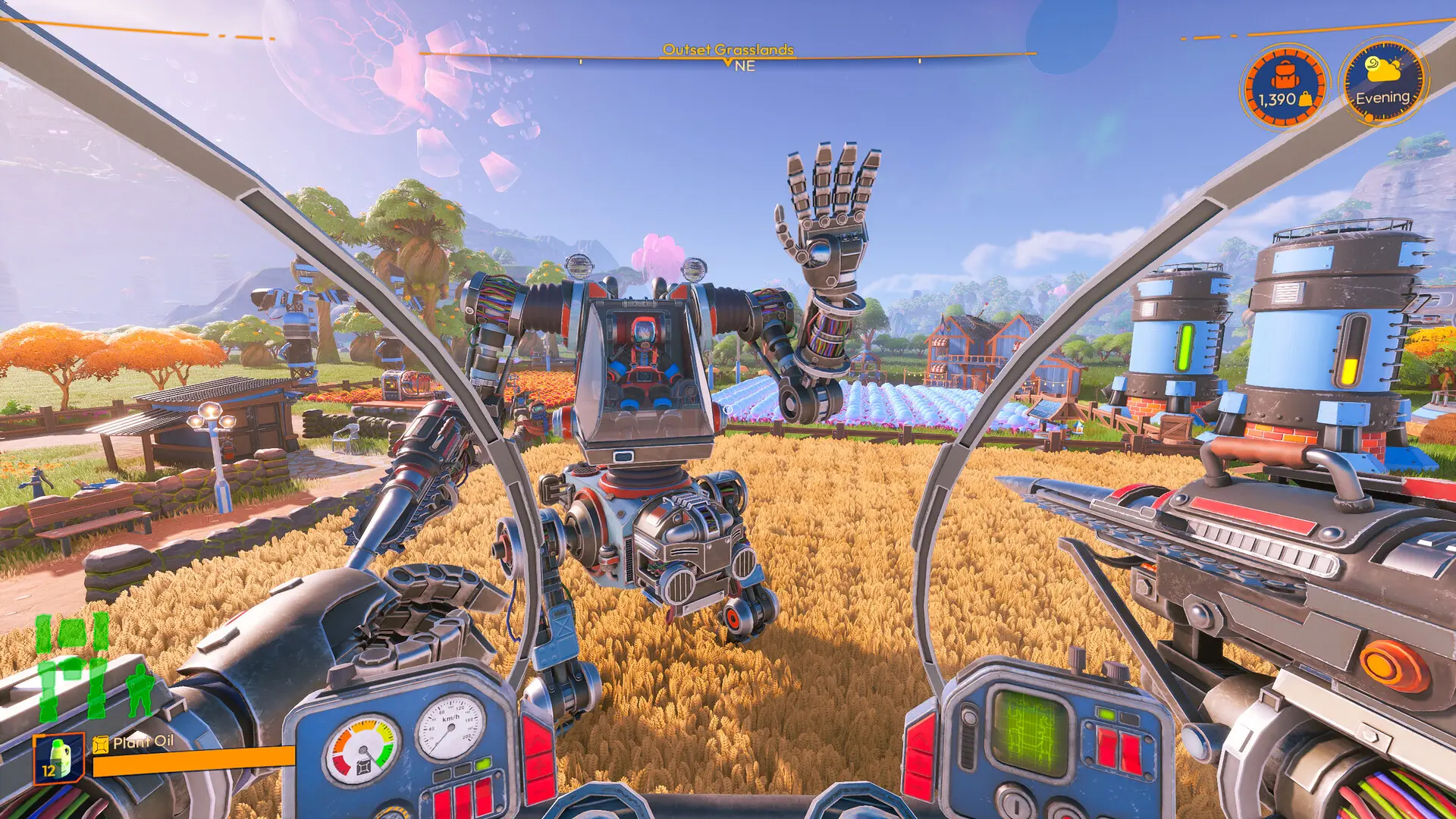
Lightyear Frontier in general is just a relaxing, enjoyable time. Visually it’s bright and cheerful, with distinct plants and animals that you’ll soon recognise by sight alone. It ran beautifully on the Steam Machine, requiring no fiddling at all to get great performance and visual fidelity. I was a little let down by the audio though – there’s a rustic, country feel to the soundtrack but it’s rather non-distinct and I often forgot it was playing. This seems like a missed trick, and when you’re taming a wild and unknown alien planet in your hulking mech it’d be nice to hear something a little more impactful that leans more heavily into the country theme.
Lightyear Frontier is both a no-brainer for fans of the genre and also one of the best introductions to it for newbies. There’s a compelling loop, a huge amount of customisation and a giant map to explore and conquer without ever feeling stressful or overwhelming. Whether you’re progressing through the missions, trekking across the world or just building out your farmstead it’s consistently satisfying and constantly compels you to play another day, which I think is the main sign of a good farming game.