
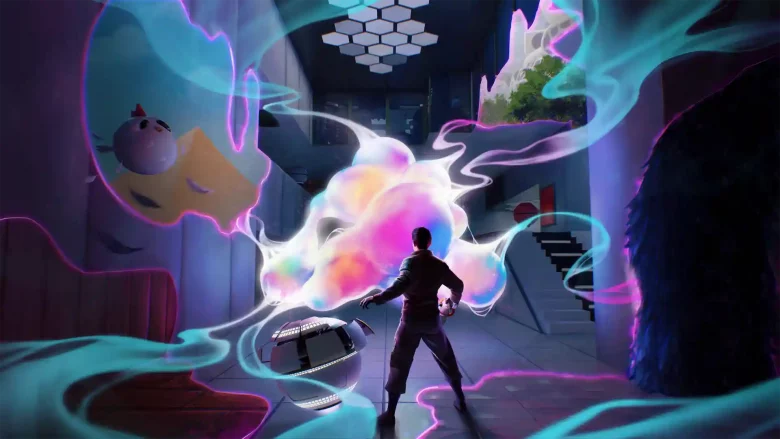
For the longest time, puzzle games were all about stacking blocks or making patterns. Then in 2007 one game changed that forever, making puzzles cool again for nerds everywhere. That game was Portal, and despite releasing as one tiny part of Valve’s Orange Box it took the world by storm. With a witty narrative, clever first person puzzles, and a very sarcastic evil robot narrating the experience, this new age puzzle game was quite simply a masterpiece. Indie puzzle games have been experimenting with the Portal formula ever since, and have found plenty of success in their own right doing so. One of these success stories was Chromagun, which certainly performed well enough to warrant its new sequel Chromagun 2: Dye Hard.
In Chromagun 2 you play as a test subject in a futuristic science lab, which again features a snarky antagonist narrating your every failure. It’s set immediately after the last game, where apparently you were almost burned to death by this power hungry madman. The sequel starts with you completing a questionnaire which will apparently lead to your freedom, but the moment you step on the button to leave this bright white hellhole a trap door opens up and you’re back to a life of test chambers.
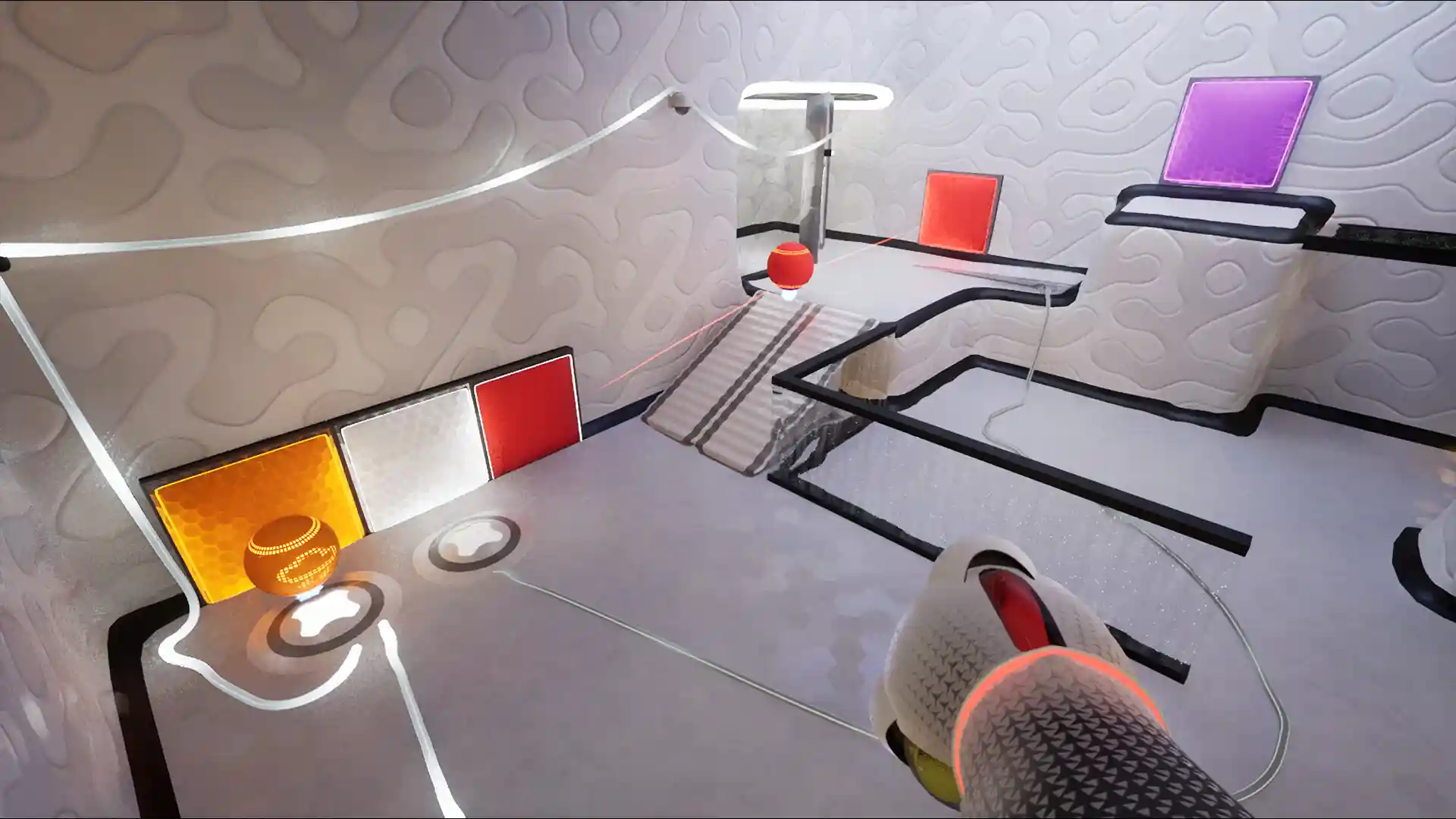
The fall breaks your colour-based puzzle gun though, and to get a replacement so the science can continue you need to go to another dimension and steal theirs. In this dimension there’s an annoying evil British lady doing the voice over instead of the annoying American man, but all in all you’ll still need to use colours to move through another lab setting. The story of Chromagun is decent but not anywhere near Portal’s level, and you can’t help but be reminded of that modern classic because the setting, story and genre is close to identical.
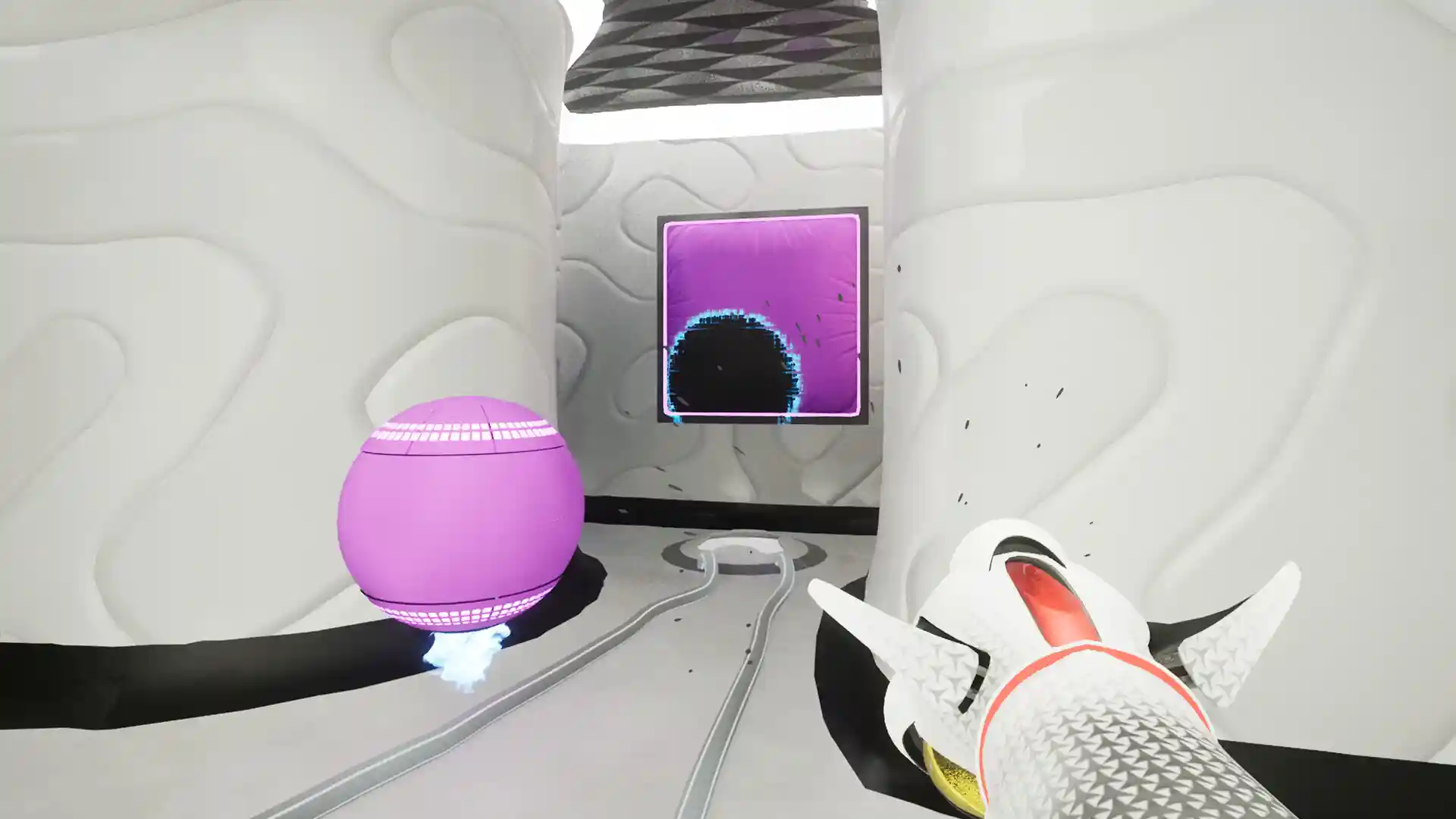
The thing that makes Chromagun 2 stand out from the games that inspired it is the titular gun, which can be used to shoot paint of the three primary colours. When you paint two objects the same colour they’re attracted to each other and magnetise accordingly, and this is what you’ll be doing throughout this puzzling adventure. You can move little spherical bots onto switches this way, pull vents off walls to find a way to progress, and before long you’ll have interior designer levels of colour mastery.
The three basic colours aren’t all you’ll use to solve puzzles either, because if you were paying attention in primary school you’ll remember they mix into new colours like purple. This sounds way too simple to build a puzzle game around, but when you’ve got multiple bots that are pre-painted and you need to find the right way to pull them somewhere useful it can give those little grey cells a bit of a workout.
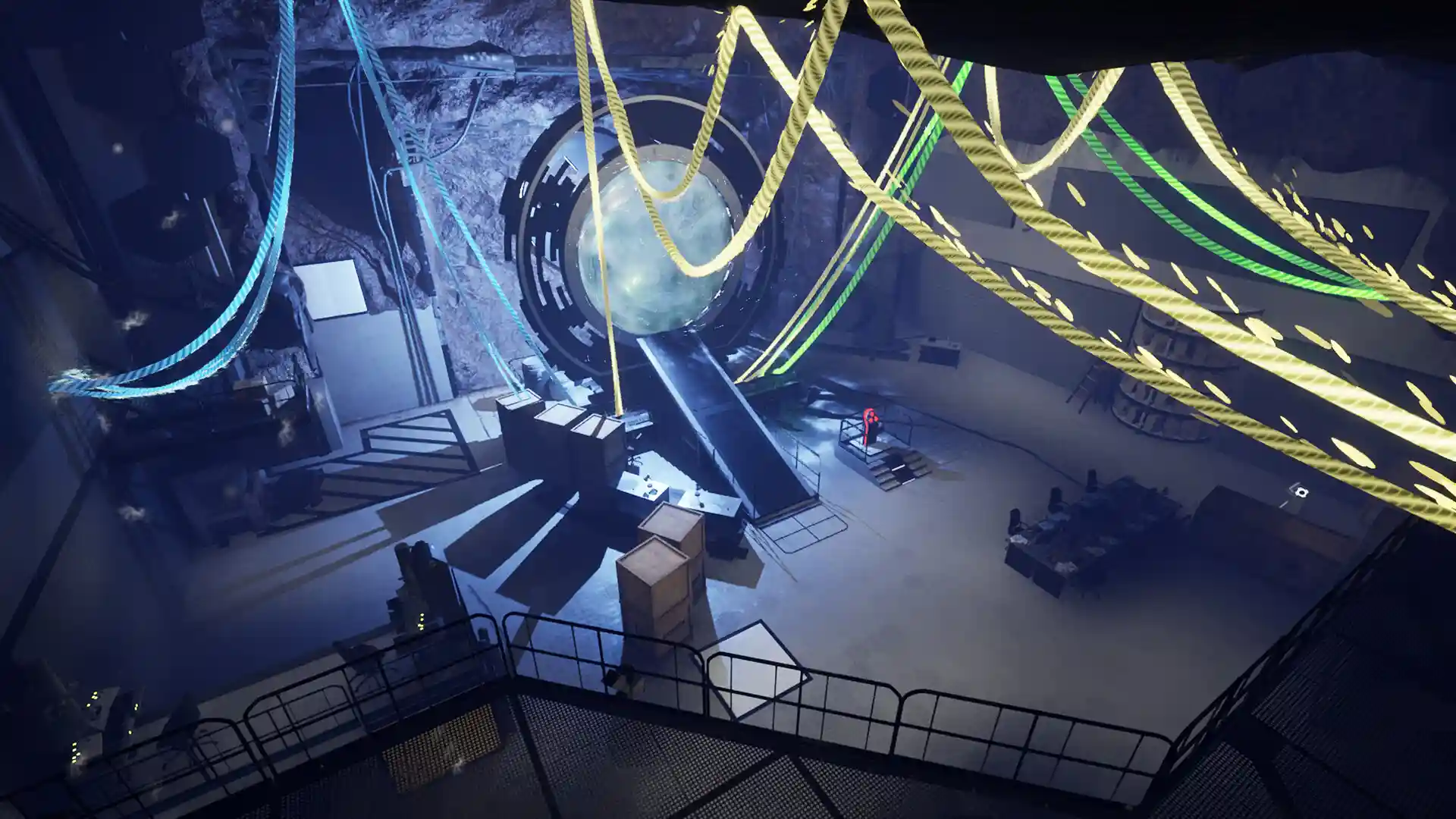
The variety continues as you progress through the chapters of the game, and are greeted with vertical lifts, perspective puzzles, and even aggressive bots that come charging at you with sharp blades when you shoot paint at them. I was always excited to see what was coming next in the campaign, and was rarely disappointed except when the credits rolled. Even then there are collectibles to grab for completionists, tucked away in clever hiding spots.
There’s a lot to love about Chromagun 2: Dye Hard, but it has a few things that hold it back too. The puzzles never quite make you feel like a genius like they do in the very best of puzzle games, and instead they either feel a tad straightforward or easily solvable with a bit of trial and error. The similarities to Portal did wear a bit thin by the end of the game, even down to the environments that start out sterile white and eventually turn to dingy back passages you aren’t meant to see.
Chromagun 2: Dye Hard is a fun first person puzzler that kept my attention from start to finish, but the similarities to Portal only highlight that it isn’t on that level. The colour mechanics are very clever to play around with though, and the varied new elements are added at a lovely pace. If you’re really in the mood for a more thoughtful game then Chromagun 2 might just be what you’re looking for, but I’m not dying to go back to it now I’ve finished it.


