Video games can take inspiration from many sources, including but not limited to the video games that came before. With so many things competing for our precious time and money it’s only natural that successful titles will inspire future hits, but the really unique games often look elsewhere. Bloodletter is a perfect example of this, in more ways than one. This deck building delight was clearly created by a team who know their physical card and tabletop games just as well as their digital counterparts, and the medieval bathhouse setting is just the icing on the cake.
In Bloodletter you take on the role of a healer, who back in medieval times often worked out of bathhouses. The village you’re healing though is having a rough time of it, thanks to evil entities that are cursing them. It’s your job to keep the people of this community safe, and use your scientifically debunked medical skills to fend off ailments and evils. Because this is a deck builder you do this with cards of course, but this isn’t even close to another Slay the Spire style experience.
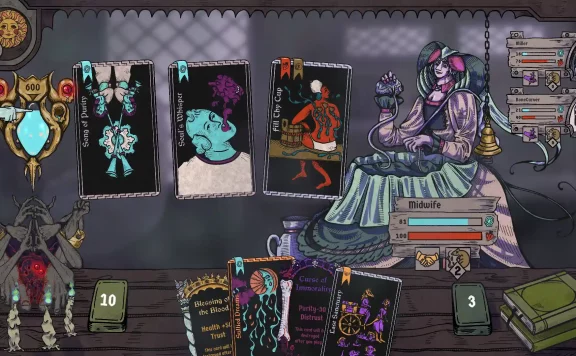
There are multiple phases to each day in Bloodletter, but the first is the one where cards matter the most. In the daytime you work in the bathhouse, and must use your cards to help the patrons who come through the steamy doors. Each villager has two meters to keep on top of, purity and health. If either of these drop to zero the villager dies, and if you let three villagers die you lose a run. You can use three cards on each of these poor souls to try and prevent this, which will often boost these levels alongside other interesting and helpful effects.
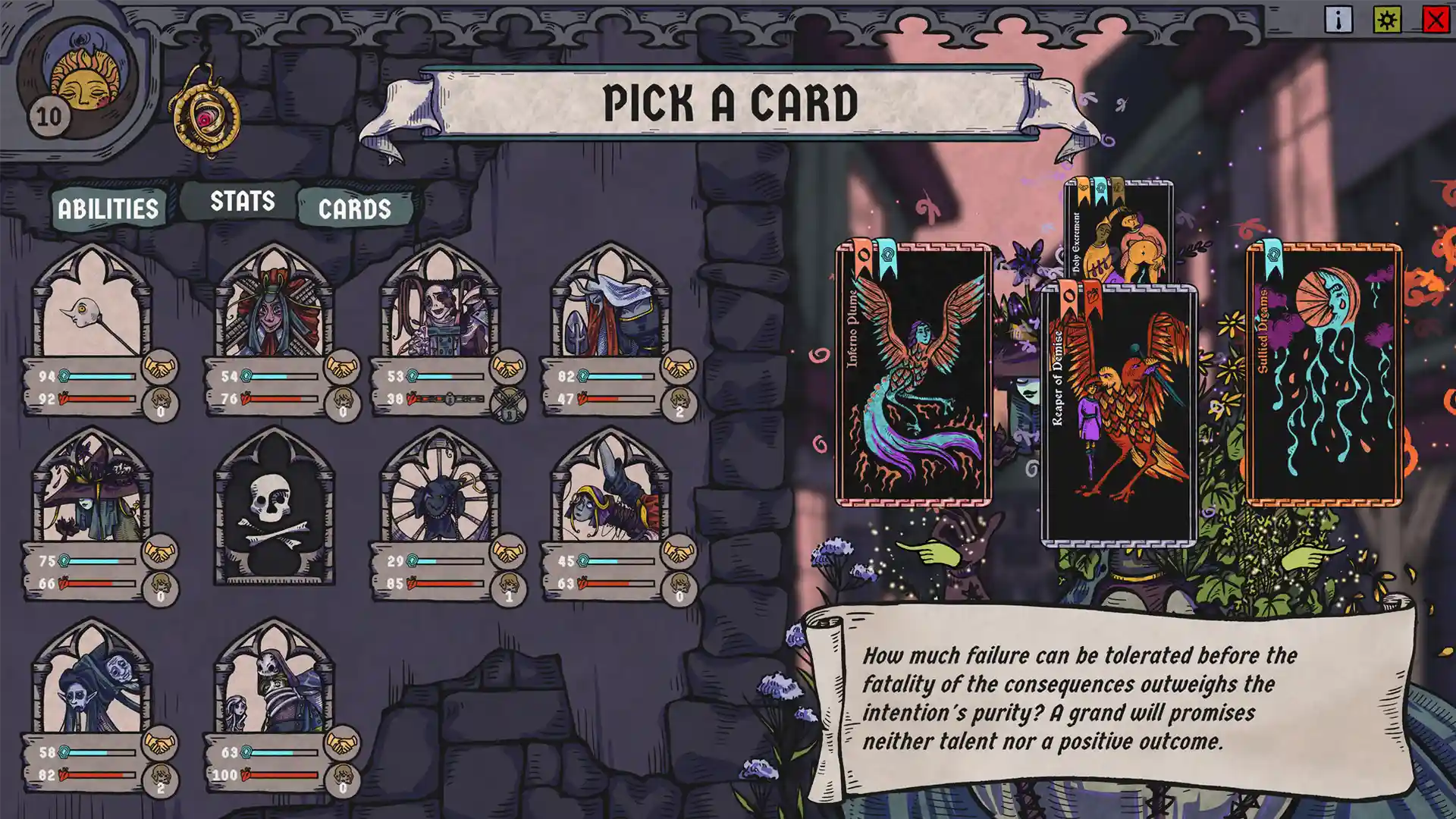
On top of purity and health, each villager can also pick up various diseases. These cause damage to health over time, and require different cards to deal with. You’ll struggle even more to help out one of your patients if they don’t trust you, because a distrusting person can only be given two cards instead of three. Trust is important for the next phase of the day too, which is where all the deck building takes place.
Once you’ve healed your last suffering person it’s time to hit the town. Every evening you can visit a single villager as long as they trust you, and doing so will give you an upgrade. One villager will help you upgrade a card with an extra effect, another will help you duplicate one of your choosing, and of course one of them helps you remove cards from the deck to streamline your healing powers. There are some interesting buffs that don’t affect your cards at all too, like increasing your maximum hand size or changing the order your sickly customers arrive the next day (which can be helpful if you pack your deck full of cards that heal more later in the day like I do).
In the night the entity strikes, and just generally ruins all the hard work you’ve been doing. When this evil force comes to town everyone suffers, with health and purity sucked from their bodies. The entity will also make the villagers lose their trust, and spread some disease across everybody for good measure. If you haven’t been careful this will usually be when you lose some lives, or even the whole run.
To purge the entity entirely from the world you need to remove its bloodstones, which are I guess magical rocks that power it. Depending on the entity you do this in different ways, but the starting stages require you to gather up set amounts of purity to obtain each stone. This means winning a constant battle against the leeching foe, and upgrading your deck accordingly. Once you defeat this first enemy you can use a bloodstone to unlock a new evil, and this time will have to assemble a magic sword like a jigsaw with your cards to extract those evil rocks. Having different objectives really changes the way you have to play, and it’s seriously clever how this interacts with the other systems.
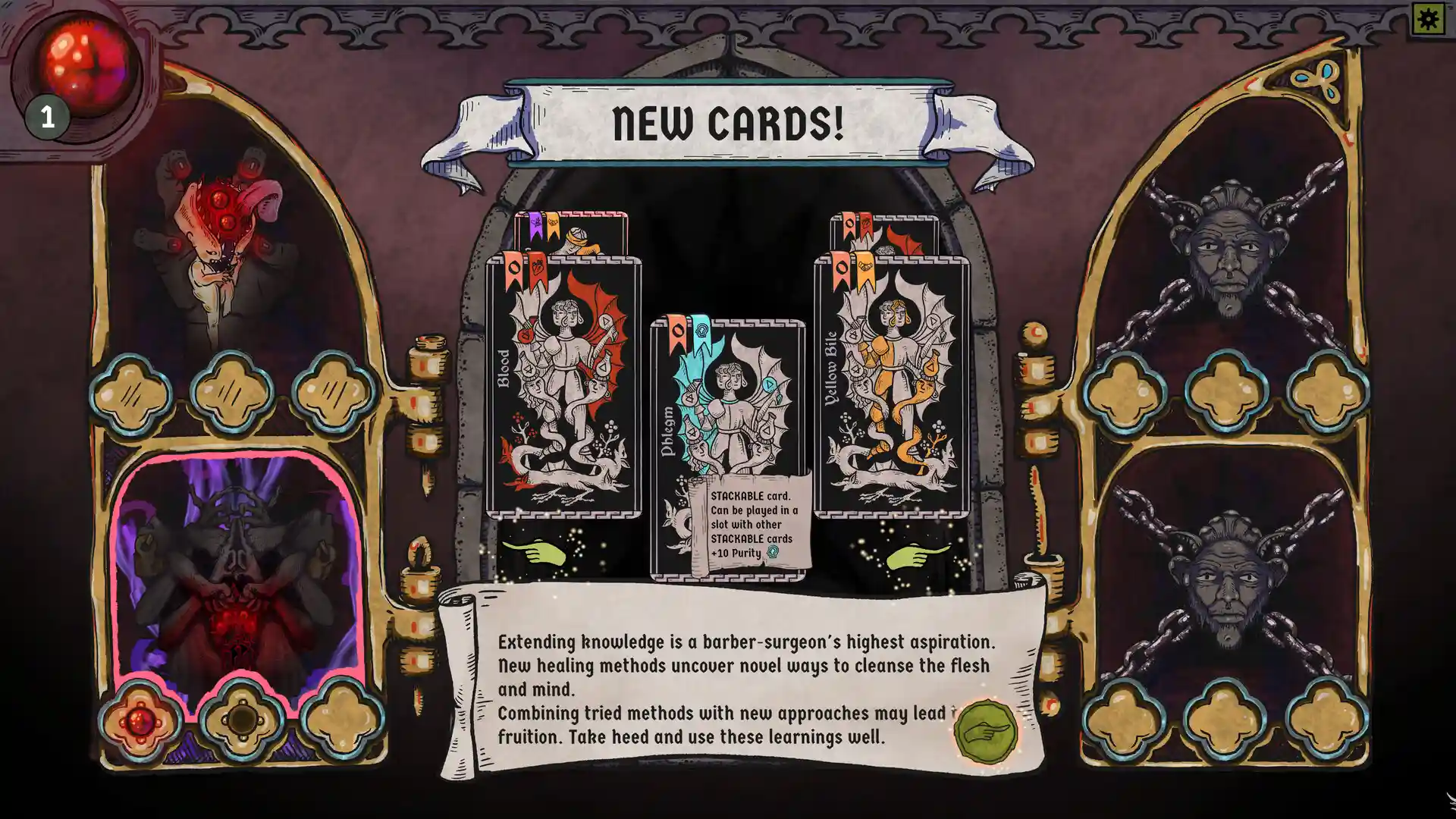
There’s so much to love about Bloodletter, but a special mention must be made to the visuals. The horrific hand drawn style of the game is so incredibly striking, and suits the setting so perfectly. Trying to save such unsettling people from illness and death just adds to the messed up charm of the experience, and as an avid collector of real world card games I can only imagine how wonderful this would all look in a physical form.
Even in its current early access state, Bloodletter is both effortlessly compelling and eerily charming. I could (and did) spend hours playing run after run of the game and trying new strategies, and with each attempt throwing something new at you there’s a whole lot of replayability here. If you’re looking for a more unique deck building experience then look no further, and grab a handful of leeches from the jar already.
Bloodletter is coming to PC via Steam Early Access on March 30th.