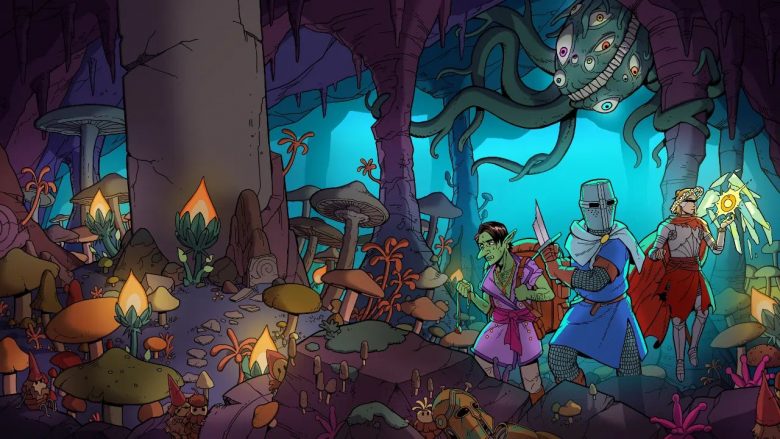
It’s hard to know exactly what to expect from a game proudly calling itself a “Disco-like”. I mean, it seems obvious, sure; but Disco Elysium is, frankly, one of the most intelligently written games of the last, well, forty-odd years, I suppose. And any game marking itself out as a pretender to that particular crowd has the potential to either be either very, very good, or a very poor imitation. It took me a while to feel it, but Esoteric Ebb is the former.
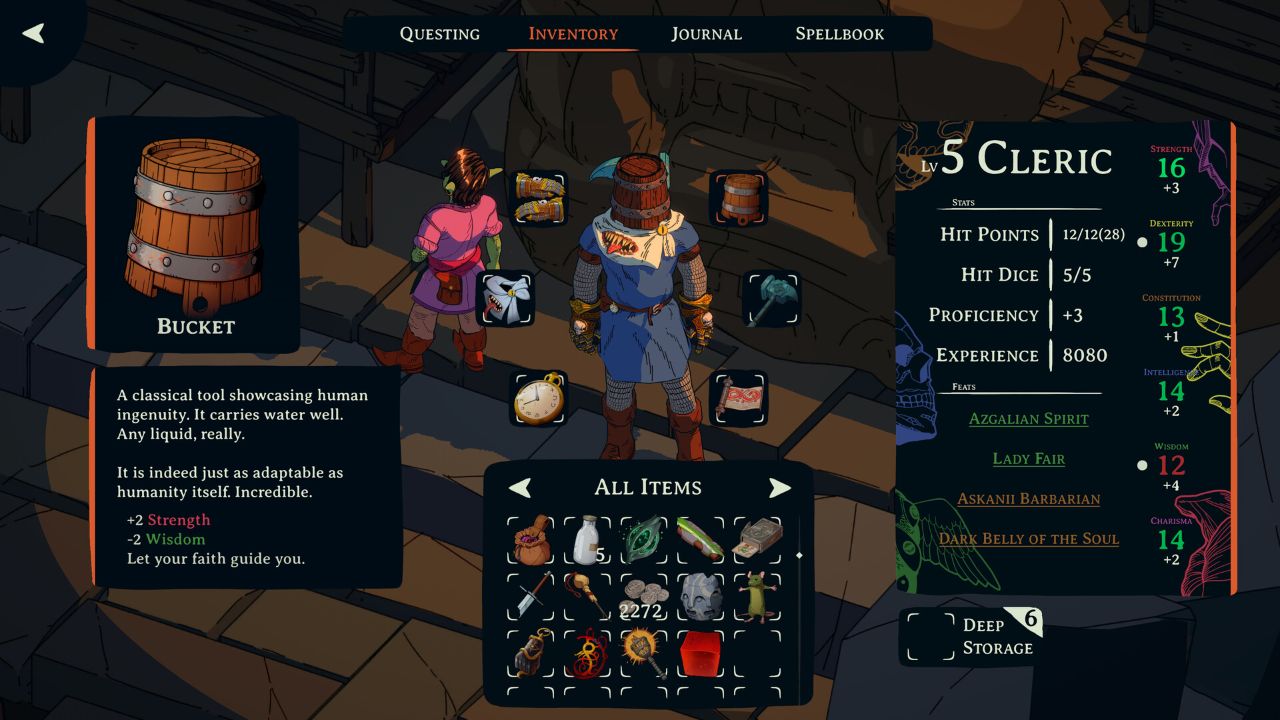
But where Disco Elysium felt like a hard-boiled noir that just happened to feature a drunk amnesiac as the protagonist, Esoteric Ebb feels more like a homebrew DnD campaign with a DM harbouring some serious issues. It begins with a character creation that pulls stats from the usual pool of Strength, Intelligence, Constitution, Wisdom, and Dexterity, before asking you to choose a “class” that further bolsters two of the listed stats.
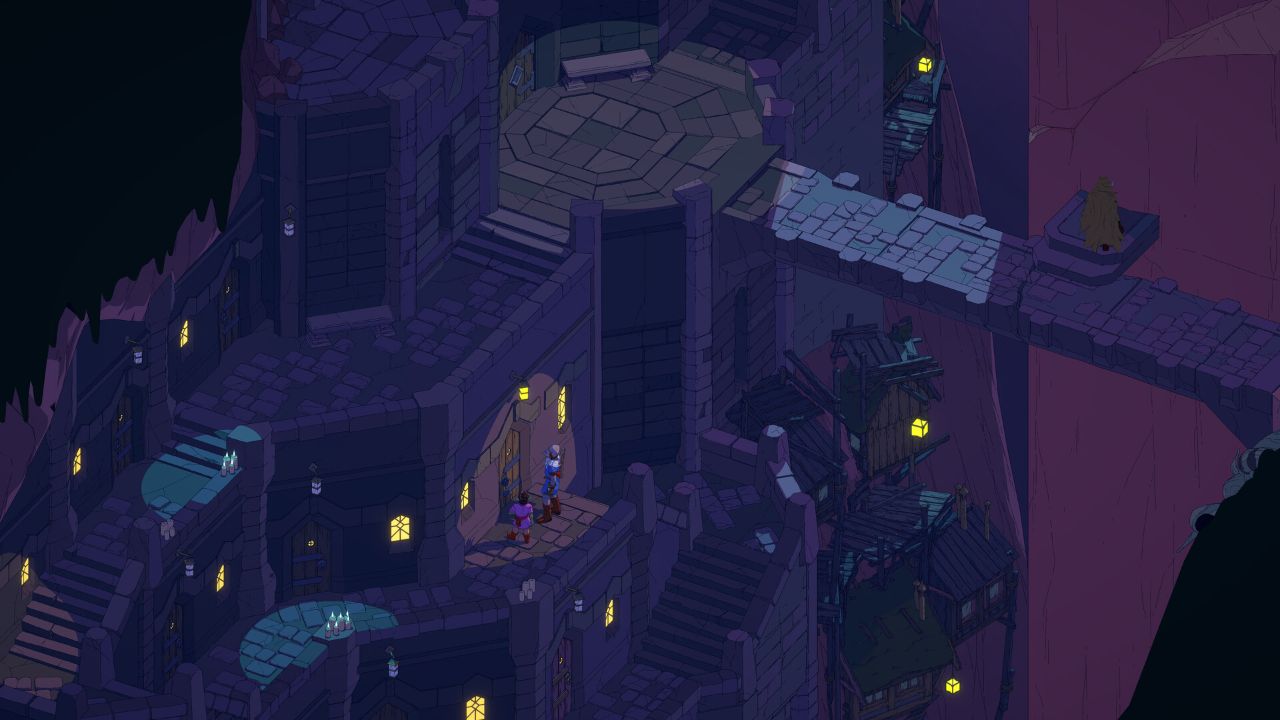
Whatever you choose, you’ll be referred to as “the Cleric” for most of the first few “sessions” of the game (see what I mean about DnD?). You’re immediately assailed by your own sentient emotions, just as in Disco Elysium, with them chiming in to guide you towards or away from certain choices that will influence the story in some very surprising ways. It loses something by not being fully voiced, as there is a lot to read here, and some of the dialogue felt like it perhaps wasn’t quite as sharp as the writer liked to think, but there are some real gems in the back and forth of your subconscious mind.
You’re tasked with investigating who bombed a teashop, an act of apparent terrorism that took place five days before the city’s first official election. It’s very hard at first to imagine how skills like Dexterity or Constitution will help with solving a crime or navigating the city’s burgeoning politics, but it begins to fall into place as you move through the environs of the fantasy metropolis, talking with protesting Dwarves and scheming goblins.
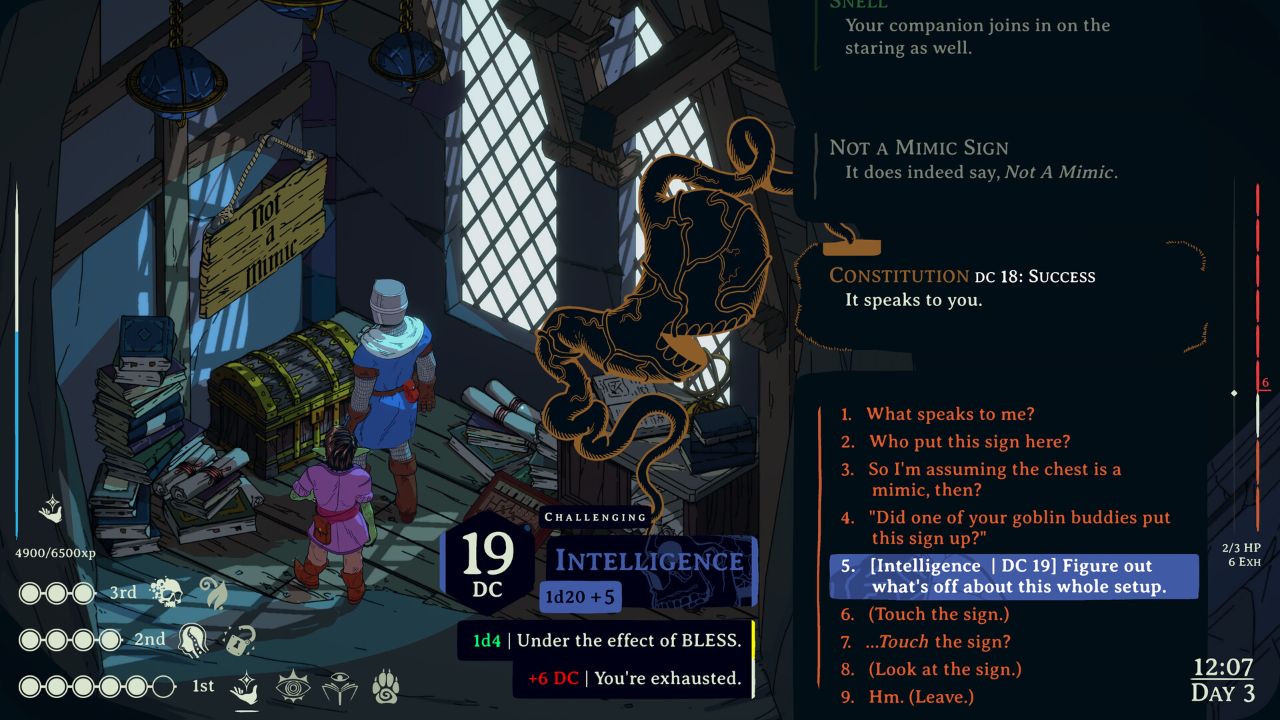
The more you dig into the meat of Esoteric Ebb, the more layers you’ll find. It’s not particularly thrilling for the most part, weaving a more thoughtful than exciting story, interspersed with the kind of wry, self-referential humour that makes this kind of fantasy setting so interesting. But beyond the dialogue exchanges and the search for evidence and meaning in all the various threads of the story, there’s a really quite intricate set of role-playing rules at work that let you make some surprising decisions.
One thing that makes it feel different to other games that claim the genre is Esoteric Ebb’s time mechanic, whereby the clock advances by an in-game minute when you make a choice. It lets you feel oddly in control of events in a way that Disco Elysium kept tantalisingly out of reach. Here, you don’t feel like a monumental screw-up, just like someone starting at the bottom of a big tank full of big fish and having to feel your way through dangers you may or may not be fully aware of.
What’s more, though, is that the day/night cycle gives you gameplay reasons to want to advance it or slow it down. When you can only interview certain witnesses during the day or night, and you may not have time to do everything you want to do in a given period, it presents the kind of ticking clock scenario that makes you wonder if a second playthrough might be worth it.
Where Esoteric Ebb feels new and fresh is in its approach to the fantasy genre. We’ve seen this kind of world presented before, of course, as it riffs heavily on the work of Sir Terry Pratchett, or at least on the kind of ideas and themes he sometimes explored, but it’s a rare thing for a video game fantasy world to not resort to the usual dragons and swords and dark lords playbook. I’m not saying this doesn’t feature some familiar tropes, but there’s something undeniably contemporary about the story its telling that makes it deserving of your attention.