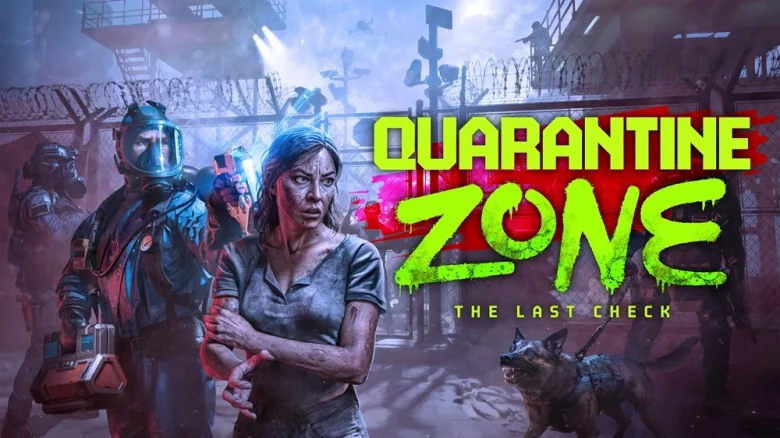
I saw clips of Quarantine Zone: The Last Check long before I got to play it. The demo set social media ablaze, with humorous videos of players committing innocent survivors to death and sending infected into social housing. Playing the full game, there’s a lot of satisfaction in vetting waves of people for a virus. There’s some simple base management to factor in, but the majority of your goal is to work out who is and isn’t turning into a zombie.
Standing at the gate and analysing survivors takes up most of your time. With a guide explaining all the potential symptoms, you’ll use a variety of tools to work out who to save. More unlock as you play through the campaign. There are nuances to certain areas of infection. Someone’s eyes may be red, but is it conjunctivitis or a deadly virus? Do they have a high pulse or a fever, and is it within the boundaries of what is considered an infection?
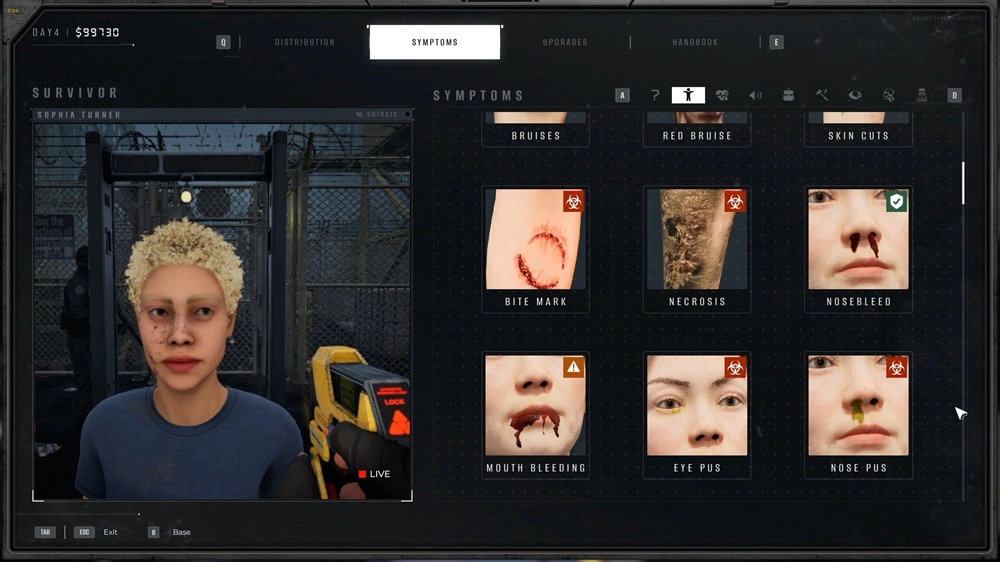
Sometimes you can get it wrong, but it isn’t always down to your misdiagnosis. I found the visuals weren’t as accurate in highlighting these symptoms. Remember L.A. Noire and those interrogation scenes where you’re reliance on facial cues was everything, yet the animations were sometimes so unclear it made your decisions infinitely harder to make? I got this same problem in Quarantine Zone: The Last Check. Reflexes of survivors aren’t instant or obvious, and poor shading can quite easily look like a bruise.
Still, I had a blast working out who was infected. Checking the look in their eyes to see if they are bloodshot or not; whether they have bruises, scratches, or bite marks; scanning for high temperatures and faster-than-normal pulses, aggression after a simple reflex check, and finding out whether necrosis has set in. If you’re confident someone is turning, sending them to be liquidated in a blacked out warehouse means they’re not going to cause any issues.
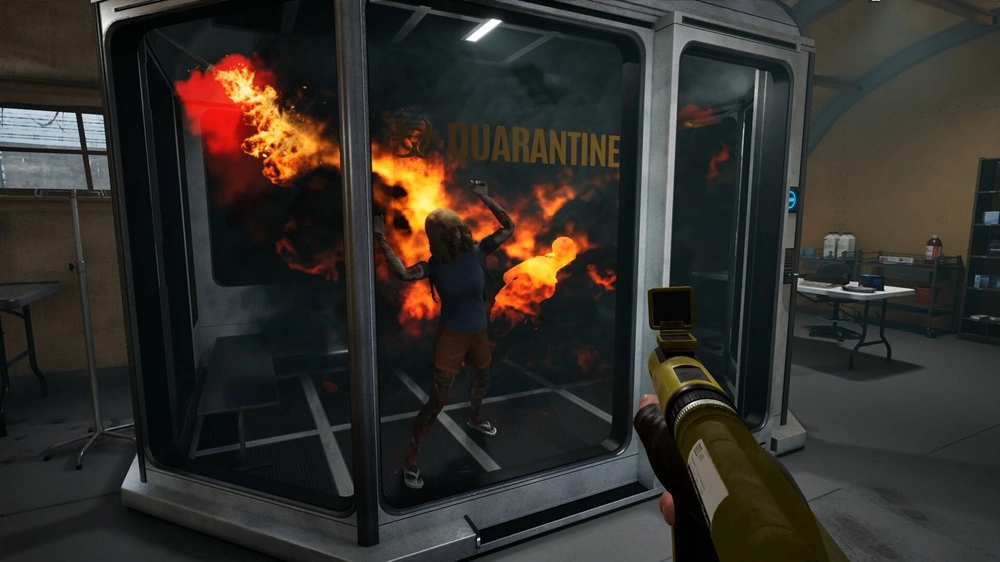
Those you don’t think are on the precipice of becoming undead can be sent to live in a social block with other survivors; however, if you get this wrong, they’ll kill everyone else who’s staying there. If you can’t quite tell if someone is infected, sending them to quarantine and checking on them the next day is an option. After a day or two, symptoms might have cleared up, or a bloodbath has just happened. Either way, torching quarantine can clear the dead and allow you to free up more space.
At the end of the week, those virus-free survivors will be taken away from camp and you’ll be rewarded for your hard work. Outside of checking survivors, there’s an element of base-building; the problem is it’s quite dull. Feeding survivors, powering generators, and healing poorly survivors is something you’ll need to do. Sadly, it can be done with a few clicks to keep supplies up, with upgrading just upping the amount of power, food, and medical supplies you have.
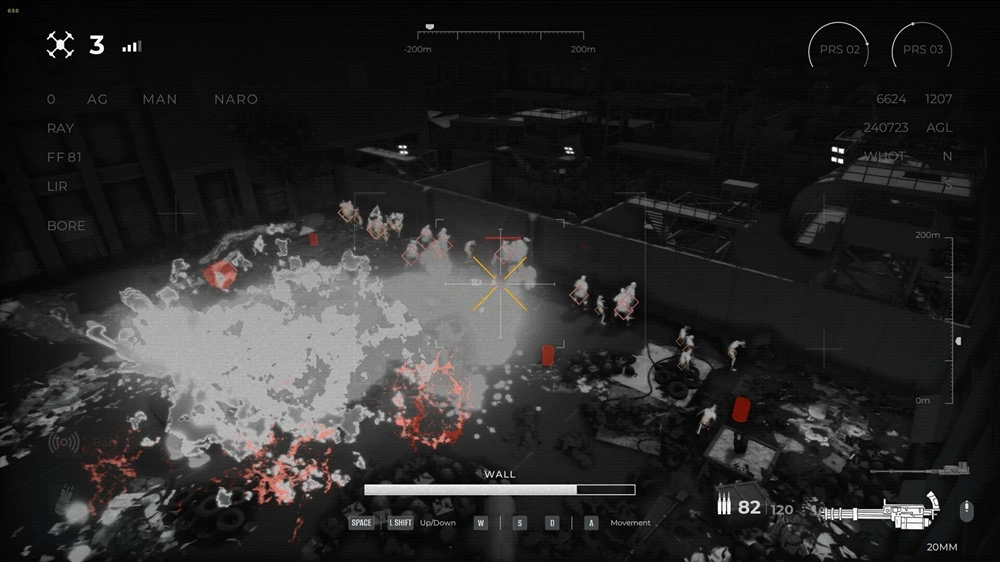
Another element to Quarantine Zone: The Last Check is taking a drone to the streets outside in the evening and gunning down waves of infected. It’s pretty straightforward, but it does offer a nice respite from the daily grind of dealing with survivors. Some of them are scared, others rude and obnoxious, and having a break from these assholes to go shoot up a bunch of zombies from the sky is fun. You can use a railgun or rockets, and seeing them get annihilated helps to break the repetition.
Quarantine Zone: The Last Check does get somewhat repetitive, but analysing survivors and making your own decisions offers a human element to gameplay. Making the wrong choice can haunt you, but when it’s not your fault and down to some dodgy textures or shading can be frustrating. The base-building is dull, but taking a break to shoot up the undead is an intense albeit brief encounter. If you’ve seen the videos and want a go for yourself, it’s hard not to recommend because it is a pretty cool zombie game.