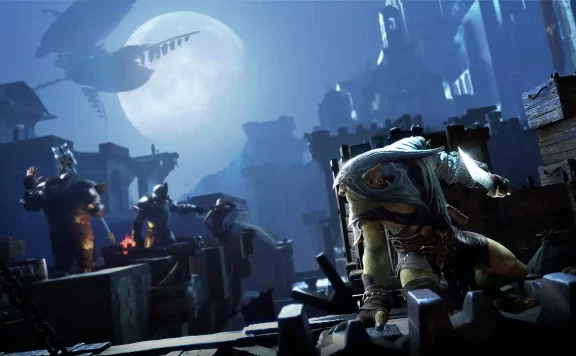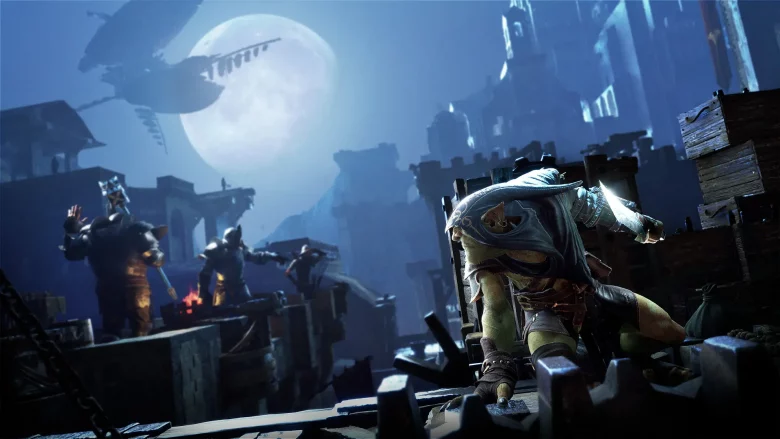
Styx is an odd series of video games, right? Born out of the world of 2012’s Of Orcs and Men, a game I’m sure most gamers don’t remember at this point, we’ve only had two dedicated Styx games since then, in 2014 and 2017 respectively. While they didn’t light the world on fire, they did introduce us to the titular goblin and his surprisingly solid approach to stealth, and Styx: Blades of Greed continues that tradition with a game packed full of excellent stealth gameplay, but unfortunately not much else.
It’s been nearly ten years since the last time we saw Styx but the way Blades of Greed opens you’d think these are yearly instalments. I was immediately baffled by the introduction of anyone who wasn’t Styx himself, with the game throwing you into the middle of an ongoing plot with characters who speak as though the player should recognise them. They might be new characters or they might be pivotal players in previous Styx stories, I had absolutely no idea despite playing both of the previous games. Story was never the series’ strong suit, but the cold opening in Styx: Blades of Greed left me confused and made it difficult to connect with the story and any of the characters for the rest of the game.
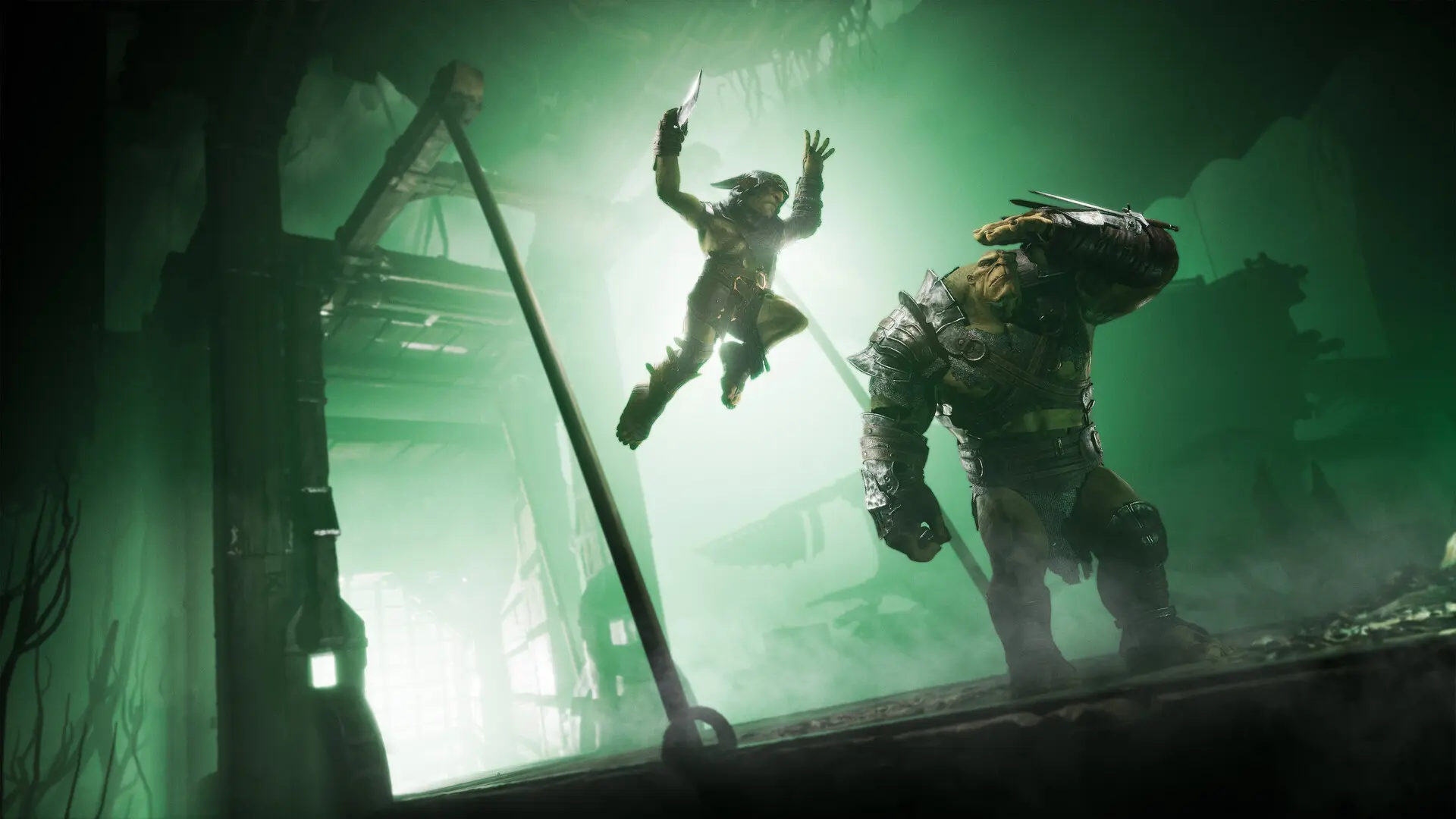
There’s all the usual fantasy tropes: a persecuted race, elves with posh accents, a group called “Inquisitors”. But outside of this the story does take a couple of interesting turns. After absorbing some Quartz (one of several mystical energies in the game), Styx ends up with an otherworldly voice in his head named Flux. This sets up the main concept for the game: trekking across the world absorbing Quartz to allow you to have more snippets of conversations with Flux so you can learn what it is and what it wants.
While the story never grabbed me, Styx himself is still the grimy arsehole I remember, and I mean that as a compliment. His gravelly voice and self-centred outlook makes him sound like Geralt of Rivia if he didn’t pay child support. He expertly straddles the line between likeable rogue and selfish prick, never going out of his way to help people unless he’ll get something out of it. It’s a sharp contrast to his supporting cast whose dull designs and questionable voice acting meant I never wanted to learn more about them.
Your quest for quartz takes you across a small number of in-game locations. When your airship arrives you’ll use your compass to attune yourself to one of several quartz deposits in the level, at which point you’re free to make your way there and grab it. This format continues throughout the game and is used as a way to introduce you to more of the levels as the story progresses.
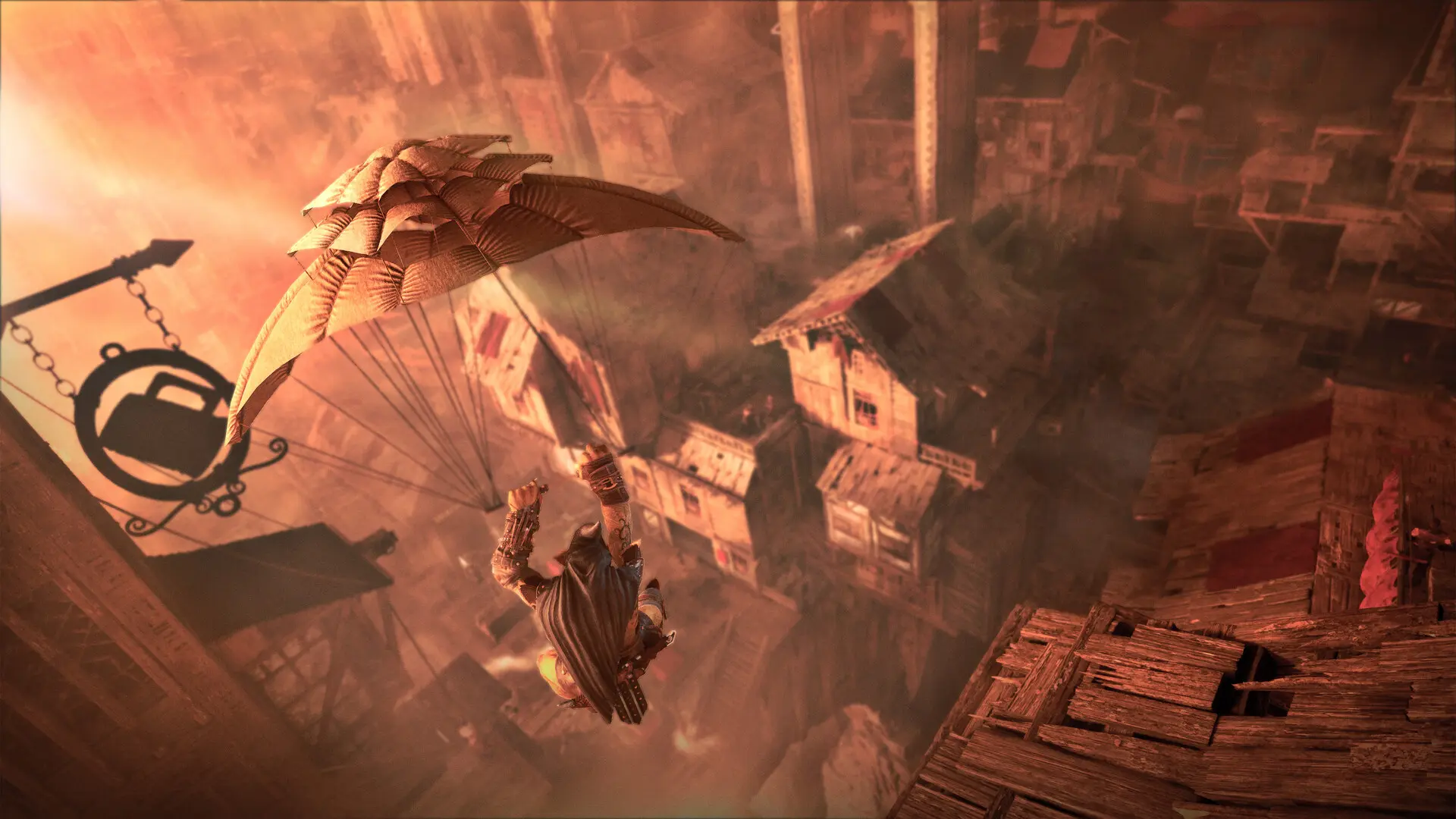
Despite being a hunched-over goblin, Styx is incredibly manoeuvrable, with dashes, double jumps and rolls all in his repertoire, as well as additional movement techniques unlocked at the end of each act. Alongside this you’ve got access to three types of special abilities: tools, Amber abilities and Quartz abilities. Tools are craftable items that include a mix of restorative and offensive options. You’ll be able to make potions to refill your health or Amber pools, bolts to shoot at unsuspecting targets or handfuls of sand that can snuff out lights from a distance.
Amber and Quartz are where things get interesting. Amber abilities are Styx’s innate powers, with the main one being invisibility, which is invaluable for sneaking through certain areas. He also has the ability to create a clone or revive from a cocoon when he dies, but if I’m being brutally honest, I didn’t use either of these more than once.
Quartz abilities are the result of your merging with Flux. These open up even more options for fun, with mind control, time manipulation and a powerful blast all on the cards. I found these more useful than most of the Amber abilities, especially his time power which lets you slow down and sprint through an area before enemies have a chance to attack.
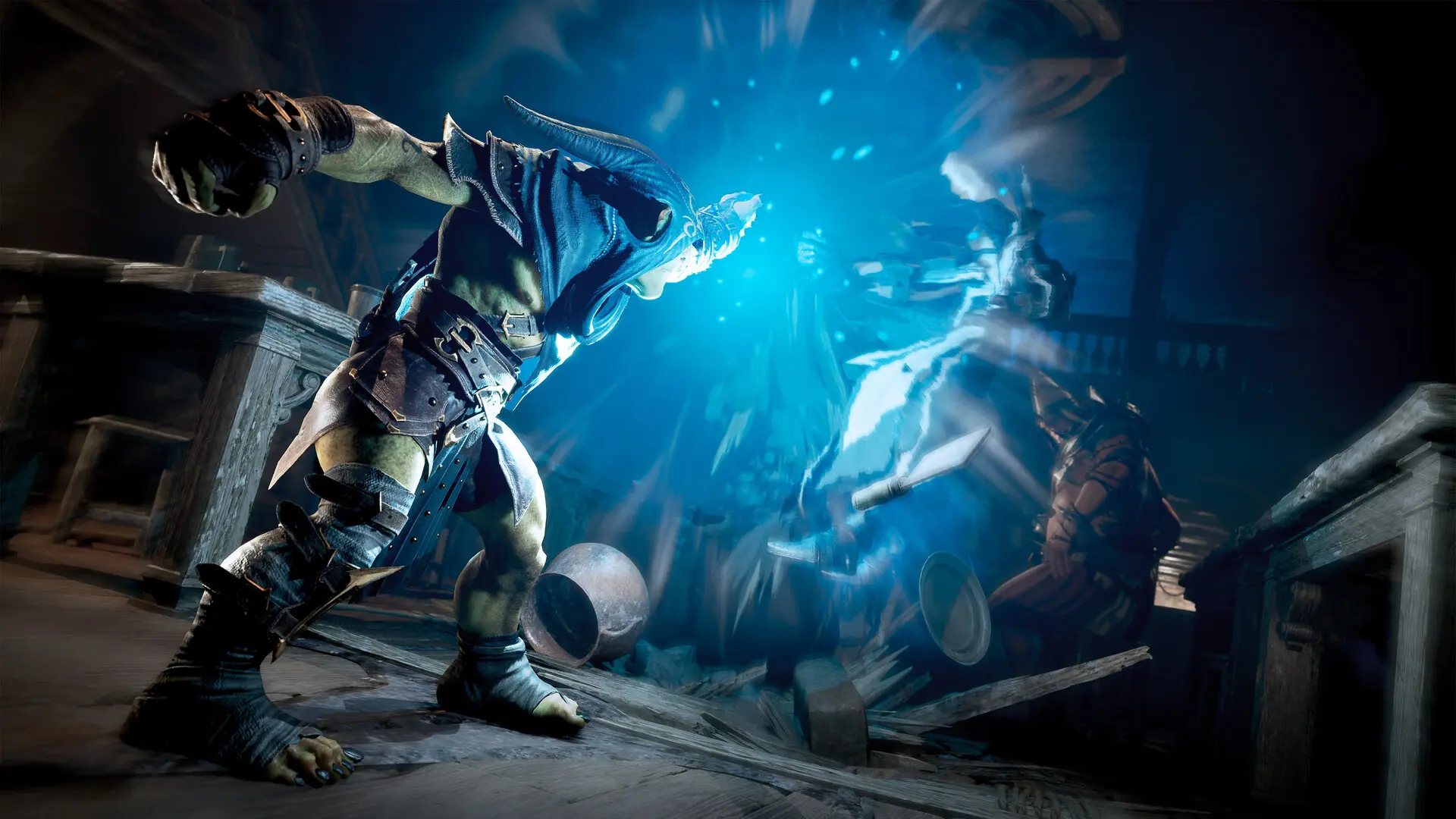
Despite having this great toolset available, I really wanted to play the game as a ghost, sneaking through areas without being seen. This meant that I mainly relied on invisibility, distractions and Styx’s short stature and agility for sneaking into small gaps or jumping up the side of buildings to get to my objectives. He’s basically useless in direct combat so anything that could result in that, such as using a clone, was off the table for me. While I never found myself hampered by only relying on a couple of tools, it did make some of the upgrade trees a bit pointless: once I’d upgraded invisibility and Amber-vision (basically detective vision), there wasn’t much else in the Amber tree for me to do. The Clone power had loads of ways to upgrade it but if I was never going to use it then there wasn’t really any point in upgrading.
Styx is very agile, especially once you get a couple of additional story-gated abilities, and it’s a good thing because the levels you’ll be exploring are huge. Not just horizontally but vertically too. When you first land in them you’ll look around and it’s immediately obvious there are a lot of places to explore, whether that’s sneaking through enemy strongholds or just hopping over rooftops or ruins to get further across the map. It’s when you look up or down though that you realise just how big these levels are: there is so much verticality to them that I don’t actually think I’ve seen anything like this before. It’s like Dishonored on steroids. You’ll see a huge tower in the distance and assume it’s just set dressing until you attune to some Quartz that’s at the top of it, and you realise that you now need to work out how the hell to get up there. It’s really impressive and undoubtedly the best thing about the game.
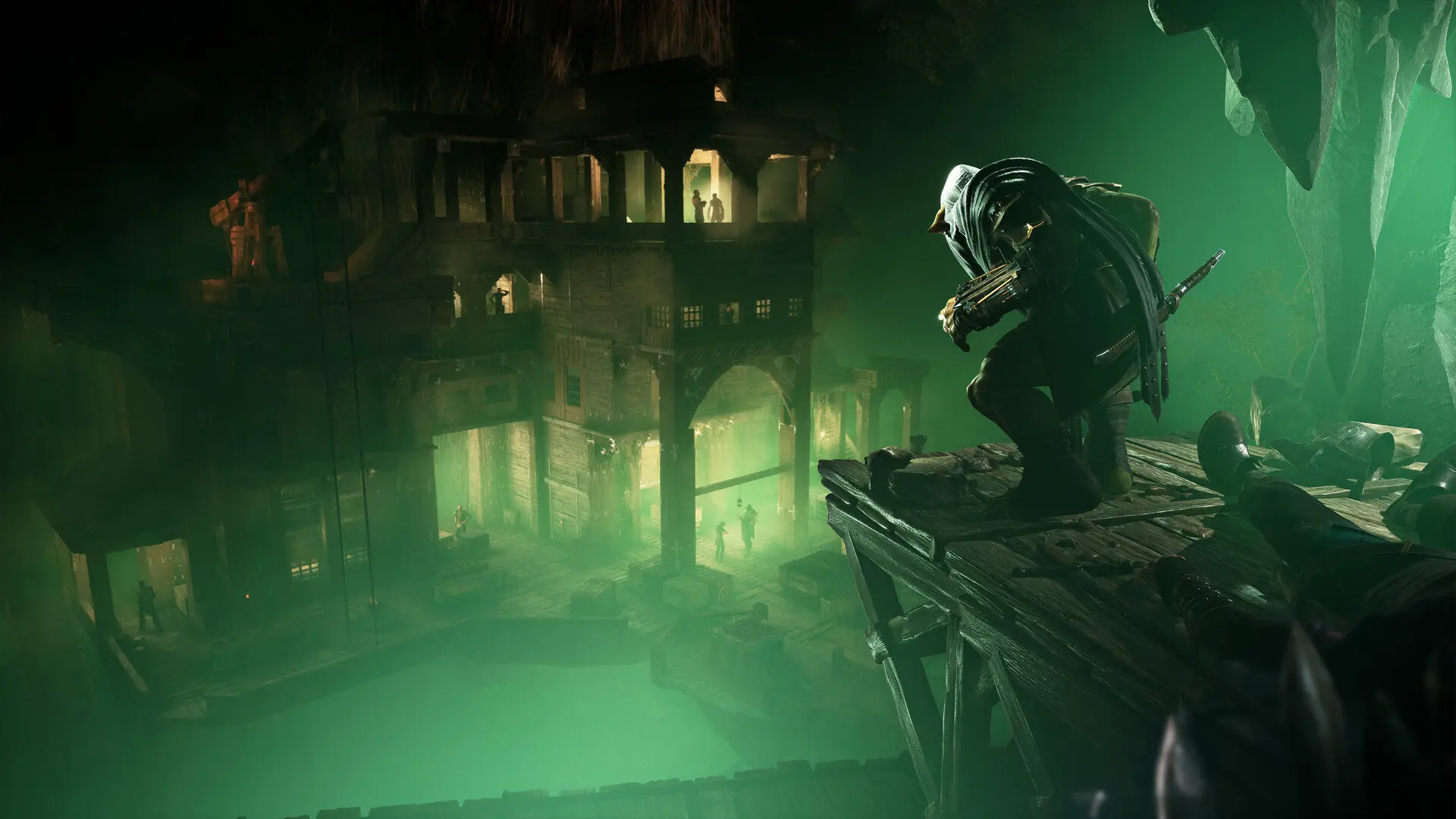
It uses this verticality well, with some top tier level and puzzle design. Often you’ll finally get to the Quartz only to find it’s locked in some contraption or being used to power a tool, at which point you need to find out a way to free it before you can absorb it. The game never gives too much away, but it’s always clear, either from in-game clues or general guard chatter, that the solution is close by. There’ll be instances where you need to move Quartz in a cart along a rail, opening up individual checkpoints so it can continue, or you’ll need to pickpocket a key to open a cage. What could have felt like a checkbox exercise ended up being a treasure hunt where each prize was gated behind a mini puzzle, and I really enjoyed each one.
Visually the game has a suitable level of edge and grime to it, befitting the dark fantasy tone. As a handheld PC gamer I also tested Styx out on a Lenovo Legion Go 2 and even on low settings the game still looked nice, with some excellent use of shadow and light making the world feel dingy and oppressive. It’s not just for show, either. They play a big part in the game’s stealth systems, with you being able to snuff out lights to make sneaking around easier.
Styx: Blades of Greed is a set of very good stealth mechanics and well designed levels wrapped in a fairly uninteresting and occasionally baffling narrative. Sneaking around strongholds, slitting a guards throat before dissolving his body and disappearing into the shadows is always satisfying, it just would have been nice to have a stronger reason driving you through his quest.