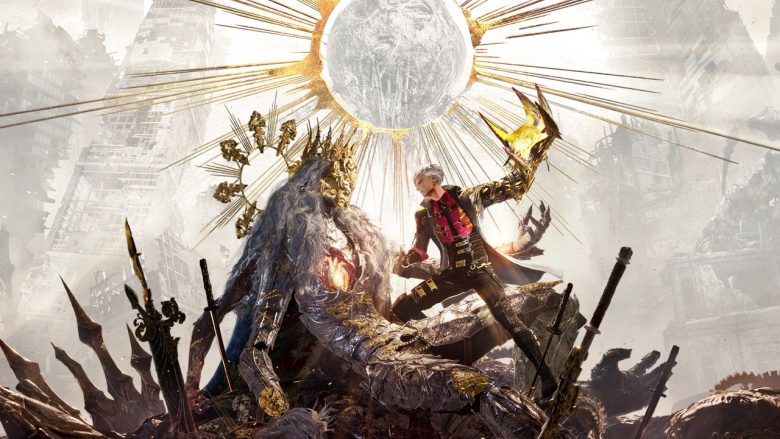
From the outside looking in, Code Vein 2 is one hell of a proposition. It’s an anime vampire adventure, right, that’s also a post-apocalyptic sci-fi, wrapped up in a semi-open world Souls like. It’s got fast combat and tons of secrets, a big cast of characters, and it’s bursting with story. There’s even a hot spring where you can go and bathe with your companions, because of course there is. But if you played and enjoyed the first game in 2019, your opinion of the sequel could go either way.
You see, Code Vein 2 feels very different to its predecessor right out of the coffin. It’s not quite as dark and oppressive for a start, and the story is a little less operatic from the get-go. It’s set in the same world, but a different region, and begins with your character waking up after death (and the psychotically detailed character creation, of course) as a Revenant, which is this world’s version of a vampire – that is, a human kept alive by blood magic and sworn in as a kind of superhuman protector. The first face you’ll see is that of Lou MagMell, a special kind of Revenant who is able to manipulate time and send you back and forward along this timeline. Your goal is to hunt down and defeat 5 heroes currently trapped, whose essence might put a stop to the Luna Rapacis virus and free humanity.
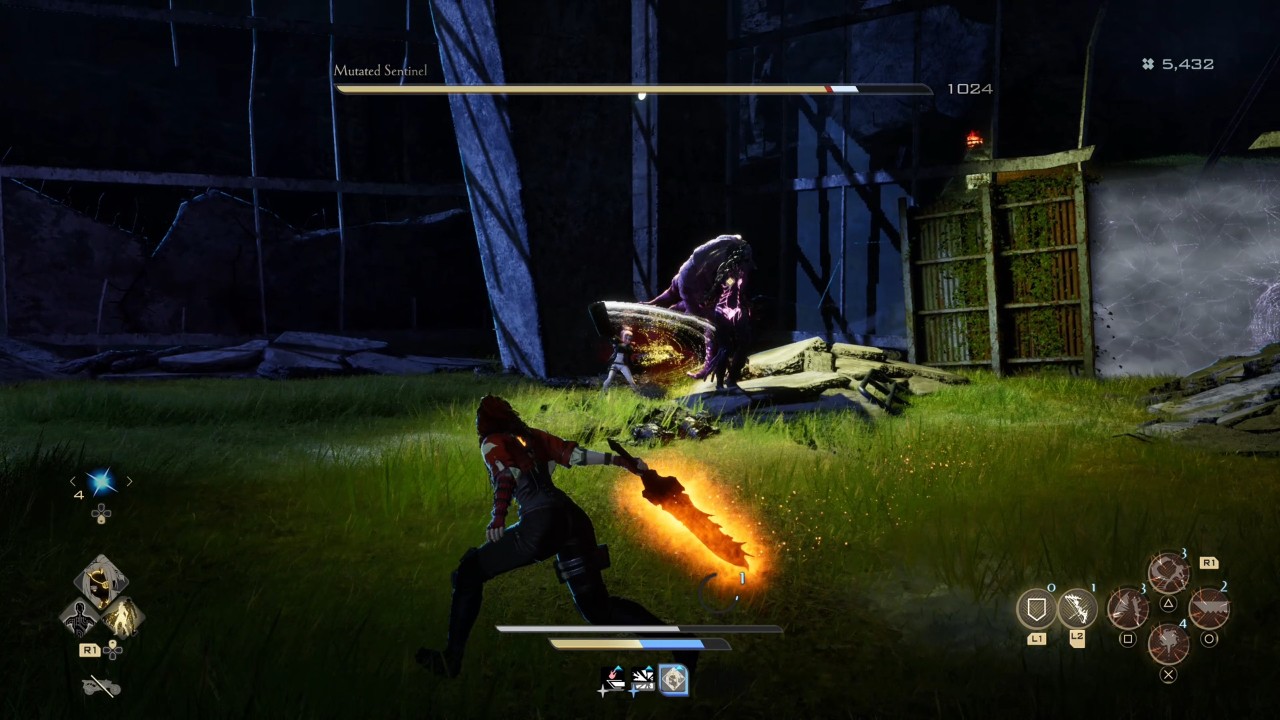
Honestly, the story is a little overwrought for what it is, but it serves as a solid framework for all the time-travel shenanigans. Lou is able to send you forward and back thanks to your Bond, which also allows her to travel with you in your magical backpack. Seriously, I’m not making that up. “Magic backpack” is a little facetious, maybe, but I must have missed some dialogue when they explained it properly. Basically, Lou, and many other possible “Partners” are able to travel with you one at a time. You can summon them to explore and fight alongside you, even giving you a second lease on life if you die (though they’ll vanish for a short time), or you can leave them in the backpack and enjoy the buffs they impart on you when you’re assimilated.
It’s a very cool system and allows you to tailor the difficulty a little. If you’re working your way through an area filled with multiple enemies, an active partner might help, and they can draw aggro from the boss. However, if you are fighting a boss you might want to benefit from those buffs. The damage they deal isn’t all direct, either, as a portion of it is greyed out until you cement it with a follow-up blow.
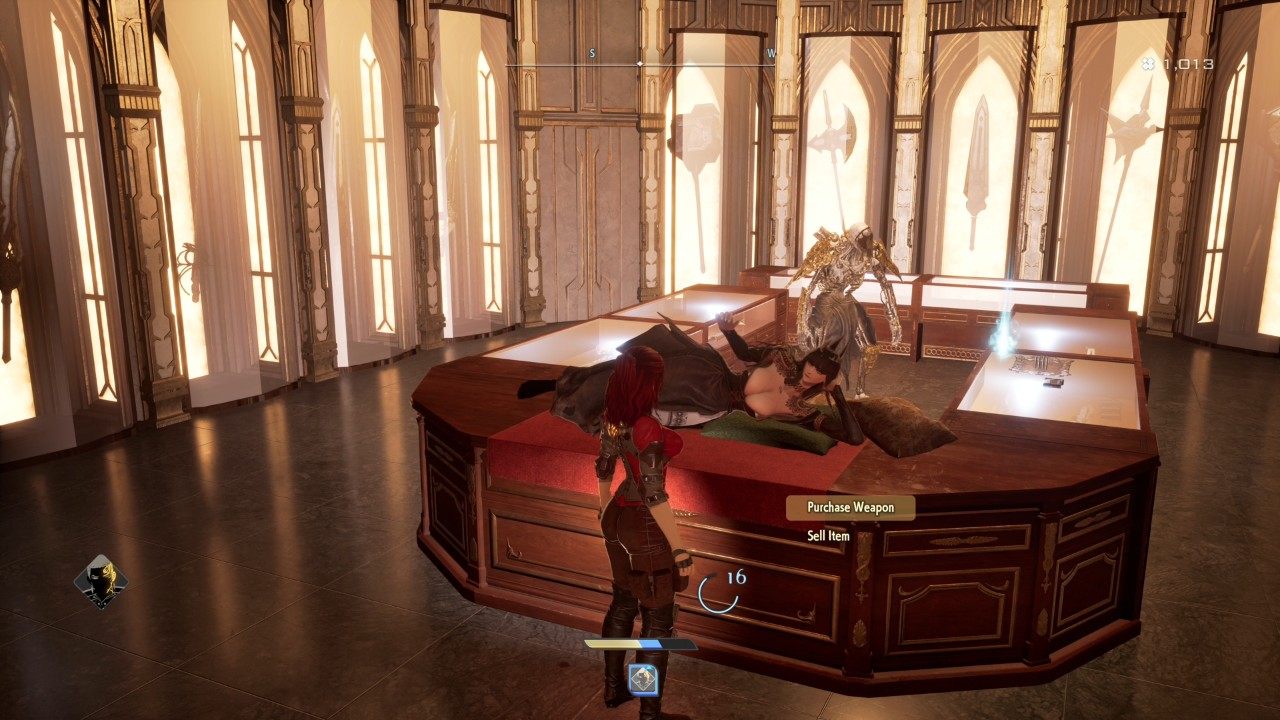
Code Vein 2 feels noticeably less “Soulsy” in the minute to minute combat, thanks to fast combos and the almost constant partner. In contrast with the first game’s more measured, arguably traditional, approach, the sequel feels somewhat unrefined. It can be clunky, and enemies will attack right through you one minute and be stun-locked the next. It also features some of the most egregiously uneven hit-boxes I’ve ever seen. All enemies, not just bosses, will target lock you so if you dodge a little early, they’ll just magically change direction like a swallow. And the reach on some bosses is borderline ridiculous, as dodging one attack puts you in range of an instant follow up. It makes combat feel unnecessarily, artificially hard. There’s a messiness to it that I don’t remember being in the original, and the game I was most reminded of was Final Fantasy: Stranger of Paradise, for better or worse.
Once you’ve established a base of operations and met the team of highly competent folk who’ll mostly be watching you do all the work anyway, you can start queuing up Quests upon which to venture forth. There’s a simple system here, despite the amount of quests you’ll accrue in a short time: finding Mistles (bonfires) creates fast travel points that also allow you to level up, rest, and tinker with certain in-game systems to modify your playstyle. And by Dracula’s lily-white nutsack are there a lot of systems to get your fangs into.
Returning from the previous game are Blood Codes, preset stat allocations that favour certain attributes and grant you specific bonuses such as higher damage or increased stamina. Each Partner, and some NPCs, will give you a Blood Code, and you level them up by equipping them. To max them all you’ll need to use a variety of different weapons, but it’s worth it. A maxed-out Code can be taken to one particular NPC who will extract Boosters, which you can equip as permanent buffs. It’s also just a very good system, allowing you to alter the allocation of stat points without a respec.
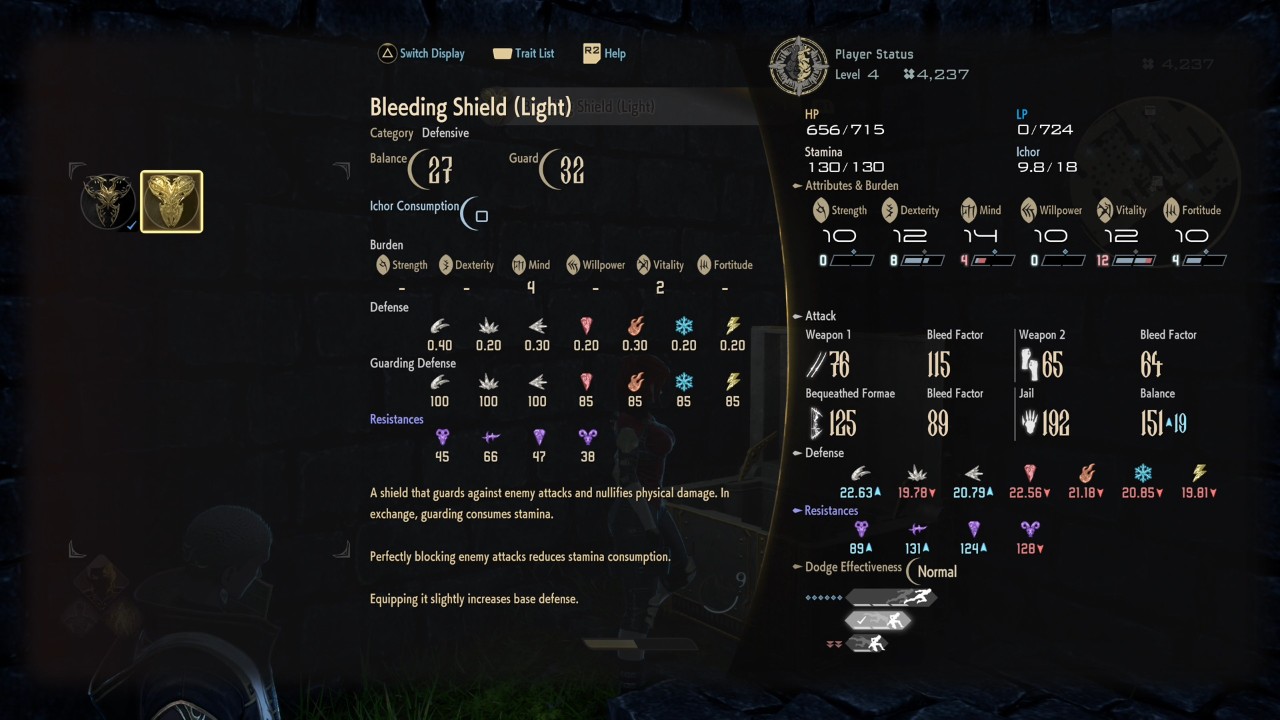
Gear is known as Formae, and comes in an array of weapons from swords, twin blades, and halberds to the more unusual bayonet rifles (which I couldn’t get the hang of), and floating daggers that move with your punches that reminded me too much of Babylon’s Fall to get comfortable with. There’s no armour though, and defensive stats come from your level, shield Forma, and Blood Code. Wouldn’t want anything getting in the way of the super elaborate cosmetic dress-up system that lets you add coats, cloaks, glasses, bunny ears, and fox tails (among many, many, many, many accessories) to your outfit. Special items called Jails enable powerful Drain attacks that draw blood from your enemies to power your Ichor, the multipurpose ammo with which you pull ammunition and cast weapon arts. Sadly their cool animations are often completely ruined by the misbehaving camera.
Once out in the world, though, it doesn’t take long for cracks to begin to show in Code Vein 2. For one thing, the environments just felt very flat to me. There’s a sense of scale and the game does its best to show off, but overall the locales just seemed to be a little uninspired. It runs the usual gamut of dark industrial complexes, abandoned towns, and gothic architecture, but I never found myself feeling wowed by any of it. Coupled with the kind of writing that made me want to thumb through dialogue exchanges, the unremarkable world design creates a bit of disconnect – or at least it did for me. There’s a summonable motorbike, though, which admittedly only works half the time and disappears if it’s hit by a stiff breeze.
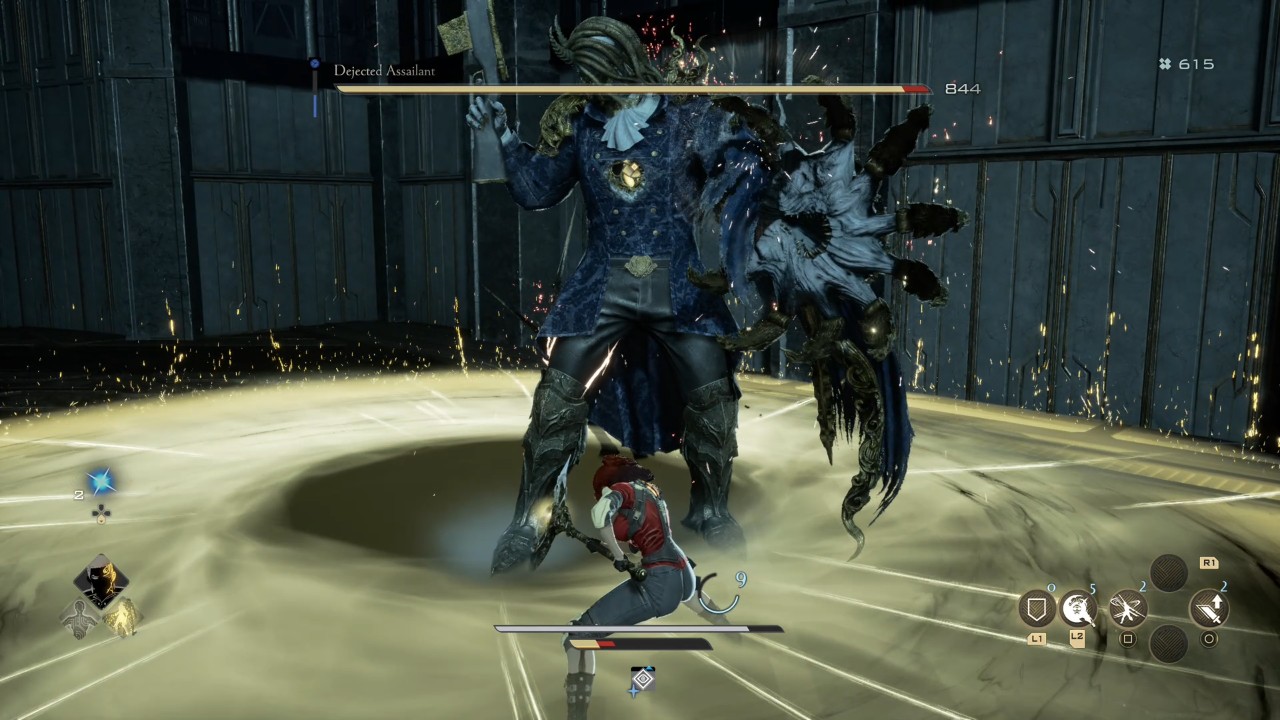
Character models are also weird. While pains have been taken to make sure the female characters show enough cleavage to distract (except the one who look and act like children, thankfully), proportions are very odd. One Partner, Noah, has a neck that seems to go on forever and I couldn’t look at him without staring at it. Even the boss design isn’t anything special for the most part, save for a handful of fights that feel like events. Often, bosses will become wandering enemies in the world moments later, which is something I’ve never appreciated in a Soulslike, even when From do it. The world is a fairly fun place to explore though, stashing weapons, weapon arts, Jails and collectibles everywhere. You can even find gifts for your NPC buddies that reward you in trade points and let you receive items and boosters in return.
There’s more yet to Code Vein 2, with systems that let you combine items and add permanent elemental buffs to weapons, but it’s too much to lay out everything it does. For all its spectacle and noise, though, it’s not a particularly slick or well-balanced experience. There is certainly fun to be had exploring the world, and character progression always feels rewarding, but the layered systems feel a little overly complex and the world often feels hollow and empty. I can’t even be sure what fans of the first game will think, so it’s one you really need to experience for yourself.