
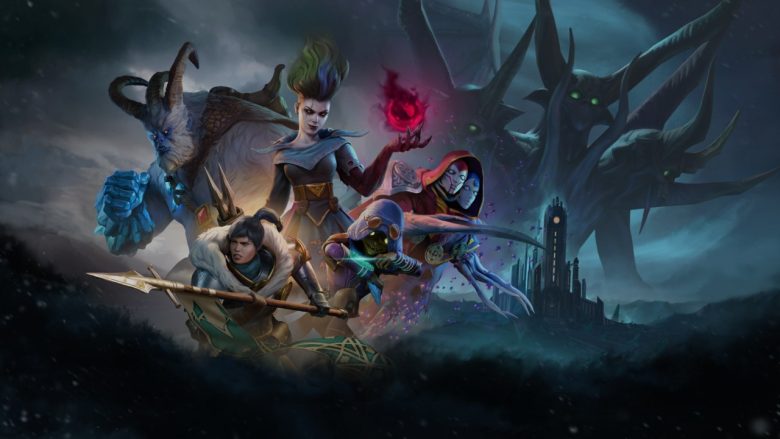
Frosthaven is a turn-based and grid-based tactics game from the same stable as Gloomhaven. Also based on a boardgame, it benefits from a handful of improvements that elevate it above its predecessor.
It sees you take control of a group of mercenaries sent to investigate the sinister goings-on in the titular town. While you can select up to four, you will recruit them based on their classes, rather than personality or character. In fact, characterisation takes a back seat in Frosthaven, necessitating a more clinical and cold approach than a tactics game like Star Wars: Zero Company.
Missions are presented almost exclusively as combat encounters, though the complexity of mechanics and improved balancing make it instantly more accessible than Gloomhaven, a game I found to be almost punishingly difficult right from the off.
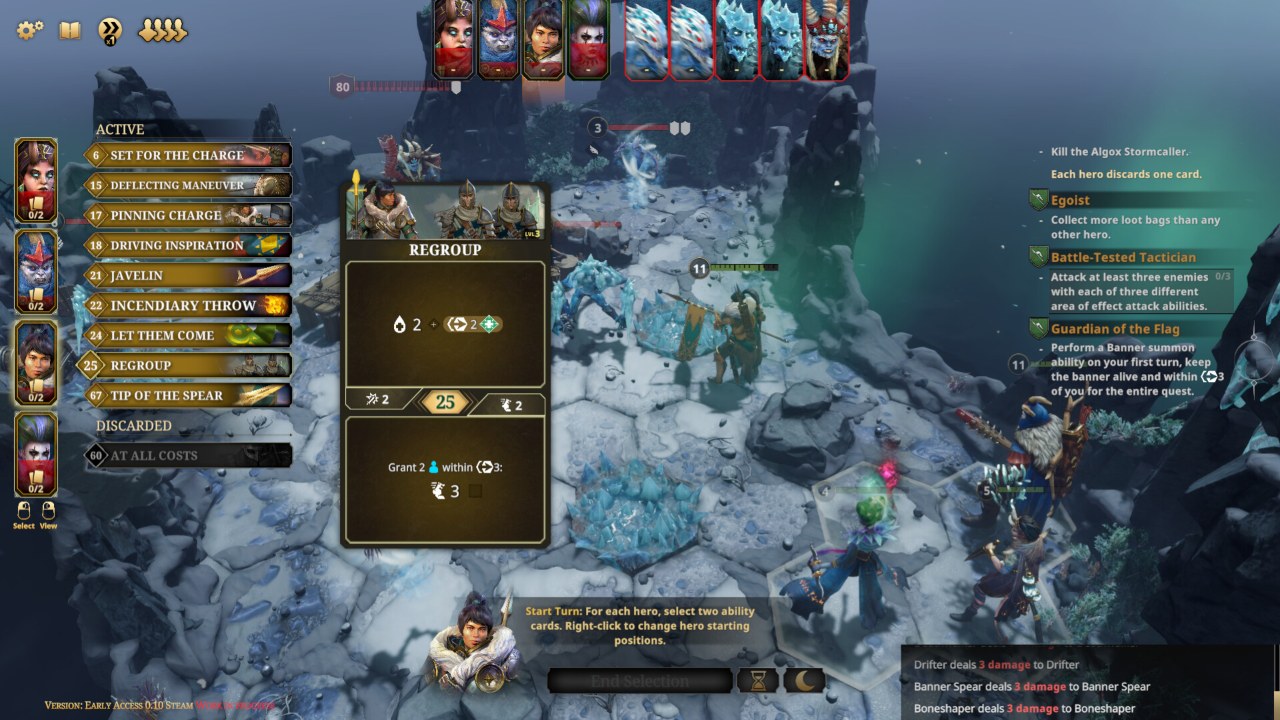
Classes are a standard enough mix of brawlers, archers, and casters. There’s a good spread of strengths and weakness here, with some characters possessing extended reach or more hp, and others built like glass cannons. The Boneshaper, for example, is a necromancer able to summon minions, a move that presents advantage for obvious reasons but also costs health as a trade-off. Heavier, stronger characters will have restricted movement, while characters built to range further tend to do less damage. Pretty straightforward stuff for the most part.
While it is more accessible, the difficulty is still no slouch. Being deck-based, there’s an element of chance to the combat that you’ll need to learn to mitigate. Having a limited number of lives per character per turn means you’ll need to manage your action economy and learn which cards synergise with one another, and it takes a lot of time and effort to begin building workable strategies. I lost a lot of fights, and barely scraped through a lot more, which meant I was only really able to enjoy Frosthaven in small doses, a few battles at a time.
Although there is a story to follow, which picks up in earnest once you reach the town itself, it’s not a focus. There’s something of Darkest Dungeon about the world, whereby the setting does more work than the narrative and you find yourself building your own subplots internally around your characters. Why did I always seem to send one particular character after loot drops? Was he predisposed to kleptomania? Who knows, but it did add an element of tragedy whenever it got him skewered by something horrible.
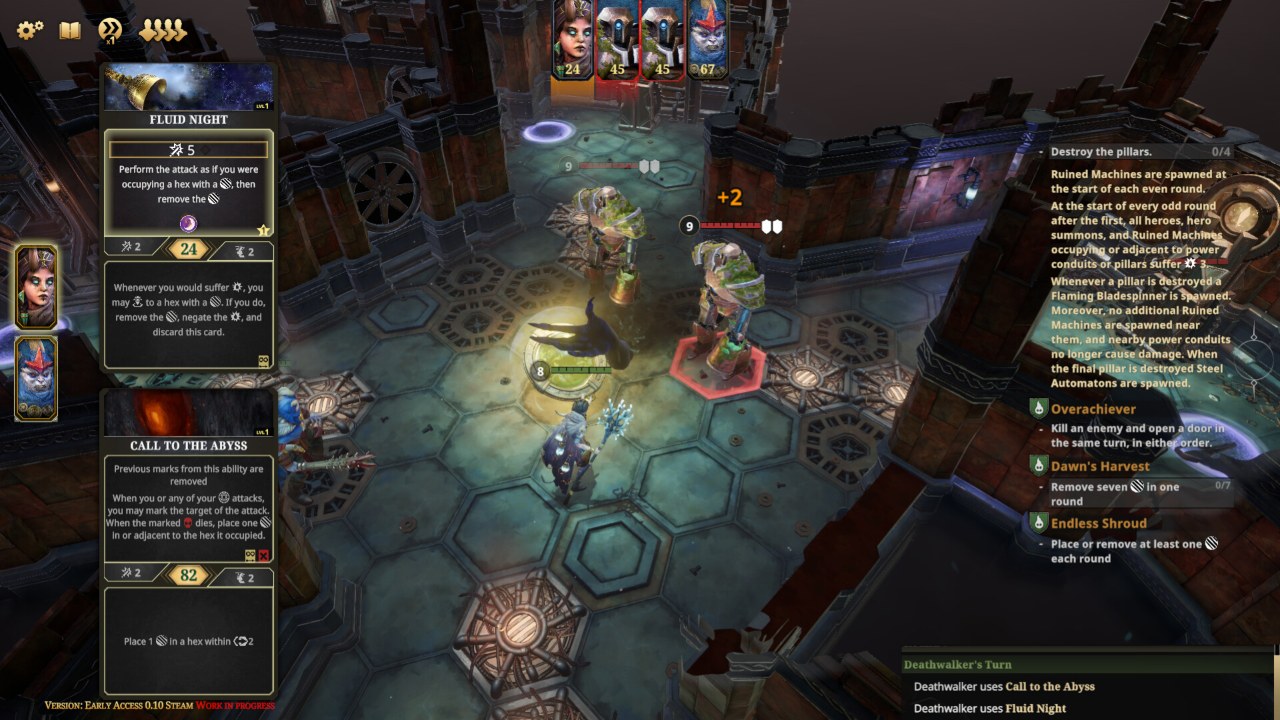
Interestingly, you don’t take turns character by character. Instead you draw your cards and the enemy draws theirs, and initiative is determined by a value already etched on the cards. Again, it deepens the tactical requirements but can over-prioritise luck. To further complicate matters, actions come with multiple options and you’ll need to select appropriate modifiers for each of your cards. Imagine then, a scenario where you have a devastating attack ready to go, but the only modifier available removes the attack damage but keeps the associated debuff. It can be highly frustrating, although arguably it’s balanced by things like double attack modifiers or buffs that move cards up in the battle order. Cards must be replenished by taking rests during the encounters, though these are also finite, so managing your deck is essential.
The town itself presents a kind of management side quest. Moving to and from the town into mission areas will often trigger events requiring tough choices or more fights. Messing up here can result in key outposts or areas being damaged or destroyed, and you’ll need to help rebuild them yourself. This costs resources and necessitates more risky fighting, risking your mercs or speeding up the time until they retire and need to be replaced. Losing a well-established warrior can be a real kick in the teeth.
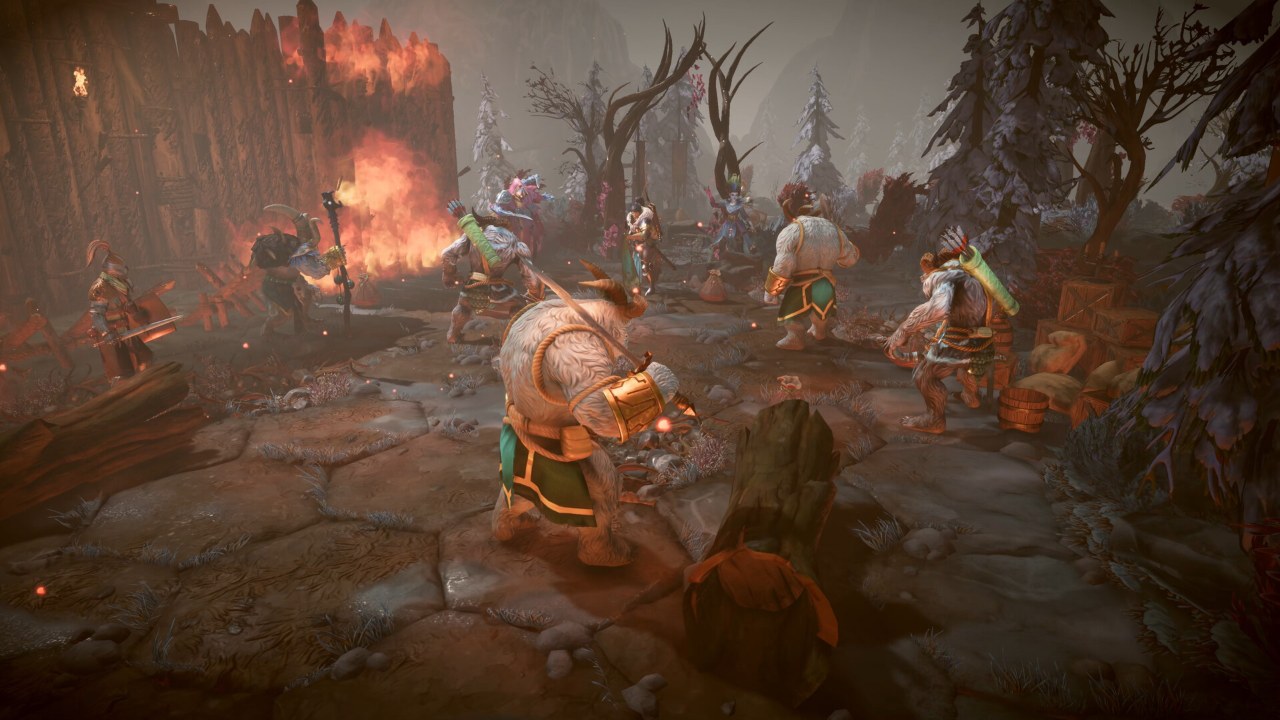
Frosthaven is better looking than the games that came before it, with more colour and vibrancy to the player characters, enemy design, and environments, although it does reuse the latter fairly liberally. In fact visual repetition can be a bit of an issue all round.
That said, Frosthaven does more than its predecessor and does it better, but it’s still a game that feels like it hates you a little. It will take considerable time to fully understand, let alone master. The variety of classes, cards, and enemy types alone mean you’ll always be looking for new strategies and tactics to make the combat easier, but you’ll never make it a pushover.


