A Storied Life: Tabitha starts with a letter.
Mrs Kettlewell, presumably an elderly relative (and the titular Tabitha), has sadly passed away and left you the keys to their house with instructions to clear it of their possessions. It sounds a bit cheeky, especially as we don’t really know who this woman is at this point, but she sugarcoats it by telling you to sell anything valuable to fund a holiday, so I’ll let her off. As you start clearing the house though you find that she’d been in the process of writing a memoir, but water damage has unfortunately (and conveniently) smudged certain words on each page. What follows is 90 minutes of sifting through memories left behind in her home, learning more about her and piecing together her story so you can finish the memoir.
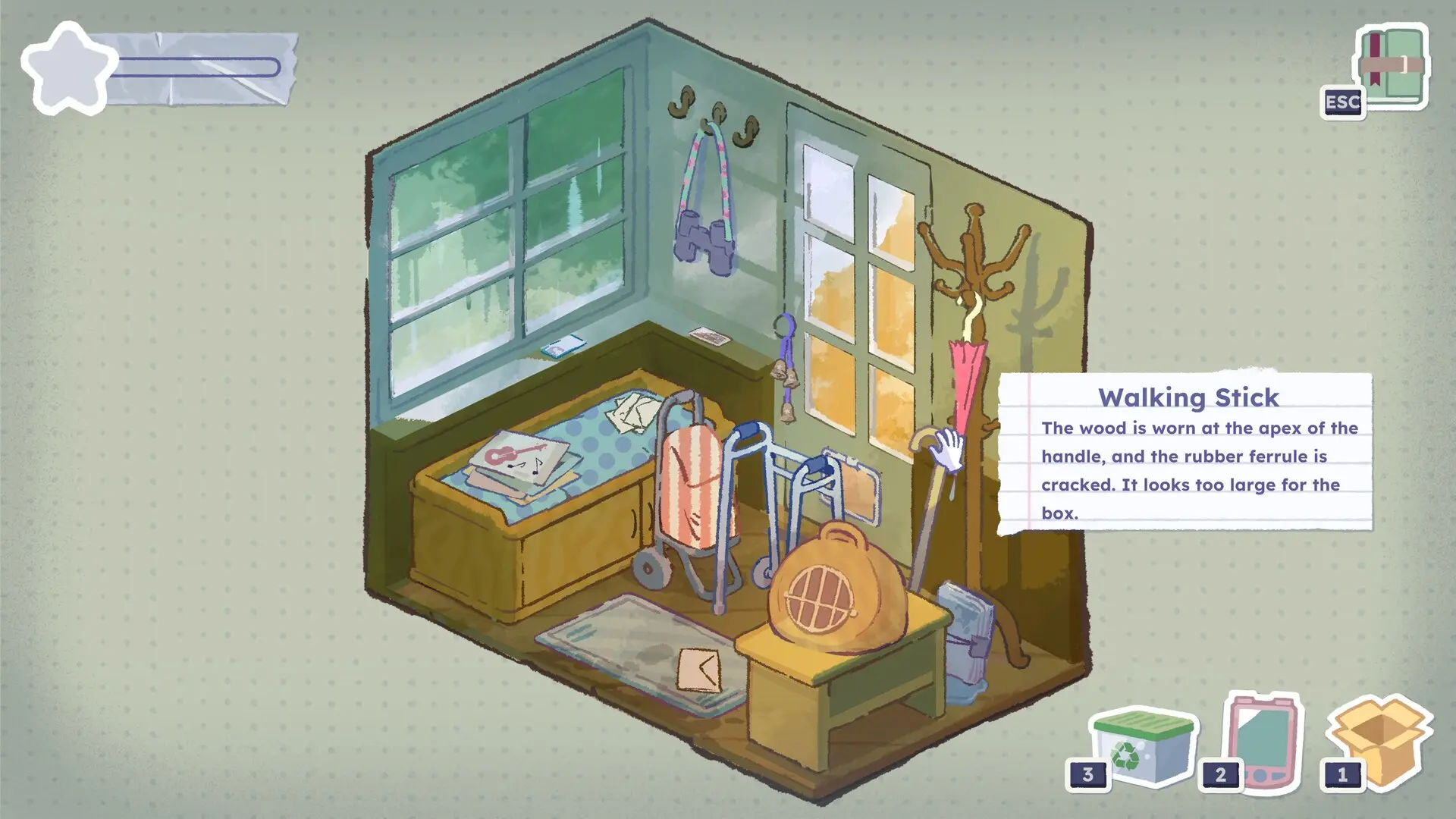
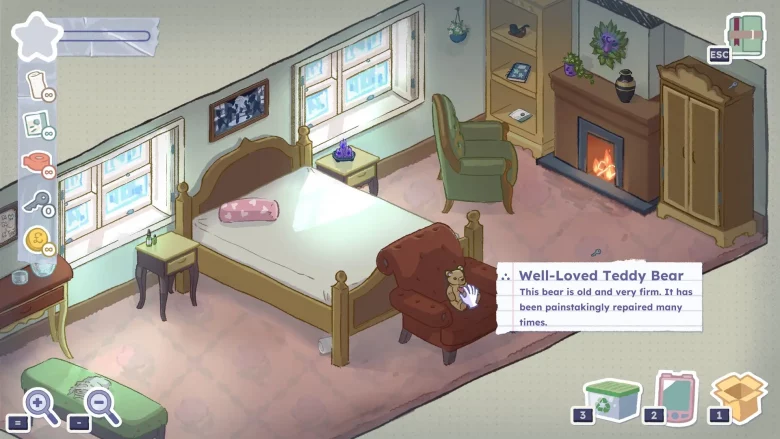
Mechanically, A Storied Life: Tabitha is Unpacking with a sprinkling of Mad Libs. You go through the house room by room and sift through all the stuff she’s left behind, ranging from unexpected treasures to literal crap. You’ll need to decide what you want to keep and recycle, as well as which single item from the room you want to put up for auction to help fund your holiday. It’s a really enjoyable loop, and I quickly fell into a rhythm of arriving in a room and rifling through drawers and cupboards to look for any hidden goodies after clearing the floors and walls.
While recycling and selling items is a simple case of bunging them in a box, you’ll need to be more careful with the stuff you want to take home. The box is split into a grid, much like inventory management in Resident Evil 4, and you’ll need to rotate items to make the most of the space. You’ll also be able to find or buy packing materials to make life easier too, such as tape for strengthening boxes or bubble wrap for ensuring fragile items stay in one piece. It’s a neat touch for making the packing more engaging, although if I’m being honest I didn’t make use of it that often.
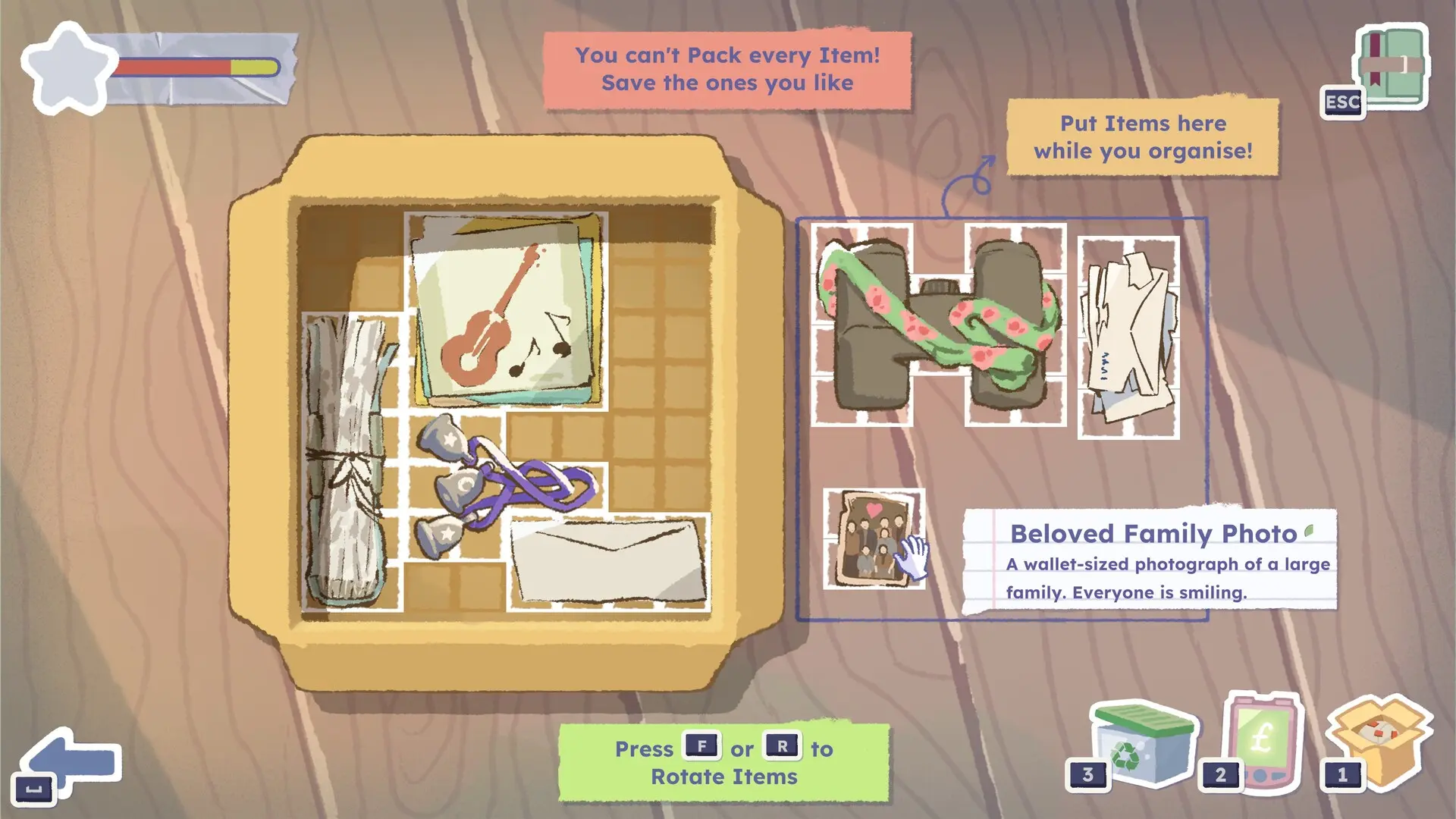
You’ll need to be selective about the things you bring back with you as these help you tell Tabitha’s story. The items you bring back then provide you with words you can use to fill in gaps in her damaged memoir, Mad Libs style. Each chapter of the game ends with an equivalent chapter from the book, so you’ll go through and fill in the gaps with words as you start to build up an understanding of her life. It’s a really interesting system and one that I found quickly invested me in her (our?) story, and while there’s the occasional opportunity for Mad Libs nonsense, I was quite impressed that most of the time the sentences would make sense.
On my first run-through I just packed whatever took my fancy, leading to a bit of a narrative hodgepodge for the memoir. It wasn’t really a coherent story, moving from her working as a nurse to odd segues about her husband, so it’s no surprise that it didn’t get picked up by a publisher at the end. The game cleverly tries to funnel you down specific routes though so that you can build a story centred on one of 6 pre-made themes, each focused on a different life for Tabitha. Each story is written by packing related items together, so if you want to write a story about Tabitha’s life with her husband then in each chapter you’ll need to pack the three items that have heart symbols on them. Similarly, if you want a more tragic story then looking for damaged and decrepit items will write a story of Tabitha in mourning. It’s a really clever system that encourages replays and provides more structure to what could otherwise be quite an open-ended experience.
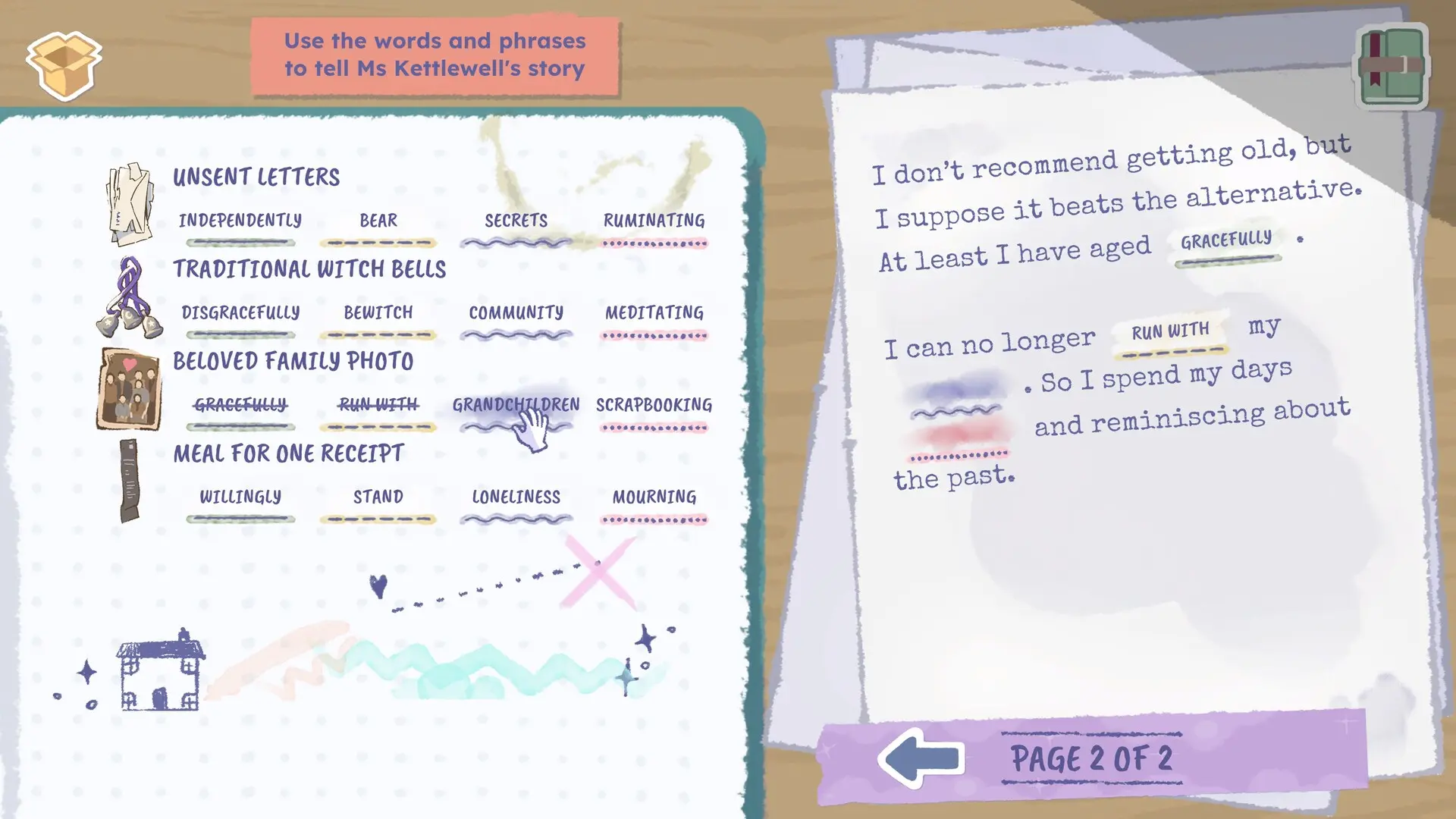
You still get flexibility in the story told too, so when doing The Lover path there were ample opportunities to talk about a potential affair between Tabitha’s husband and one of her friends, but I chose to focus more on the love for her husband and children. It’s a really good way of making sure the story feels like something you’ve crafted while providing a narrative and mechanical structure for you to work from.
The game may be short but it’s built around replaying the story and packing different items so you can explore different stories. While this never really bothered me, it did mean I was often speeding through chapters I’d already completed multiple times. I knew what item I wanted to put up for auction and where most of the other items were so I ended up being on auto-pilot for parts of the game until it was time to start writing the memoir again.
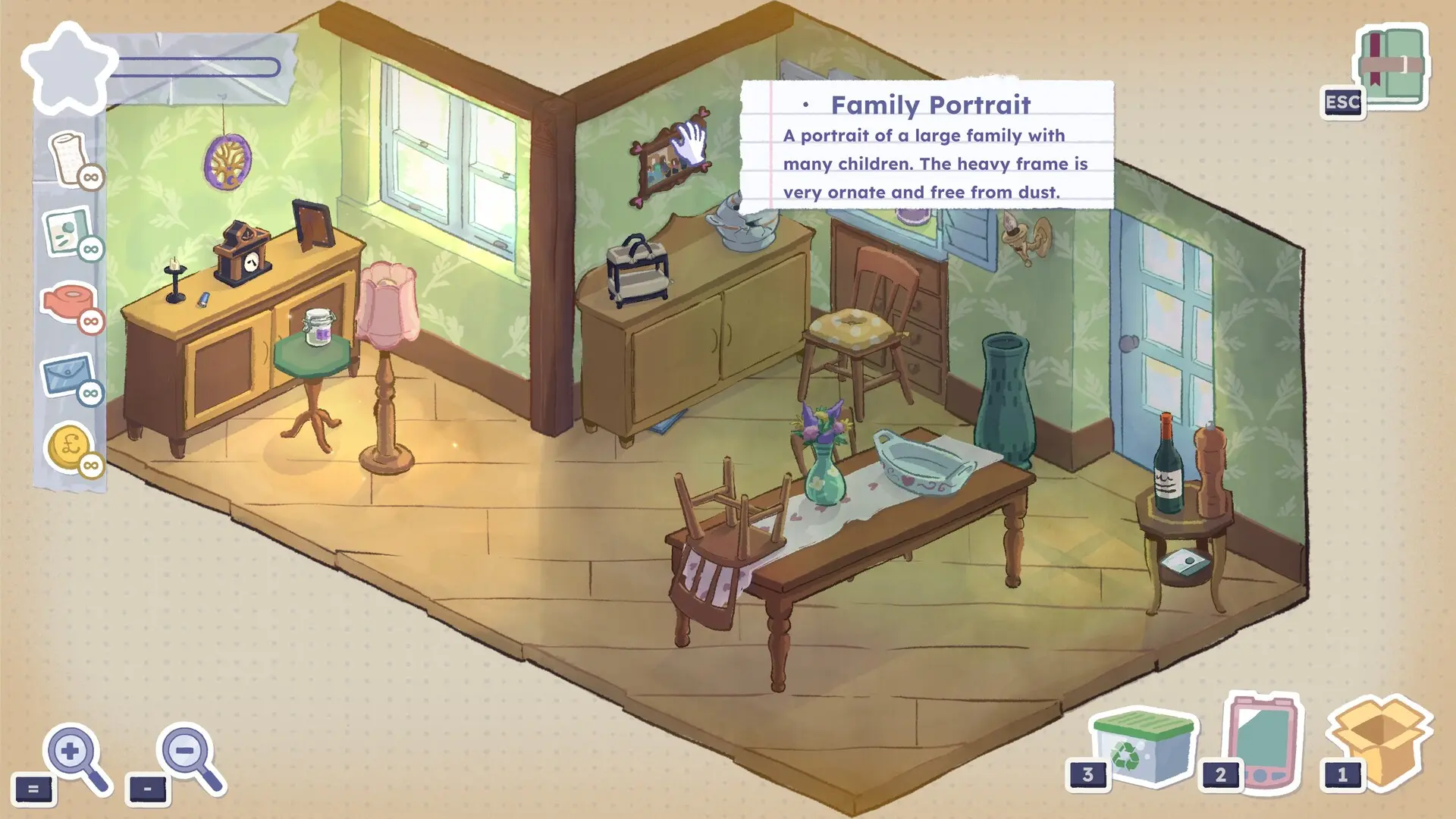
While the game is less than two hours to complete, you’ll want to replay it multiple times to get different endings. Each playthrough is accompanied by a lovely mix of classical tunes, including Greensleeves, William Tell Overture and more. It looks gorgeous too, with the story told through panels like a cutesy motion comic. It’s packed with lovely details too, and sitting at your desk at the end of each chapter with a cup of peppermint tea and Tabitha’s water-damaged memoir just makes it feel all warm and cosy.
A Storied Life: Tabitha sounds like an odd mix of genres, with its heavy focus on narrative combined with a Mad Libs approach to telling that story. By cleverly nudging you towards certain paths but still giving you enough flexibility to put your own spin on things, it creates a story that’s worth reading every time.