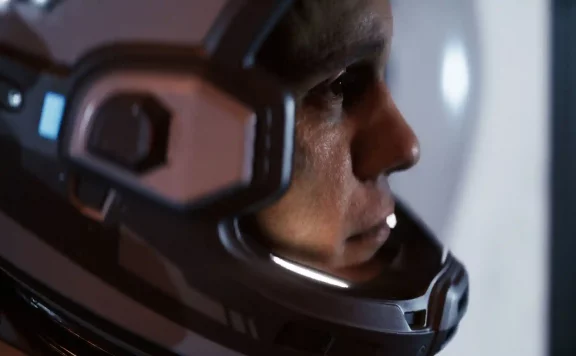
Supermassive Games has made a career out of branching narratives within the horror genre. The developers have a penchant for drawing you in with mysteries and jump scares, but Directive 8020 feels different. It’s more mature, with higher stakes and a cast of characters that feel more developed than they ever have. Games like Until Dawn and The Quarry have featured teens who quite frankly I couldn’t care if they lived or died. Now, I fiercely tried my best to keep everyone alive because I was deeply involved in their survival.
Taking place aboard the Cassiopeia, a ship on a mission to find a habitable planet for humans to live on, the ten crew mates face threats far greater than the impending doom of the human race. As Earth is dying, these people head to Tau Ceti f, 12 light years away from home. It’s the most important mission to have ever taken place, and with it come high stakes and dangers no person has ever faced. With this story as its backbone, the personal tales told within it make every minute of Directive 8020 feel so important.
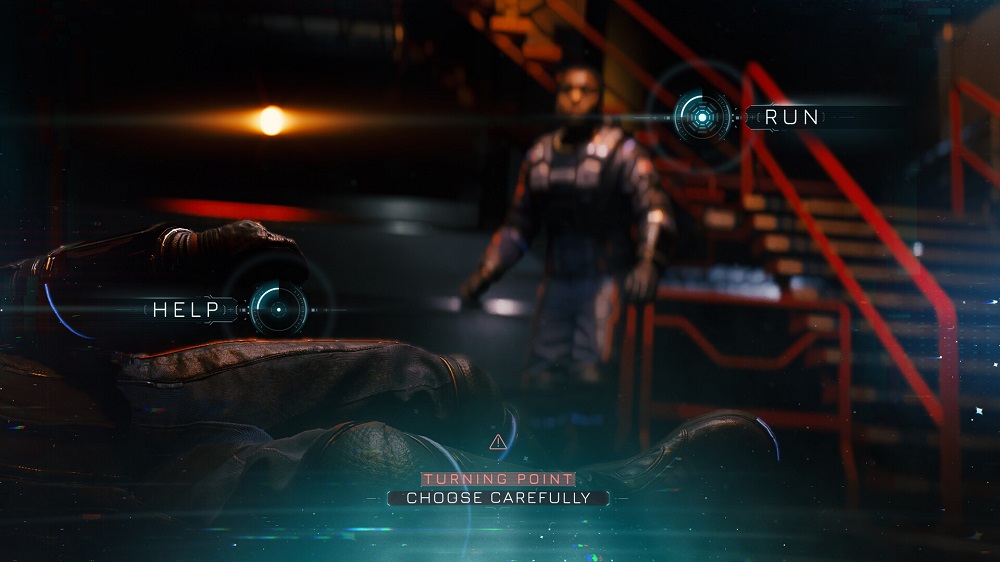
With every Supermassive game, choices become front and centre. Sometimes these choices define the characters own arc. Other times they are the literal difference between life and death. Either way, whenever forced to choose between two options, you feel the weight of them. No character feels unimportant or filler. Stafford is a respected veteran commander; Eisele is the proud mission officer; Anders is a science genius; Cooper is a medical specialist carrying a lot of guilt; and Mitchell is a pilot that brings life and humour to the crew.
Williams is the Corinth CEO who has his own reasons for being on board the Cassiopeia; and Young is a pilot who’s father inspired her to fly beyond the stars. My favourite character, Cernan, is the technical engineer who’s philosophical warmth brings comfort to much of the crew, while missing his husband back on Earth. Directive 8020 however, starts with Simms and Carter, two sleep technicians who monitor the ship as the others wait in a four-year slumber until the time is right for them to wake from stasis and carry out their mission.
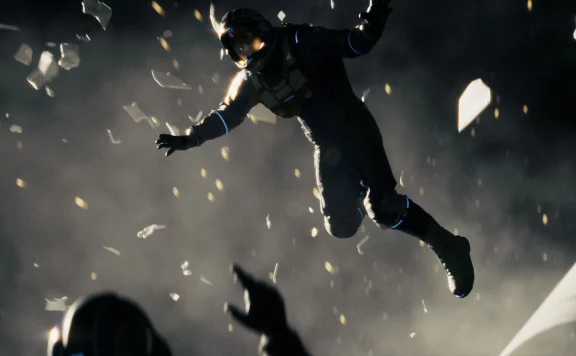
There is a sense of foreboding dread despite the friendly relationship between Simms and Carter. Unfortunately, things begin to descend into chaos when the Cassiopeia gets struck by something that pierces the ship. An unidentified organism begins to take hold of not only the ship, but the crew on board. What I loved most about Directive 8020 other than the cast and the story was the pacing. Threads of dread start to weave with the narrative and build slowly, and when those important choices come, you’re left struggling to make them.

Directive 8020 takes a lot of inspiration from John Carpenter’s The Thing. Knowing who to trust and who not to trust acts as the primary concern. This alien organism can mimic the crew. At times, you’re not sure if they are who they say they are or not. This makes decision-making much tougher, especially when you care about the crew. No spoilers, but having to choose whether to shoot a crew member or a mimic with only picking up on the smallest of cues is a lot. Other stressful interactions are littered throughout the story, and they never get easier.
What I wasn’t prepared for was the morality of a big reveal in the final quarter that changes the way you make your decisions. It’s a twist I didn’t see coming, but one that flips the story on its head. It’s a testament to Supermassive’s maturity and evolution as storytellers. Not only that, but there a multiple points where you’re free to rewind the story and explore other alternatives via the ‘Turning Point’ mechanic. Deaths can be reversed, and seeing new directions of your action’s consequences adds another layer of intrigue.
The gameplay of Directive 8020 has also been improved. It’s still linear, but movement feels freer, with various secrets to be found in the form of documents, video screens, and personal objects that add to the story. Climbing through vents and through windows, crouching behind computer desks to avoid detection, and trying not to step on broken glass at the risk of drawing attention all add to the horror. When the mysterious alien organisms begin to take on certain forms, playing the game becomes more of an action-adventure.
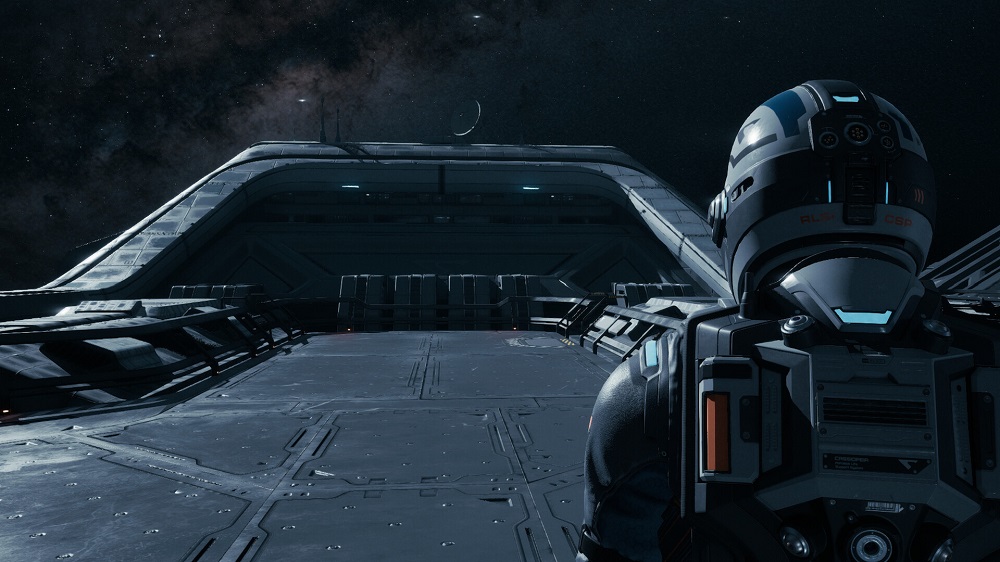
I did find some of the hiding and sneaking a little repetitive as it does happen quite a lot. Saying that, I jumped far too many times and one particular time I felt my soul leave my body. That horror often comes from the unknown; Directive 8020’s sound design is exceptional, and hearing so many different sounds emanating throughout the ship leaves you feeling on edge. It’s also a gorgeous game to look at. Character animations are so life-like. The ship itself is so detailed. Even a later mission on a planet leaves you speechless.
Directive 8020 is my favourite Supermassive game so far. It’s much more mature. Not just with its characters but also its approach to storytelling. There’s a deeply personal story at its centre, yet the science fiction elements are fantastic. I loved the characters right until the end (if they survived), and having multiple endings and branching paths made me go back once finished and explored what might have happened if I’d made a different decision. The gameplay sections are fun, and the general appeal was far beyond what I’d hoped it would be.