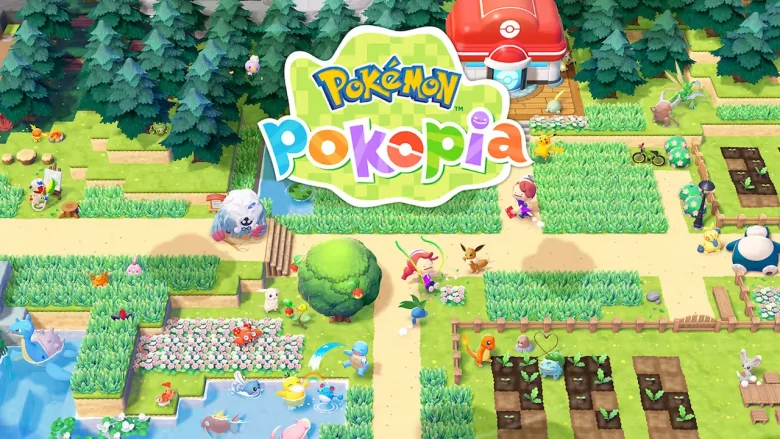
As much as I love them, cosy games and town builders are dime-a-dozen now. Whether you want cottagecore, cyberpunk, or high fantasy, there’s probably something out there that’ll tickle your fancy. Nintendo has now decided to join in the fun and has graced us with possibly the most perfect marriage: taking a cosy and addictive town builder and flavouring it with the stars of their catch ‘em all franchise: Pokemon. It’s a match made in heaven, frankly, and for those with even a passing interest in either of those things, you’re about to find your new obsession in Pokemon Pokopia.
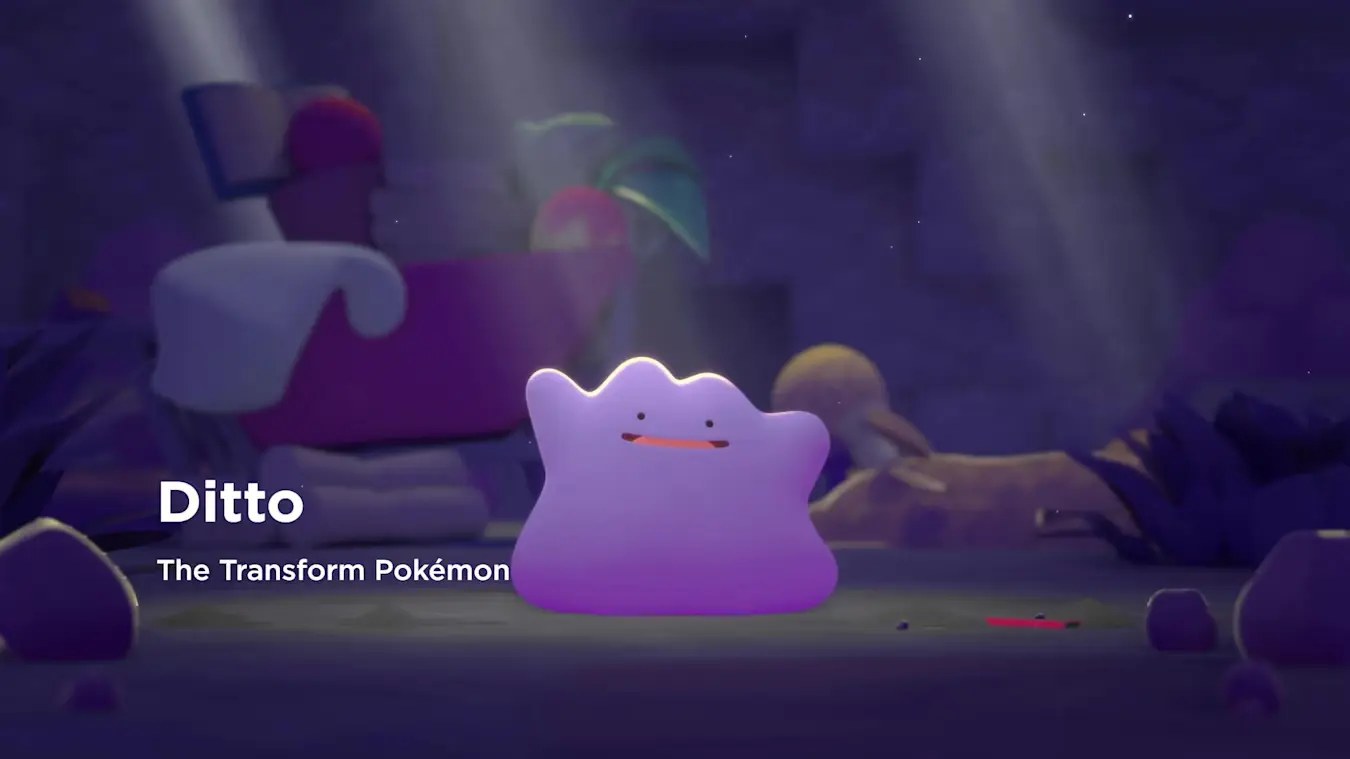
If you’ve played Dragon Quest Builders before then Pokopia will immediately feel familiar. It uses the same blocky design language, with a world made up of cubes, not dissimilar to Minecraft, but smaller and less intimidating. You’re thrust into this world as an adorable little Ditto, the shapeshifting jelly blob of a Pokemon, and you immediately meet Professor Tangrowth who’ll be a companion for the rest of your time in Pokopia. As the name suggests, he takes on the role of a teacher and mentor, and he’s studying the disappearance of all humankind because nobody seems to remember where they’ve gone. Together you step out of the cave you’ve awoken in and discover the vibrant world of Pokemon is looking more like it belongs in something like Fallout.
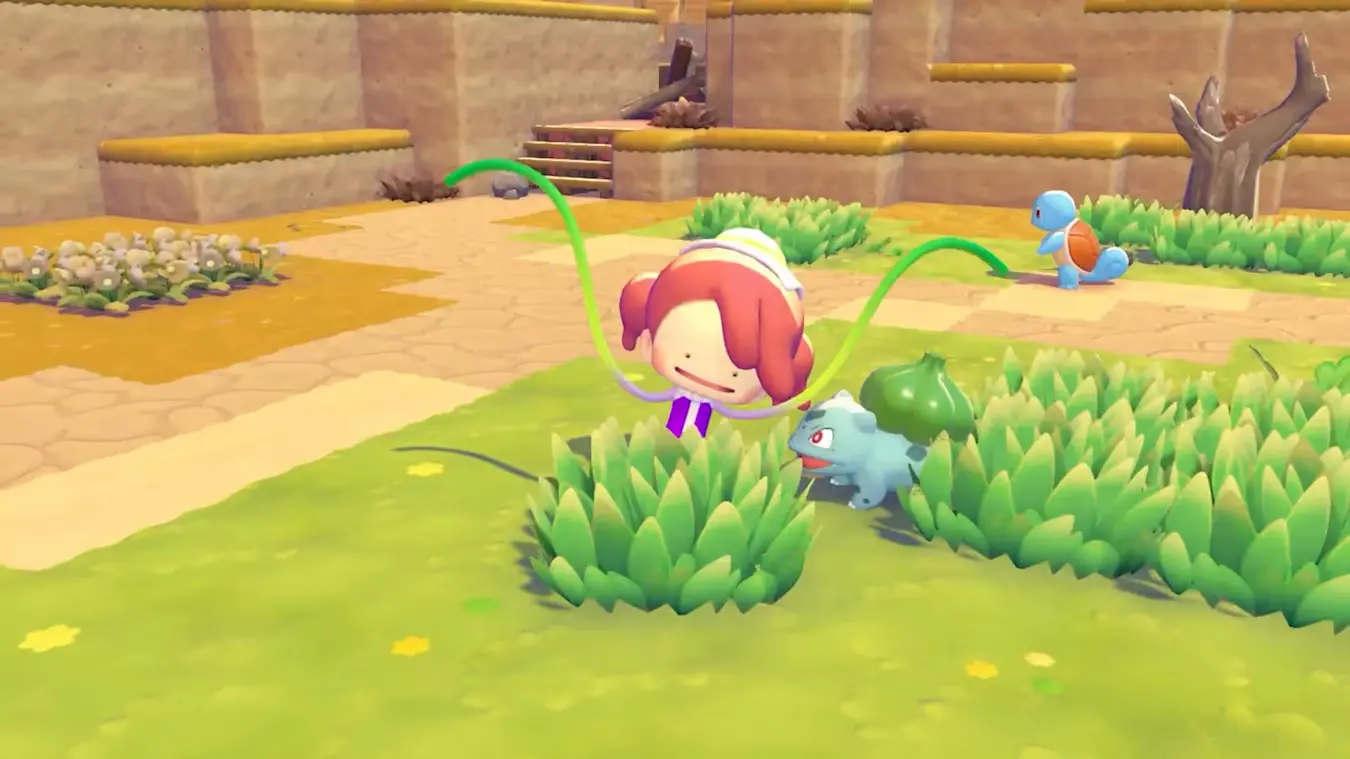
Together with Tangrowth, your aim is to rebuild civilisation and bring life back to the world, both Pokemon and humans. You’re quickly introduced to some basic mechanics, including creating Pokemon habitats. By clumping together certain blocks, such as long grass, you can create habitats that attract Pokemon to live there and your first 20 minutes or so are spent making homes for the original three starter Pokemon: Squirtle, Bulbasaur and Charmander. As a dirty Genwunner this was absolutely the way to immediately endear me to the game, and it was great to see them interact and speak with Ditto, sharing the collective confusion around the missing humans.
As Ditto is able to shapeshift, making friends with new Pokemon can open up new moves based on their abilities. You’ll learn Water Gun from Squirtle, meaning you can bring life back to the barren dirt. Bulbasaur teaches you Vine Whip so you can pull long grass up out of the ground. As you go on you’ll learn new moves that lend themselves to farming, terraforming and harvesting materials, providing a fun alternative to the usual solution of simply using tools. Each is accompanied by a little animation, whether it’s Ditto’s arms turning into scythes or a shell appearing on their back as they shoot water.
Pokopia is one of those games you could easily lose 20+ hours in the opening area alone. As you unlock new abilities you’ll be able to explore more of this area, finding new nooks and crannies showing hints of the past. It’s within your gift to choose how you interact with most of this: do you spend hours “tidying” up this wasteland, breathing life into its flora and creating elaborate homes for your Pokemon pals? Or do you spend more time on the critical path, planning to circle back when you’re better equipped?
I went with the latter, and I’m happy to say you don’t miss out on anything by doing this. The game does a great job of keeping you focused while still giving you plenty of freedom to approach tasks the way you want. You’ll find your time split between regular tasks that help out a specific Pokemon, and important quests that are highlighted in your journal and often involve multiple different stages. These usually lead to noteworthy conclusions, like bringing a Pokemon Centre back online or illuminating a previously dark and dingy area of the map. Along the way you’ll be building habitats to get new Pokemon to the area, including those with special skills that you’ll need to make use of. Each Pokemon has at least one skill, such as Builder, Trade or Generate, which you can use by getting them to follow you. You’ll often find things in the world you can’t impact alone, such as grime that needs cleansing or electricity that needs generating, so by bringing along a Pokemon with that attribute you can accomplish these tasks. It’s a neat system, and manages to translate the “gotta catch ‘em all” ethos from the main games into Pokopia without feeling forced.

The world itself is huge, and with plenty of vertical space to explore too I can easily see people putting dozens if not hundreds of hours into the game. You’ll soon find gates to other parts of the world too, and these are limited by your current level. You unlock the first two new areas together, again giving you a bit of flexibility in how you progress through the game while still giving the structure needed to avoid it feeling completely open-ended. As you progress you’ll learn about introducing electricity or infrastructure to the world and these can then be added to any of the areas you’ve visited previously. You can also use everything you’ve learnt in Palette Town, a sandbox area that you can fully customise to your tastes, and even play with friends (even on Switch 1 using GameShare!).

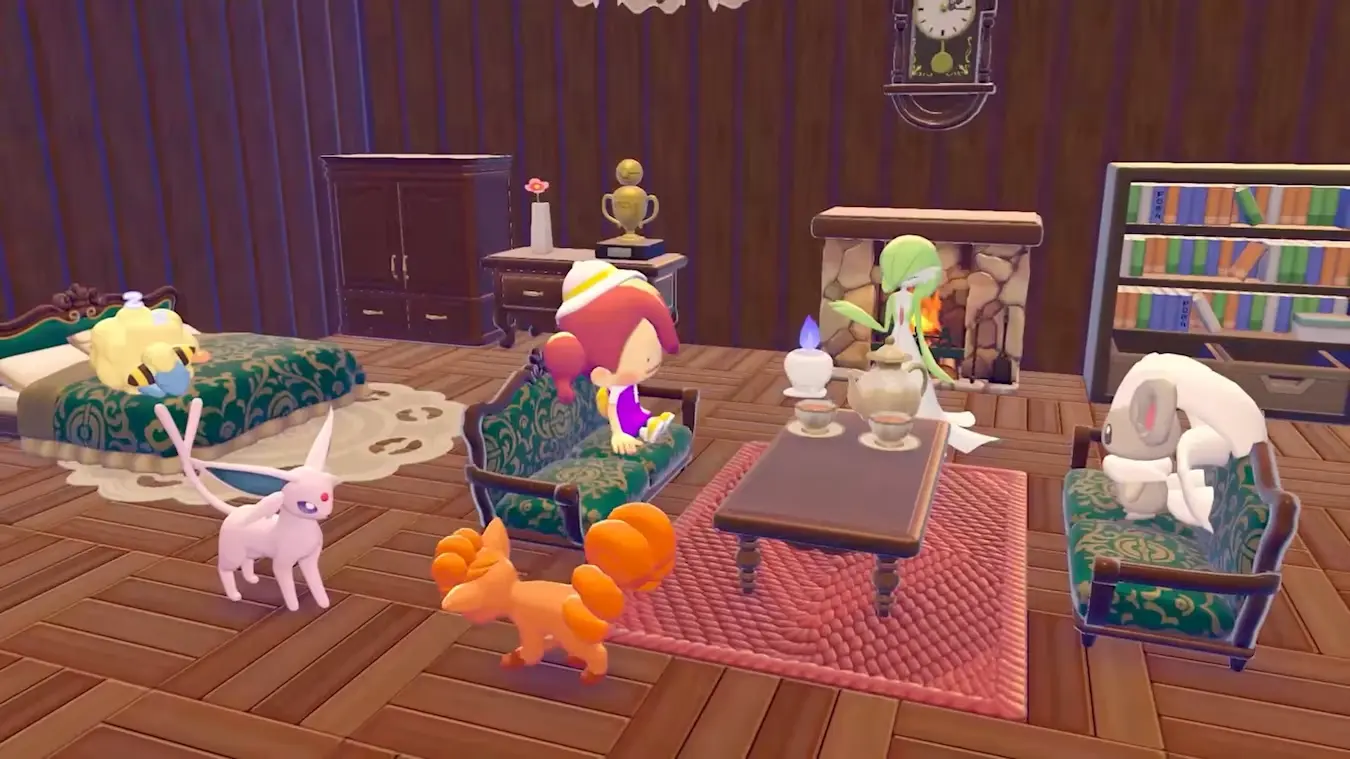
As a Pokemon game exclusive to the Switch 2, Pokopia is as bright and vibrant as you’d expect. Visually it’s a lovely game, despite you essentially living in a wasteland, and the Pokemon themselves are the real stars. They’re beautifully animated, and watching them go about their day is a joy. The game even notifies you when they’re doing something cute or special, in case you want to snap an in-game photo. Ditto is adorable too, with a derpy smile and somewhat ungainly gait that really sells the idea that they’re just pretending to be a human.
The audio is top notch too, and it regularly triggered little bursts of nostalgic joy in my brain. It uses the classic tunes from the main games in new and interesting ways, with my favourite being the evolution music playing as you learn a new move, but I noticed several iconic pieces of Pokemon music throughout my time with the game.
I don’t have any real complaints about Pokopia other than, at times, it can be a little overwhelming. The areas are huge, and the piddly map in the corner of your Pokedex isn’t the best when you’re trying to remember which cave led to Palette Town and which led to the trapped Onyx. It’s easy to trigger a lot of quests too, and while the game always clearly highlights the important ones, I still found my poor brain fretting about finding the optimal order to complete them in and trying to remember which route to take to do so.
Pokemon Pokopia is a fantastic entry to the cosy and town-building genres, and easily one of the greatest Pokemon games I’ve played. It ticks all the boxes for me, from endless ways to build and customise environments to scratching my nostalgic Pokemon itches with its cast of creatures and iconic soundtrack. Whether you’re a newcomer or a seasoned trainer, Pokopia is a game everyone should try.