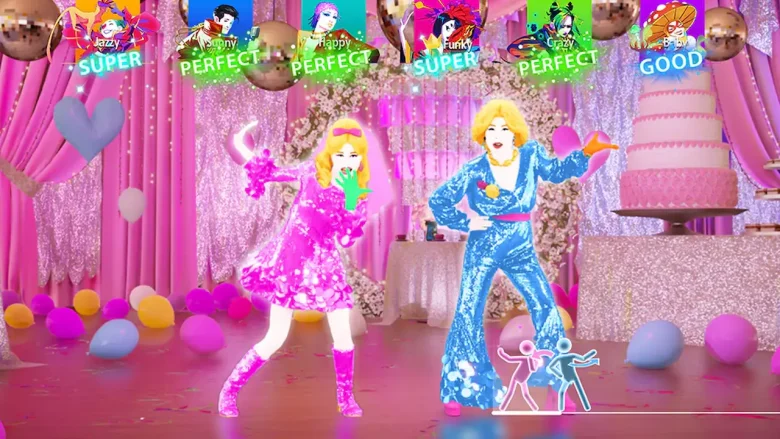
With Just Dance: Decades of Hits available now, we thought it was a fine time to chat to Benjamin Jouffret, Costume & Character Director, and Estelle Manas, Choreograph Director about the game.
We had the chance to ask about the story mode, the designs and outfits, who the team would go dancing with if they could, and a whole lot more. Without further ado then, let’s get into it.
There’s a pretty extensive story mode in Just Dance this year, did this impact the character design process?
Benjamin: Yes, it clearly had an impact on some characters. The ones designed specifically for the Adventure mode, we spent more time on than on the game’s regular characters. We needed consistency between the characters, an affiliation, and characters that were really accessible, that reach a fairly broad audience and fit the Just Dance target. So the thinking time and the level of detail go further than on some maps.
Some of the designs and outfits in Just Dance this year are spectacular, how do you decide which designs fit which songs?
Benjamin: The designs aren’t split up by song: we’re brought a song, and that’s what we design from. So it really depends on the songs and the artists. Some inspire very strong, very creative concepts, others less so, but that doesn’t mean they’re any worse. It just means the universe called for something simpler, whether for the costume, the environment, and so on. And when we have artists who already have an ultra-developed, very inspiring universe, it naturally pushes us even more to create exuberant, striking characters.
If you could go out dancing with one Just Dance character you’ve worked on, who would it be?
Estelle: I’d say the Flashy Star coach from the Wannabe map. She has this really wild, very “London night out” side: you know you’re going to have a great evening with her. Otherwise, maybe Midnight Sun: she’s festive but very summery, you feel like you’re going to a barefoot full moon party with her.
Benjamin: For me, it’d be the coach from Sing Hallelujah, so he can show me his workout and I can get abs that nice.
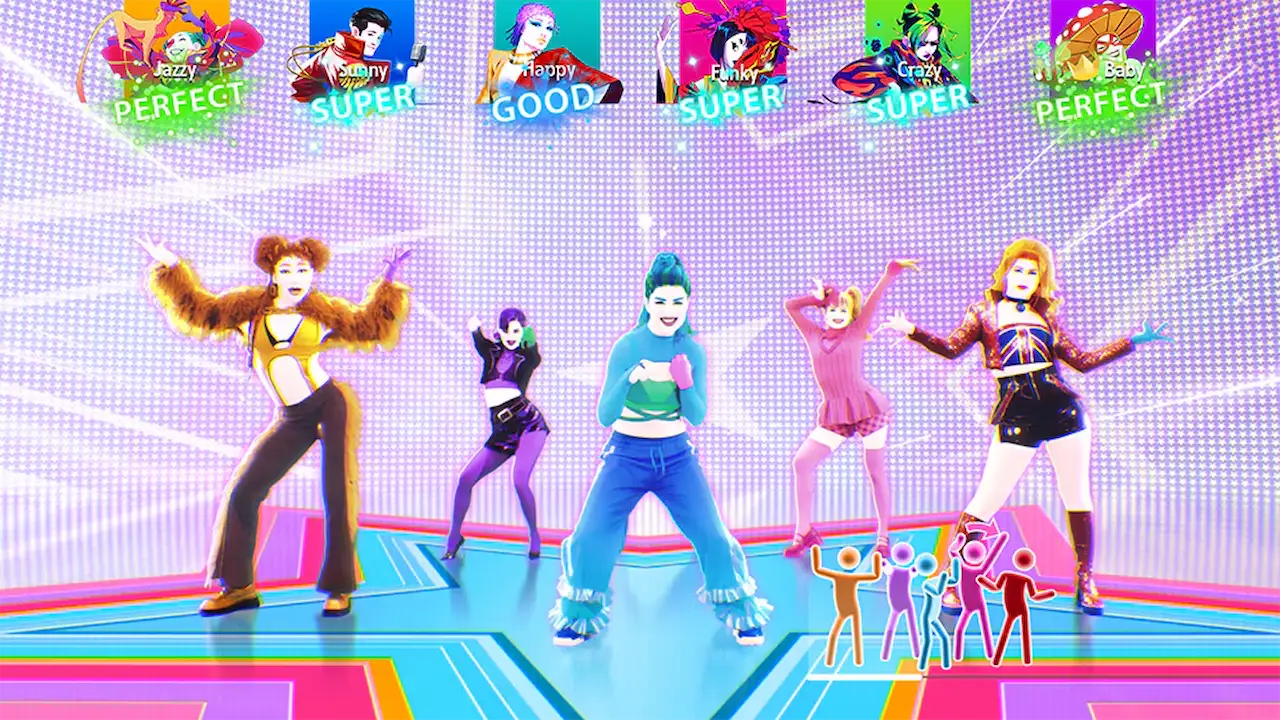
How much does choreographing a dance for Just Dance differ to choreographing a dance outside of video games?
Estelle: Creating a choreography for Just Dance is really different. It has to be nice to watch and make sense with regard to the concept we defined with the creative teams. It has to make people want to play and dance, and above all be suited to the players and the constraints of the game: the controller in the right hand, clear, readable movements so that people can reproduce them, and which fit within the camera’s detection criteria for scoring. There’s also the constraint of difficulty. When you create a choreography for a music video or a show, you have no constraints of that kind: you do what you feel in response to the music. We have to pay attention to them. In the end, you don’t create a choreography at all the same way when it’s designed for an active audience that dances themselves.
Most people who play Just Dance aren’t professional dancers. Is it difficult to find dances that people of all skills will be able to replicate?
Estelle: Yes, it takes a lot of research, especially to keep renewing ourselves. The game has been around for a long time, an enormous number of moves have already been done since the first instalments, and we have to find simplicity while still bringing something new. We have to avoid boring players and keep creativity going, so that the choreography isn’t too redundant despite the repetitions. Because for it to be as simple as possible, you need repetition and technically easy moves, so as not to frustrate those with no dance background. The goal is for them not to give up and to be carried along by an accessible choreography. What’s difficult is finding fun in simple moves and repetitions while still renewing ourselves compared to everything that’s been done over the years. You might think working on easy choreographies is the simplest thing, when in reality it’s almost what demands the most creative work from us to find originality in it.
I love that every year Just Dance adds seated songs for people with physical limitations. How do you go about choreographing these?
Estelle: First, we put ourselves in the situation: we do all the rehearsals seated, naturally. We look for moves and combinations that give a real feeling of dance, real enjoyment, even in a seated position. We’re also constrained, without always thinking about it, by the framing of the screen. On the seated maps, we often use tighter shots. If we lower our arms, for example, we go out of frame and the players can no longer see the move, so it isn’t readable. So we hold ourselves to the frame that will be shown, and we need to know the directing intentions. We’ve also done maps for example, where there was a table, which obviously constrained our movements.
We’ve also done what we call “seated but not really” maps: they focus on the upper body, the dancers are standing, and it’s the framing that means the legs aren’t used. This year there’s Hello, where both dancers are seated. It also raises the question of originality: without coordination from the legs, you have to rack your brain to keep finding different things.
Which of the era featured in Just Dance: Decades of Hits is your personal favourite?
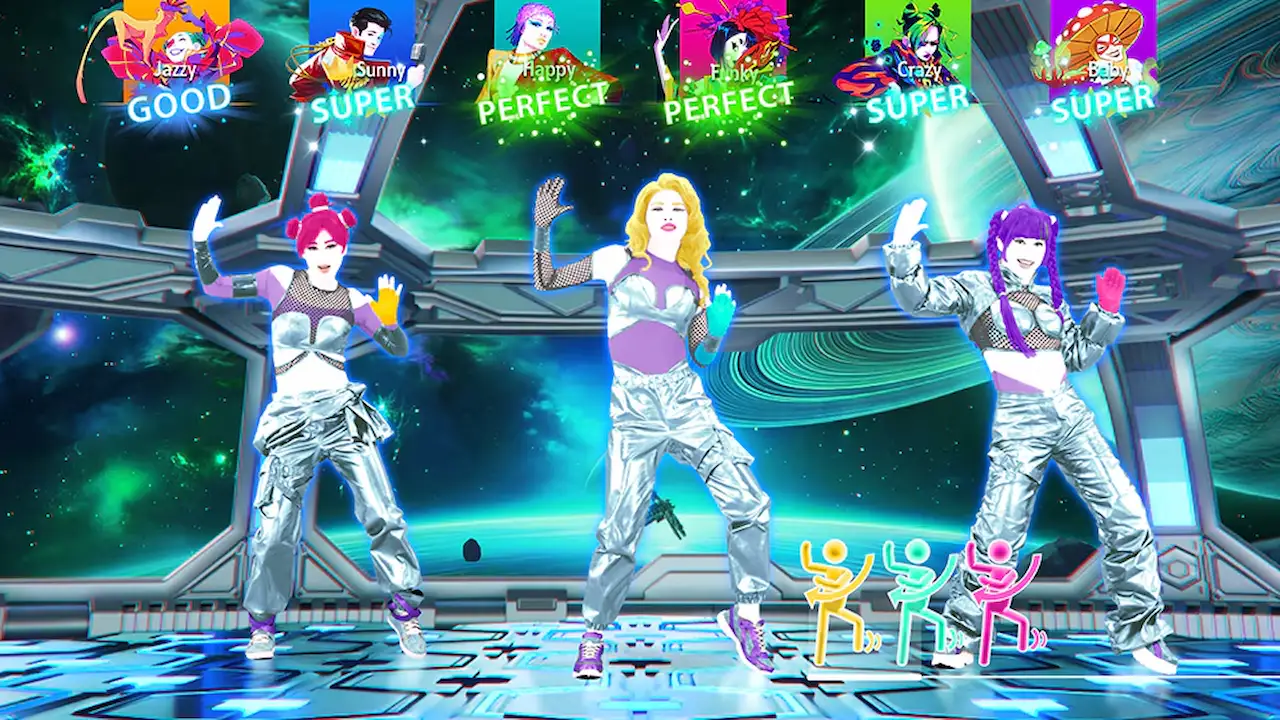
Estelle: I’d say the 2020s, but that’s a bit of a cop-out! There’s Manchild, Midnight Sun… tracks that speak to us a bit more in terms of style. But if I go retro, I’d say the 80s, because there are very different styles: hip-hop, disco, pop with Madonna… It brings diversity into the nostalgia, and it’s quite fun to have so many different styles in a single decade.
Benjamin: For me, you can put the 2020s, because I love K-pop and that’s the decade where there’s been some. It’s the one I play the most, and in full try-hard mode.
Are there any songs you haven’t worked on for Just Dance yet that you’d like to?
Estelle: There are lots we’d love to work on, and that’s a good sign: it means there are plenty of great songs left to use, to choreograph, and whose universes we can imagine. Some aren’t PEGI 3, so we’ll probably never get them. RIP Gasolina. Every year it’s my running joke: I put Gasolina back on the table, but it’s not PEGI 3, so I think I’ll never get them. Among more recent ones, we were talking about it the other day, I’d like to do a Rosalía track. It’s been a very long time, and it would bring something we haven’t done in a while, musically and choreographically. I’d also like to do Candyman by Christina Aguilera, which I find super playful: she immediately establishes a universe, a style.
Benjamin: Me, I’d like us to do more musical theatre songs: Hairspray, Chicago… really cool, danceable pieces originally designed for choreography, and we’re missing that. My guilty pleasure, I don’t know if people know it, is that I’m a fan of the Disney Descendants films. I love the music, and I’d love to have one in the game someday. It’s really a personal thing.
When playing Just Dance yourself, what are some of your favourite songs to dance to?
Estelle: Midnight Sun, I find it really nice to dance to, and I really like Manchild too. Personally, I like things that aren’t too difficult, but I do like a little challenge, because it’s always satisfying to improve and catch the musical subtleties slipped in here and there. I prefer medium or hard difficulty songs: it’s rewarding and fun, I like that playful side. I’ll also admit I like rather feminine choreos that keep the groove. And I like songs suited to children in terms of difficulty, because it’s always a pleasure to dance with them: they’re not frustrated, we can really all dance together and have fun.
Benjamin: For me, it’s kind of split in two. For my usual routines, when I play without overthinking it, I prefer girlie, sassy pop maps: fairly simple things, but with feminine, very pop attitudes. At the opposite end, when I feel like challenging myself, it’s more the official choreos, especially K-pop, or the K/DA maps that drive me crazy. To give an example from Decades of Hits, one I really loved and played in try-hard mode was More & More. It was hard, but it’s exactly the kind of map that’s incredible, especially when you start getting it after practicing several times. We need more K-pop, honestly!
Thanks to Estelle and Benjamin for their time. Just Dance: Decades of Hits is out now for PC and consoles.