

The Metroidvania genre has been around for many decades at this point, but my introduction to it didn’t start right at the beginning. For me my journey into one of gaming’s greatest genres began on the Game Boy Advance, with titles in both of the series that make up the slightly cringey genre name. I fell pretty hard into Metroidvania because of these spectacular titles, and now that we get more than you could ever play releasing every year I’m a pretty happy chap. Clockwork Ambrosia made me feel like I was taking a trip back to my teenage years, with an incredibly traditional Metroidvania in the best possible sense.
In Clockwork Ambrosia you play as Iris, an engineer on a journey to stop people messing about with a powerful new material. For a very long time though you won’t really realise this, because the story of the game isn’t ever the focus. You’ll chit chat with NPCs and learn more about the world as you go, but this is a game much closer to those earlier genre offerings that want you to dive into the exploration and shooting without worrying about much else.
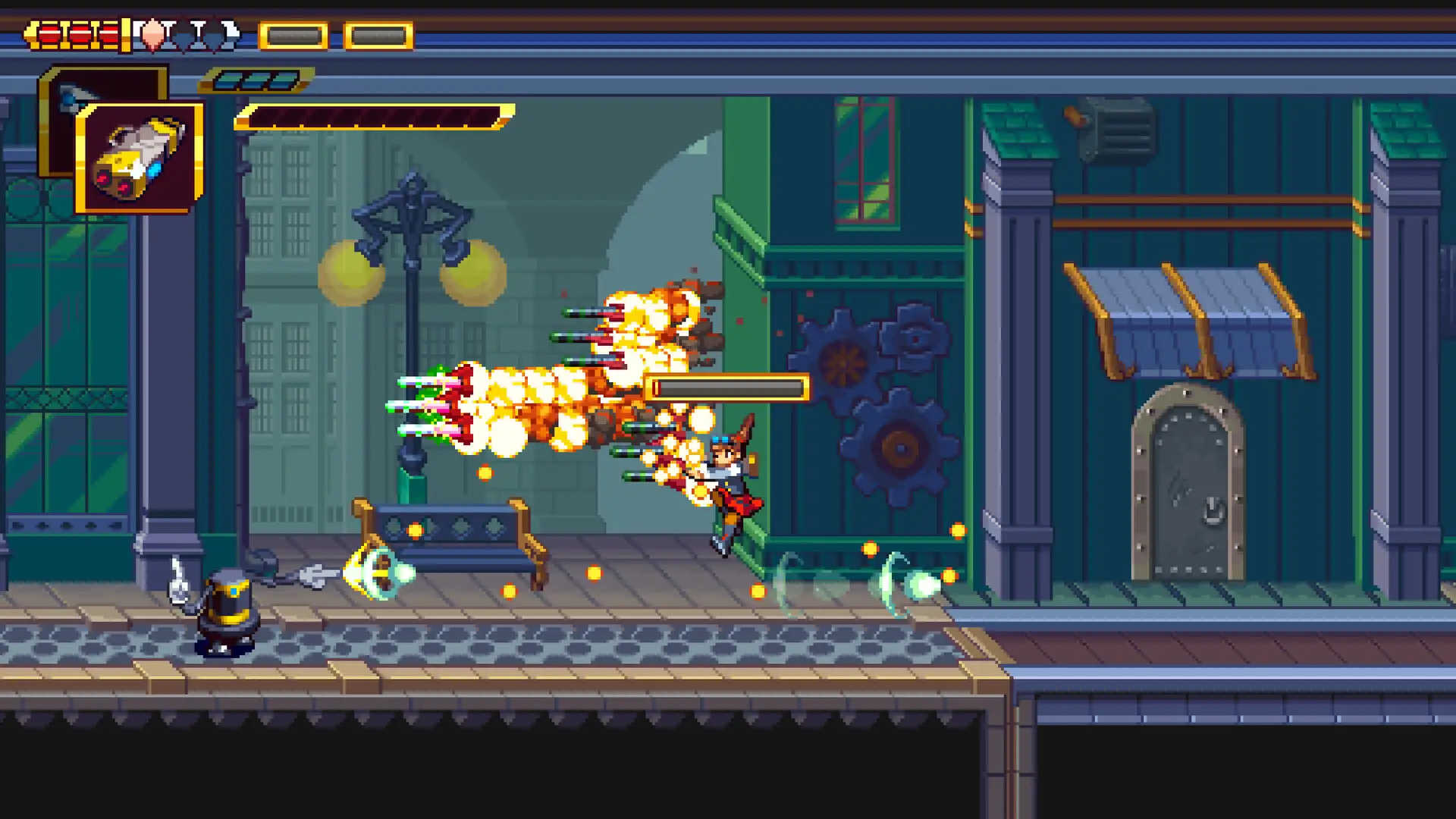
Iris herself controls really well, although admittedly and expectedly her abilities are rather limited at the start of the game. It certainly doesn’t take long to gain access to your first weapon though, and use it to blast blobs and birds that want to chomp down on your engineer ass. I was having fun with this simple but effective run and gun combat, but I had no idea what I was getting myself into.
Although the gunplay of Clockwork Ambrosia feels familiar and perhaps even a little safe at the start of the game, it evolves very quickly. This is because of the different mods you’ll find as you explore the world, which function as your main power ups instead of the standard granular health bar increases. Every one of the four main weapons has around six different mod slots you can add specific mods to, and they change how they work entirely. At first these mods seem fairly normal, providing things like faster shots or shorter charge times. This doesn’t last long.
When I found the revolvers I was incredibly happy, excited to use a quick weapon with plenty of ammo. After a few mods though I made a monstrosity, which no longer fired in a straight line and had bouncing bullets that left chaos in my wake. It wasn’t a particularly good gun but it was a fun one, so I refused to use better mods for a while. With my rocket launcher I added a “bombing run” mod that spat tiny missiles down from my main projectile, which I thought would just help with ground based enemies. It actually also allowed me to blow up some floors to access new areas, before I had unlocked the weapon that was supposed to be used for this. With over a hundred different mods I’d be surprised if this is the only way to sequence break the game, and that excites me greatly.
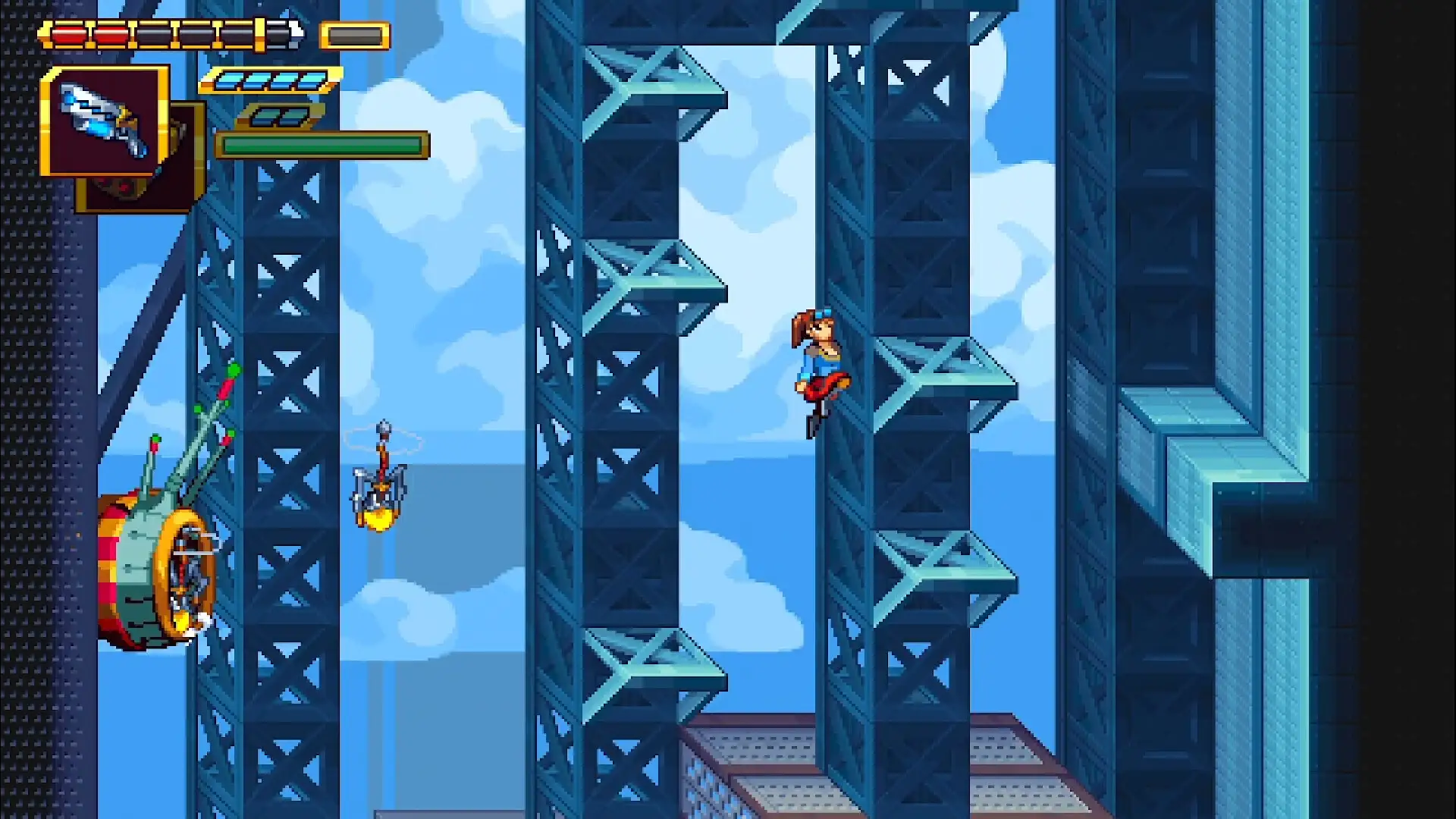
Not all of the ways you access new places are gun based though, with plenty of different relics providing handy new abilities. You recognise some familiar skills if you’re a fan of similar games, with a dash that lets you cross gaps, wall jumps, and ceiling slinging skills all waiting for you to find them hidden throughout a sprawling world. The familiar satisfaction of gaining new abilities was as welcome as ever, that’s for sure.
The exploration of Clockwork Ambrosia is one of my favourite aspects of the game, and a lot of this is because it doesn’t make the world too confusing. So many newer Metroidvania games have complex maps with rooms of all shapes and sizes, and it can be easy to get lost. Clockwork Ambrosia takes things back to basics, with square rooms and a map that just looks like a big coloured grid. I found it so much easier to understand the layout of the world because of this, and the addition of some modern conveniences like different labels helps too.
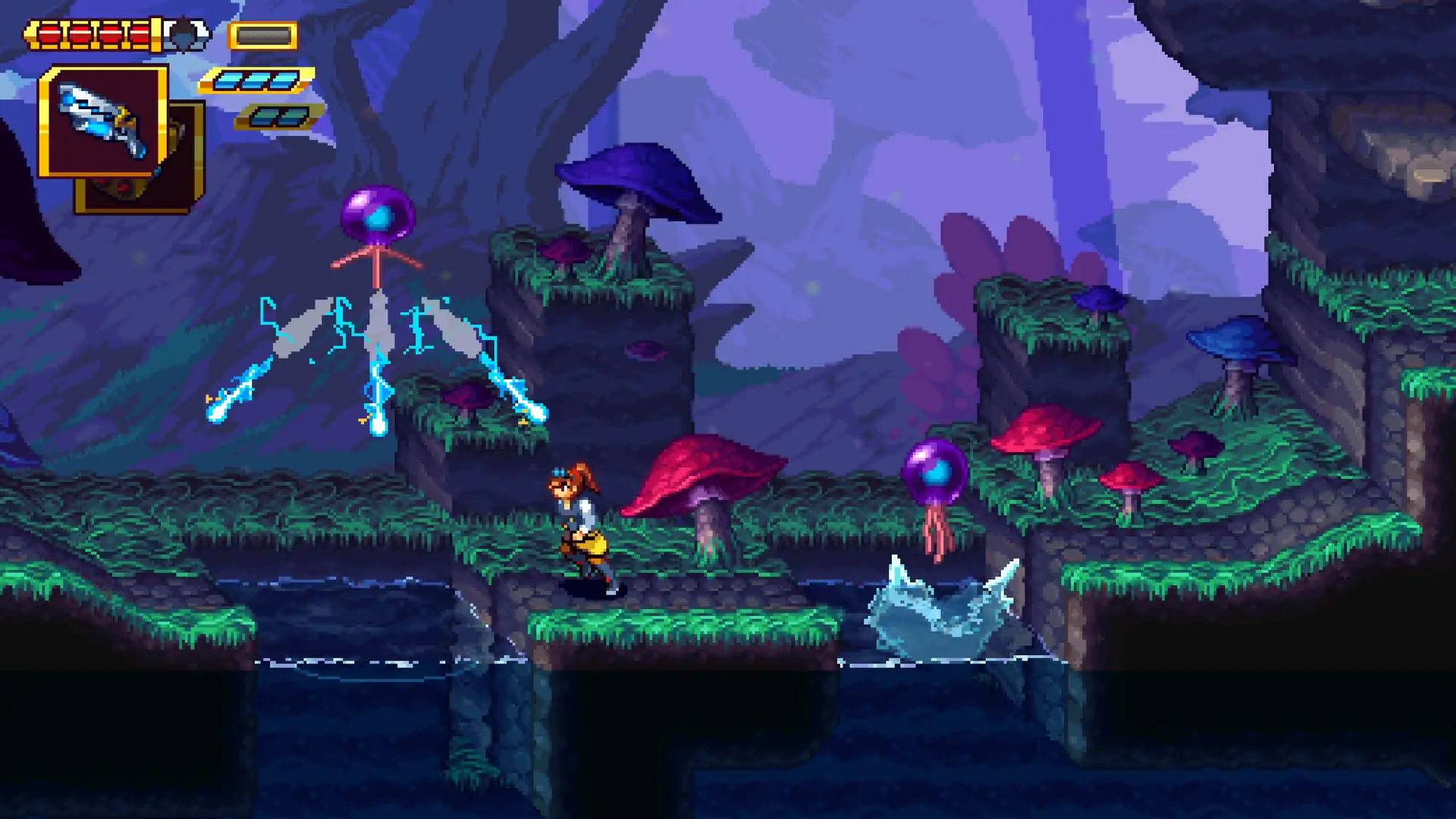
There’s a lot to sink your teeth into in this Metroidvania throwback, but not everyone will appreciate its somewhat retro charms. One issue I had was with switching weapons, because you can do it two ways. With two shoulder buttons that swap your gun in entirely different ways (one temporarily when held and the other outright) it’s incredibly easy to get confused and then fire the wrong weapon. The early enemies get a little samey too, with lots of repeat slimes and owls. It’s not a massive issue though, and the tricky bosses as the game progresses more than make up for it.
Clockwork Ambrosia feels like a Metroidvania I’d have loved as a teen, and would’ve played through multiple times trying out different mod combinations. It might be a bit too old school for some, but its clever fun gunplay does a lot to show off its creative side.