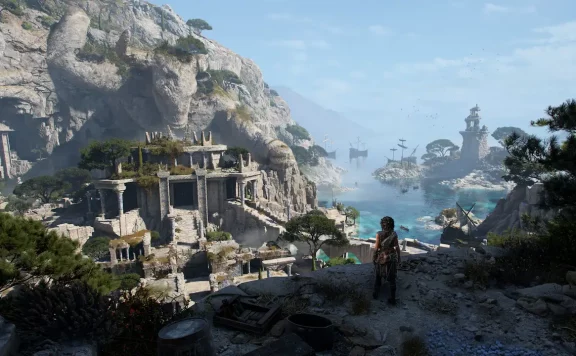
Asobo’s A Plague Tale saga, set in France during the Hundred Years War, has been a predominantly stealth-focused series, following teenager Amicia de Rune and her little brother Hugo, whose connection to the supernatural Macula disease gives him the ability to control swarms of plague rats. In A Plague Tale: Requiem, the second game, Amicia is joined by plunderer Sophia, a more battle-hardened character who aids her and Hugo on their journey. Now in Resonance: A Plague Tale Legacy, it’s Sophia taking centre stage.
While the ending of Requiem hinted at a seismic shift in whatever comes next, Resonance sidesteps this by jumping back in time fifteen years, showing a younger and less experienced Sophia on the run from her former gang of plunderers (read: pirates) in Crete. The preview build I played includes chapters 5 and 6, which seems a curious offering – though it seems that Asobo wants to keep as much of the story under wraps as possible before release. And frankly, it’s easy to see why.
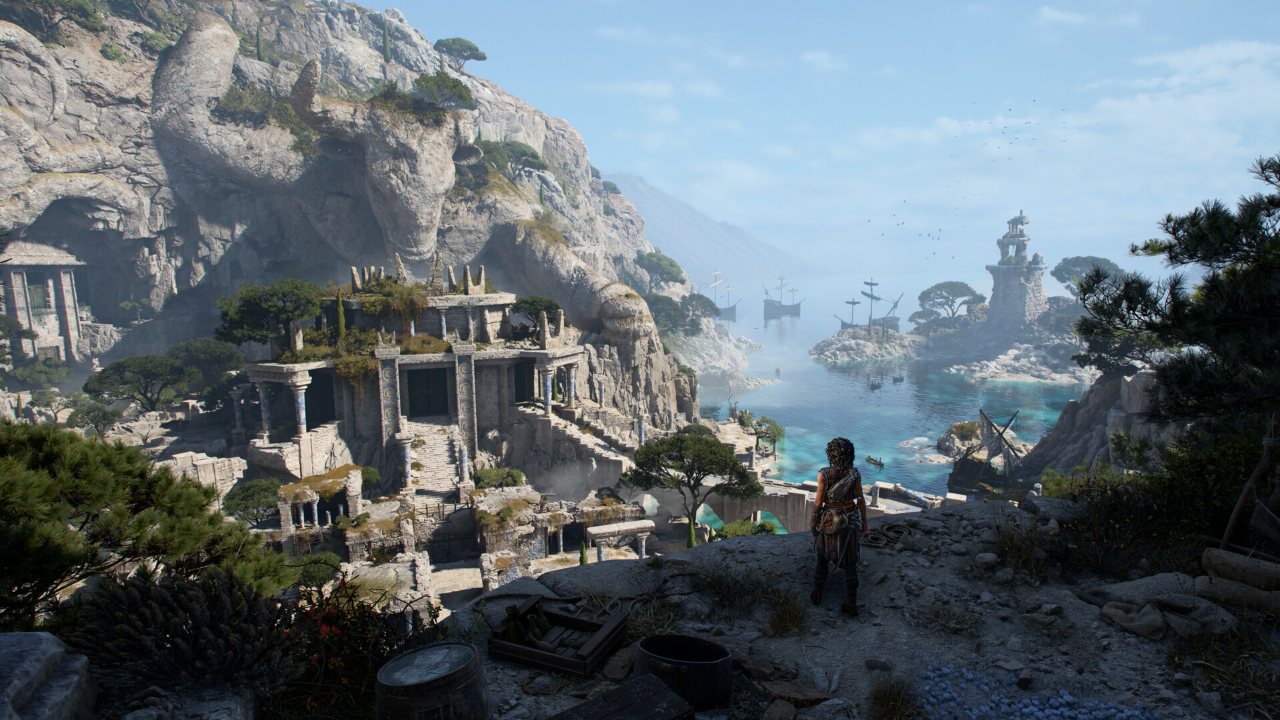
These two chapters do provide an informative look into what’s coming though. For example, Chapter 5 sees Sophia travelling with Leni, a young woman who works as a useful tool for solving various puzzles. She’s able to activate levers and hold things in position to help Sophia navigate the environment, she can fight pretty well, and will even offer puzzle hints if you get stuck. Chapter 6, on the other hand, separates Sophia and Leni, introducing the horror-stealth elements for which the series is known, and also offering a glimpse of a second playable character when the narrative switches to the distant past.
I won’t spoil any more of the story elements here, but suffice to say that Resonance: A Plague Tale Legacy is following a completely different path to the previous games while still maintaining a tangential link to the Macula disease. Where it really differs, though, is in the core mechanics. Whereas Amicia spent all her time sneaking around, assembling ammunition from various materials to use with her slingshot, Sophia has no such restrictions on her fighting abilities.
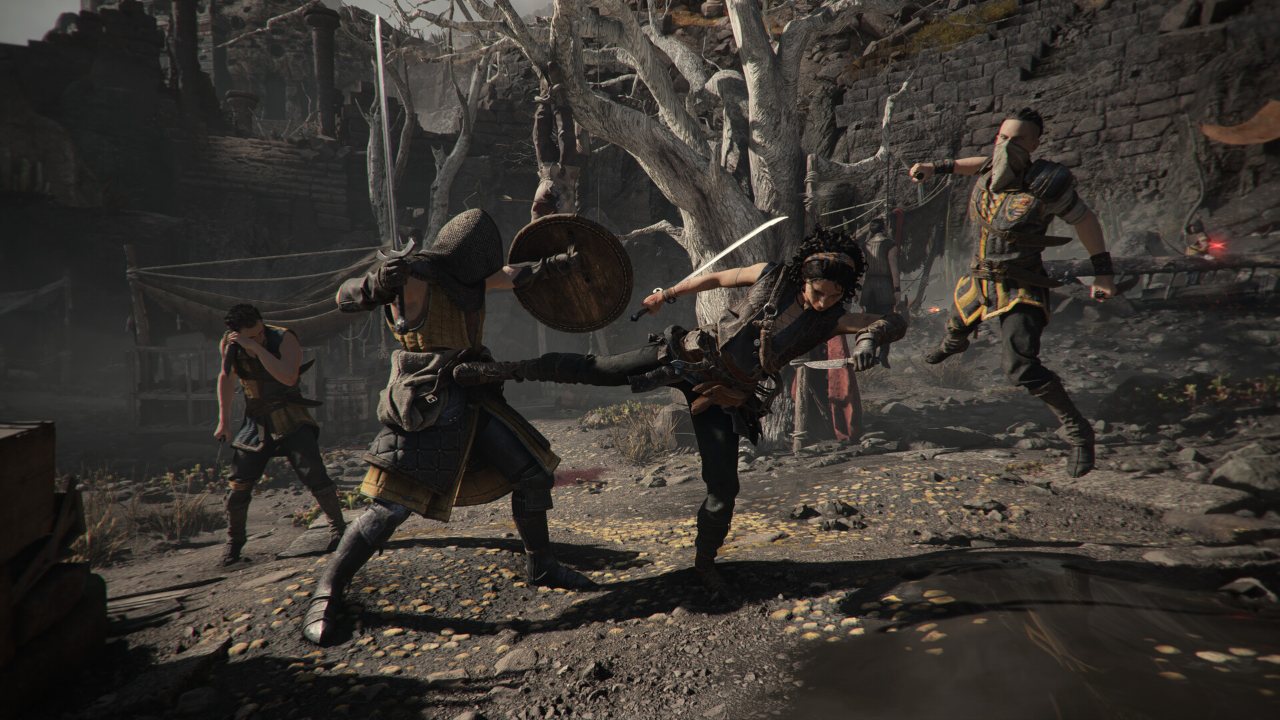
Combat is slick and satisfying as Sophia wields a cutlass and dagger, dealing deadly combos, parrying, dodging, and breaking the enemy’s defences to deliver brutal finishers and takedowns. She can only take three direct hits, which are replenished when she kills, which encourages a combination of focused aggression and careful, timing-based defence. Considering the combat in the previous games was purely based on ranged damage or quick-time escapes, Asobo has really impressed me with the way Sophia moves. She also has a grappling hook for crossing gaps, scaling walls, and dragging ranged enemies off vantage points to dispatch them on the ground.
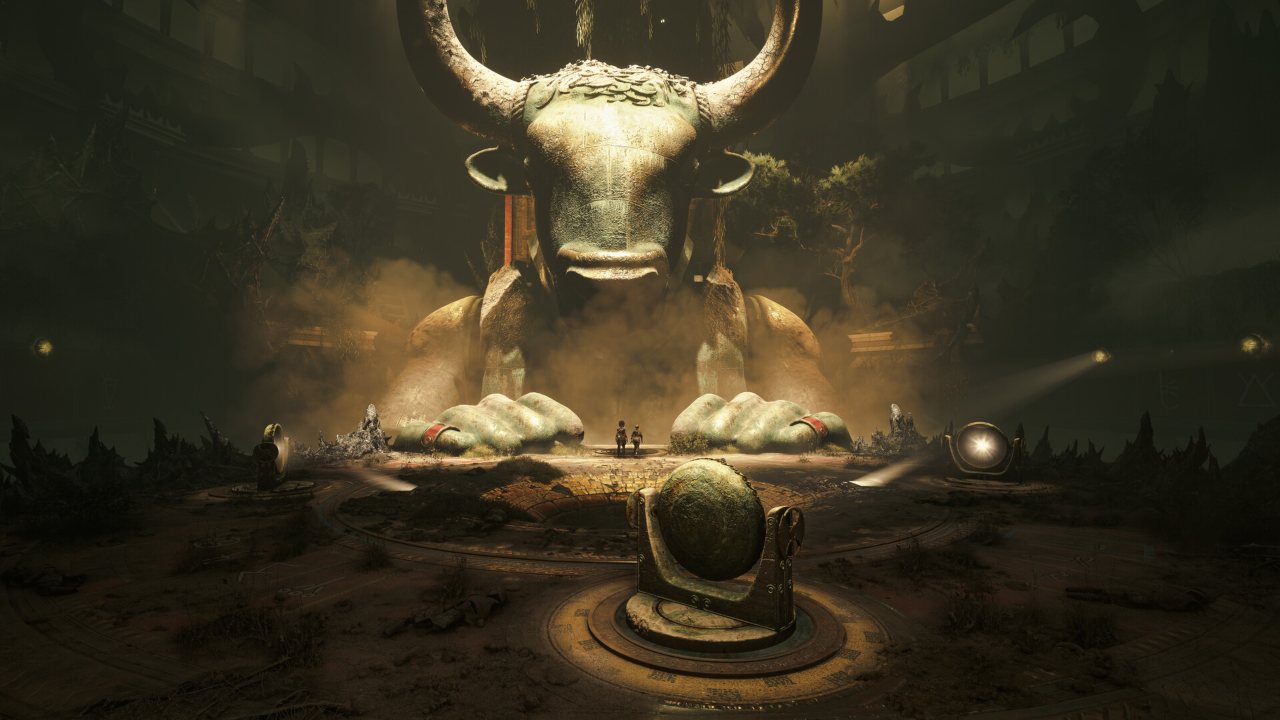
Exploration is encouraged, as there are plenty of hidden items to be found such as bracelets, armbands, trinkets, and earrings which impart passive buffs to Sophia, combining with the skill tree to offer up a rudimentary but robust build system. Areas seem to be mostly linear, though Chapter 5 at least offers a choice of which order to approach its core puzzles, most of which involve using an ancient device to refract light into three coloured beams, which you shine onto matching reflectors in order to open doors or activate mechanisms. Other puzzles focused on moving mirrors to redirect light beams and remove corruption or activate switches. None of them were too hard, and seem to be mostly on par with the puzzles in the previous games.
The only thing I felt a little disappointed by were the Resonance Points, or to be more specific, how you acquire them. They’re used to unlock skills and abilities on the various trees, and most are awarded for solving puzzles and defeating groups of enemies, but now and then you just find them on the floor in the shape of little ornate shells and it feels weird that this is a thing. It’s almost as though Asobo realised the testers weren’t skilling up quickly enough and scattered some freebies around.
Another thing that impressed me is how good Resonance: A Plague Tale Legacy looks. The outside environments are gorgeous, presenting a version of the classic Grecian paradise. Inside, the detail and atmosphere are on point, too, and facial animations and lip-synching during cutscenes help to tell what’s shaping up to be a compelling original story.
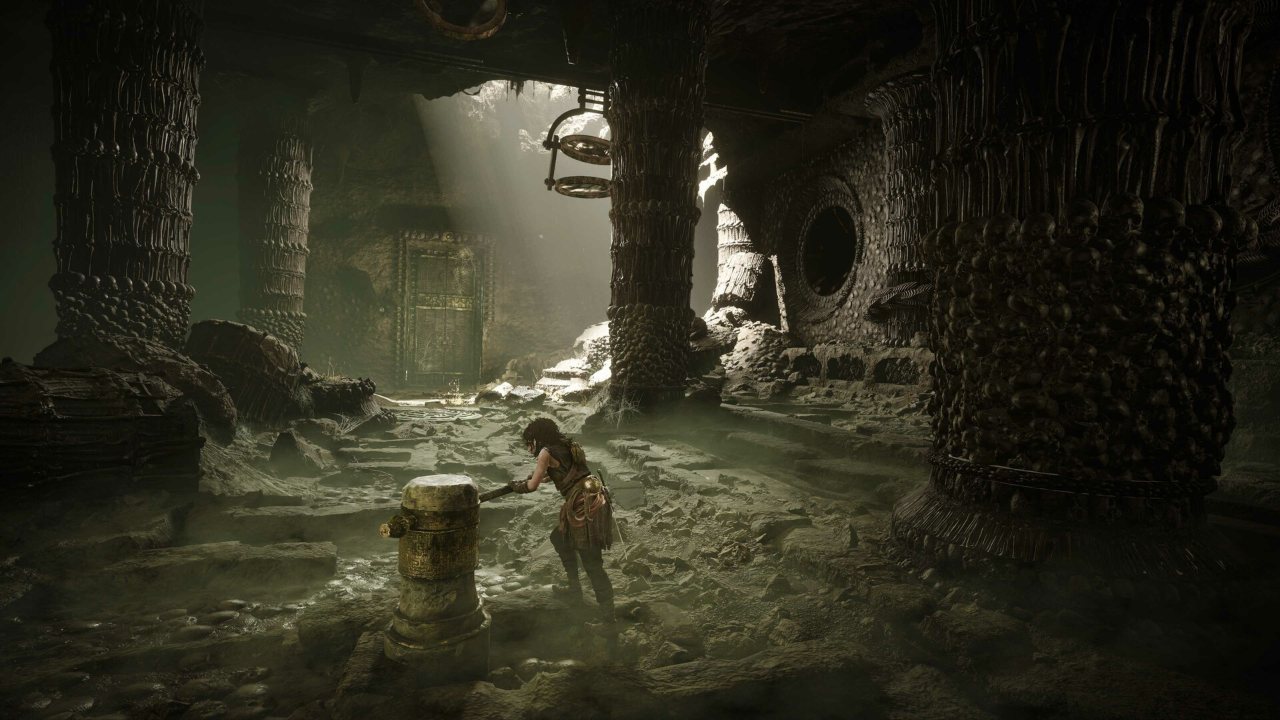
Although I struggled with the build initially thanks to some Nvidia shenanigans, the build I played was pretty solid. Besides some jarring slowdowns as I entered new areas, the overall performance gives me confidence for the upcoming launch.
A distinct lack of rats might give some cause for concern, but rest assured: what I’ve seen in two hours of playtime is more than enough to convince me that Asobo know exactly what they’re doing in Resonance: A Plague Tale Legacy. The shift to Tomb Raider-style traversal and fast, brutal melee combat will definitely be a leap for anyone playing the games one after another, but don’t let that dampen your excitement for another visit to Asobo’s beautiful but macabre world.
We played Resonance: A Plague Tale Legacy on PC. It is set for release on Steam, PS5, and XBOX on 27 August 2026.