I don’t think even the more hardcore of series fans are quite ready for how big Fire Emblem: Fortune’s Weave is. I’ve sat down and thought about how to explain the size of the game numerous times before writing, and still feel concerned I will be unable to express how all encompassing and addictive it is without writing an actual book on it, or how it will threaten to take over your life, such is the enormity of the scope and span that it has to offer. Indeed, until I played Fire Emblem: Fortune’s Weave, I would have said the “longest” game I’ve ever played is Persona 5 Royale, though I’m not actually sure that’s the case any more.
Saying it plainly: there are some people out there that this will simply be too much for. I’m going to tread incredibly carefully around story and spoilers, but I do want to lay out the structure of Fire Emblem: Fortune’s Weave here, so you can understand the magnitude of the game that’s on offer.
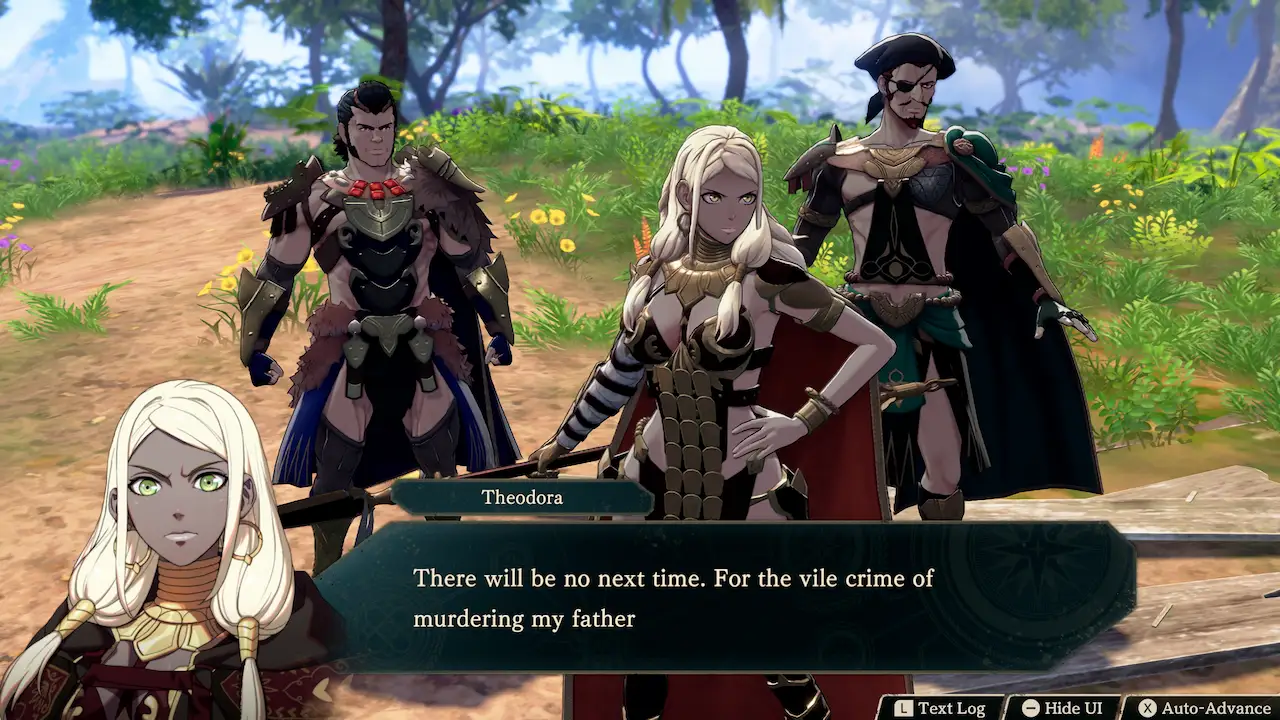
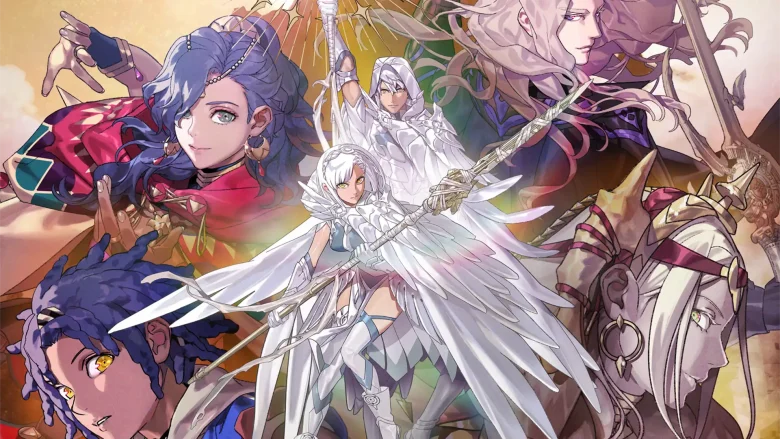
Fortune’s Weave is broken up into three parts, by and large. At the start of part one you’ll pick one of the four heroes you’ve seen in the trailers: Cai, Leda, Dietrich, and Theodora. Whomever you pick, you will interact with an enormous cast of (mostly recruitable) characters throughout the story, including these main characters. I’m going to say, conservatively, that part one took me around 25-30 hours. I’ve played a lot of Fire Emblem games, so I fast forwarded a lot of battle animations after a while, and I’ve held down “A” so much during enemy turns, map movements, and other interactions, my thumb ended up hurting now and then. That’s why I say it’s a conservative estimate, because I’m used to these games.
The game is set in the Empire of Dagda, and it does skip time a bit, though not too much in the actual act of playing of the main parts. There’s so many characters, both human and divine, that the storylines on offer would put Game of Thrones to shame. I picked Leda for my first character in part one, and her character is all about revenge, offering a genuinely dark throughline for her growing coterie of friends and helpers.
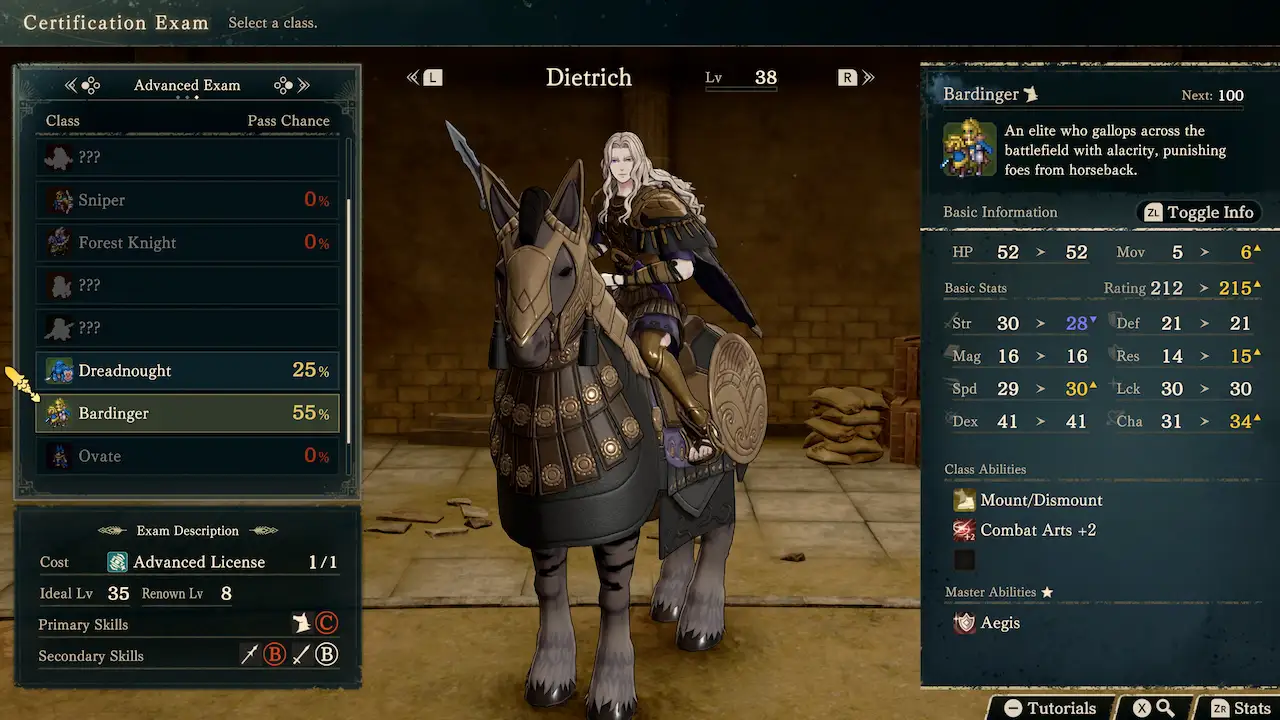
Everything you’d expect from a Fire Emblem title is here. The battles and fights are as good as ever. You can train, change classes (and there seems more classes than ever before, unless my memory is failing me), interact with your crew, take baths together, dine out with your posse, and more; but everything is aimed at improving your relationships, your skills, and your abilities within a class type. Doing things costs time, currency, or motivation (of which everyone has three and you can recharge in certain ways within a week-long cycle). The most important factor for Fortune’s Weave, though, is time.
Between main missions, you see, you have free time. Reminiscent of Persona, or perhaps more accurately, Metaphor ReFantazio, you will have a turn limit that progresses as you commit to actions, moving time forwards. If you get to the end of your turn limit and you’re not at the main mission, it’ll just pull you into it, and recharge your character ahead of the inevitable battle. Should you really not like this, you can just go to an inn and “auto-sim” your characters until the main story beat is ready, choosing whether to level their class, character, or even have some of them just look for resources. It’s your time to manage, but you’re going to miss so much if you do this often.
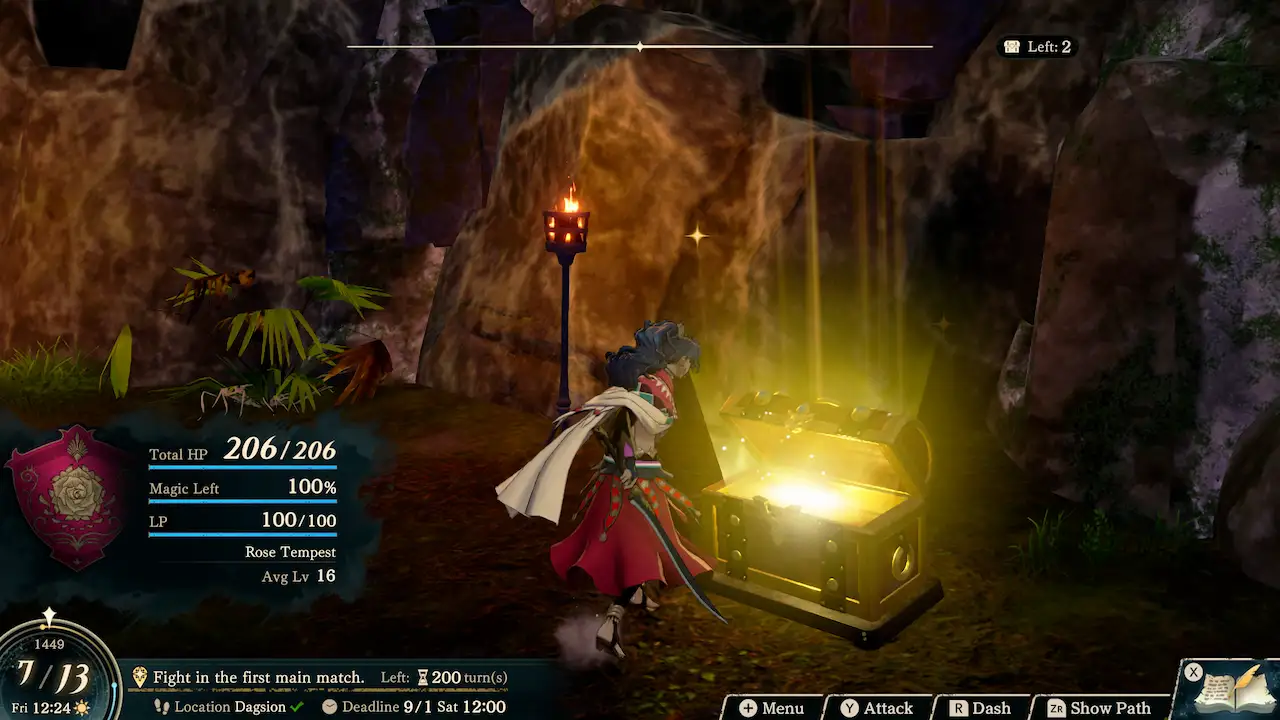
What I would do instead, is spend time on the world map, exploring the nodes, dungeons, resource spots, and more. The main shake-up here, formula wise (aside from the Atlus-inspired time aspect), is that dungeons are active engagements. Borrowing from Fire Emblem Echoes: Shadows of Valentia, you have the same systems as a normal battle, but you run around the dungeon, smashing up boxes and crystals to gain resources, before also having a 3D-based standoff-fight. You can link character attacks for bigger damage or to heal, and your overall health bar is pooled as one. You can replenish this at a rest spot, using food items you’ve found to cook, thus getting health and magic use back. Sometimes you’ll even find a secret exit out of a dungeon, giving you access to a part of the map you didn’t know even existed.
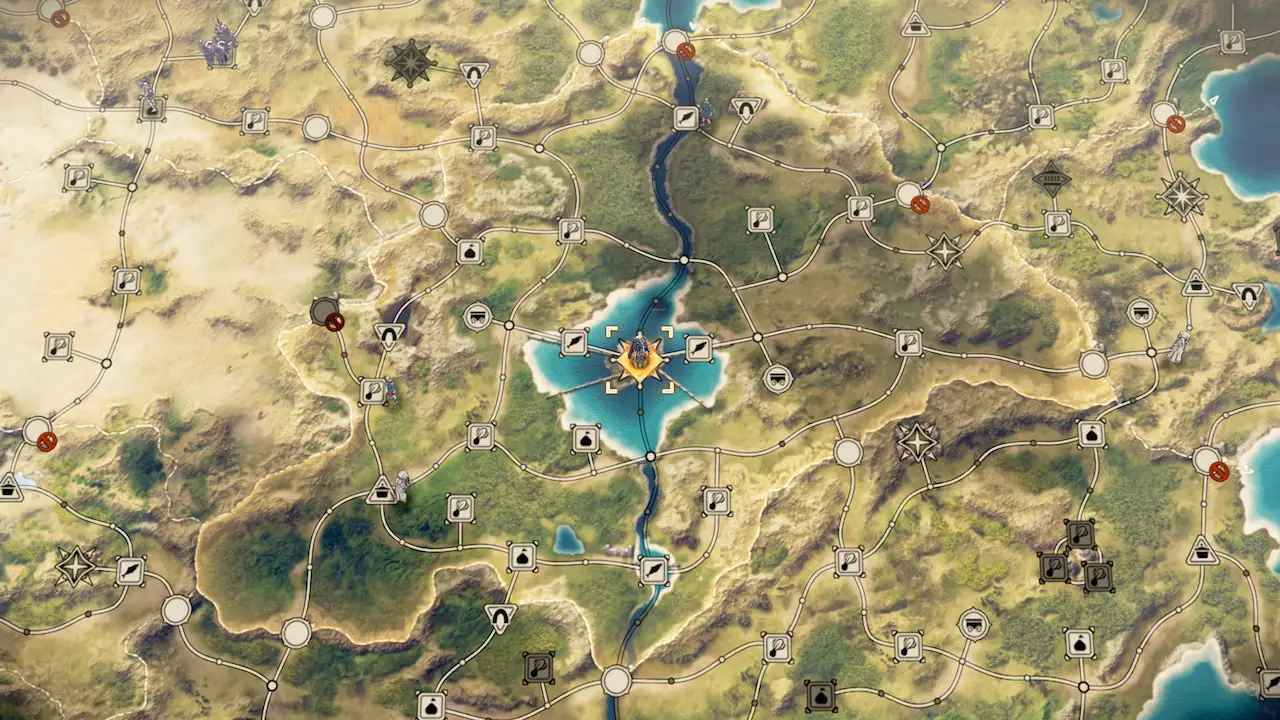
Ultimately, while this is a ridiculously lengthy game, the time offered is yours to manage. If you’re over-levelled, these dungeons offer a quick way to get resources and treasure. You can one-hit the enemies in the dungeons, without ever entering into battle. What I’ll say for the runtime is that Fortune’s Weave doesn’t ever actually waste your time, and allows you to “get on with it” when you’re in that kind of mood.
You’ll notice I digressed after talking about part one of the game, so let’s get back to that. Part two is a little shorter, but the battles are far more in depth, and even on normal difficulty I had battles that spanned over an hour each. Much of the mid-part of the game depends on how you fared in part one, and that itself has two things worth mentioning. Much of Fortune’s Weave is about changing causality, and finishing part one with Leda is only a quarter of the way through part one. Indeed, to have the best experience, and the best outcome for the rest of the game, you’ll be recommended to play through all four character’s “version” of part one.
You see, while part one is all about the Heroic Games competition, you will interact with all of the main heroes whoever you’re playing as. But on top of that, they all have their own crew (some of whom you can recruit when playing as other people), and their own unique stories and reasons for being a part of the Heroic Games at all. I was pretty shocked when starting my second part one (as Cai) to discover not only was the lead up to the mid-part of part one (I know it’s confusing, and I’m sorry) completely different, but there were different mechanics, different locations, all within the same city of Dagsion I’d spent nearly thirty hours prior as Leda running around and exploring. Yes you’re exploring the same locations, but there are significant changes depending on which hero you’re playing as.
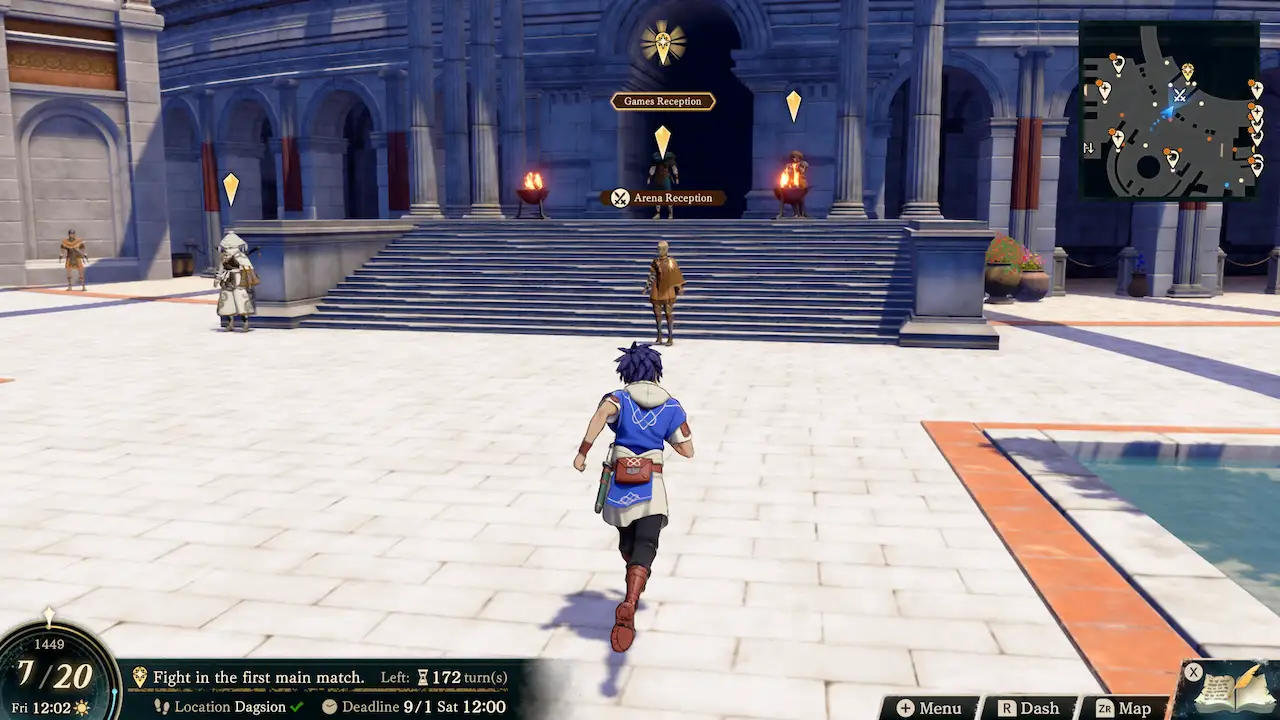
So what I’m saying here is, to get the most out of Fire Emblem: Fortune’s Weave you might want to consider playing part one four times. In fact, the developer tells you as much. And while you can skip some bits because you saw them the first time around, these are unique storylines, voiced and interesting, that colour the backstories of the four would-be stars of the Heroic Games. There is a location within the main city, where you can gain foresight into the future, and even skip back to the area where you selected your character, so you aren’t stuck playing one entire story, then another. You can come at Fortune’s Weave however you want, and thankfully you can skip “part two” entirely if you want (I didn’t) for some reason as well.
The enormity of it all comes to roost when you reach part three. It’s very clear this is the longest part as an individual experience. Yet more new mechanics, things to do, and ways to do them will open up. The titular “weave” is evident here, and you might run into characters that don’t quite make sense given how you played individually as the four main protagonists, but that’s what you get for messing with causality, right? It’s borderline monstrous in size, scale, and scope, yet it doesn’t drop the ball, and I loved every minute thanks to the stories, the combat, and the world-building that, yes, does slip into anime-territory at times. As is the norm with the series, you’re invested until something goofy happens, and you find yourself feeling weird while watching it all play out.
Such is the tried and tested nature of the combat, I have hardly even mentioned it so far. Weapon durability is a major thing in Fortune’s Weave, because using Combat Arts (special moves to you and I) eats away at that durability. You can get through most simpler battles without ever engaging with them, or the Blaze Arts system, if you fancy, though. There are so many moves on offer, depending on who you are using on the battlefield, and the battles themselves are varied enough that you won’t get stuck using all your favourites. I wanted to level up my lower-tier characters, and get them involved. It’s fantastic.
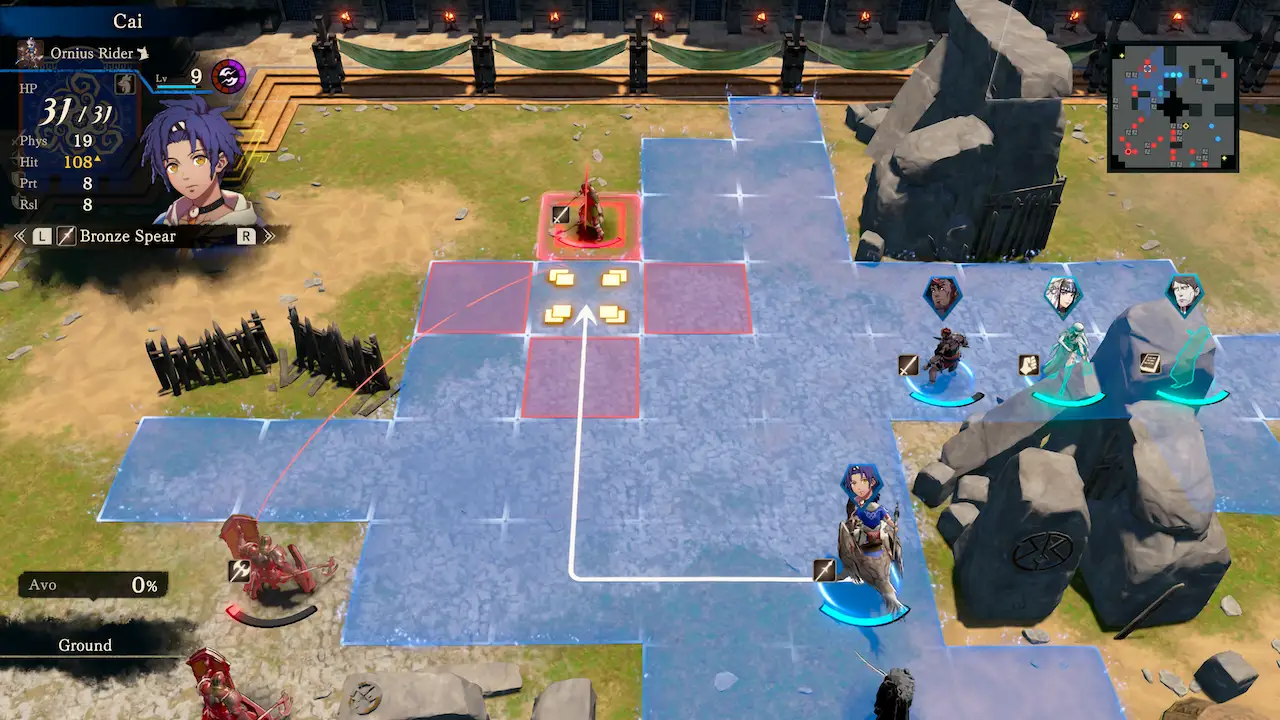
The Blaze Arts system is excellent, giving unique skills to the most important characters that truly change the battlefield in your favour. Instead of using durability, these skills will use your health points, meaning you won’t always want to blast away with them unless you’ve a mage nearby to heal you up. These skills are so unique that after playing 25 hours as Leda, suddenly using Cai felt like my entire play-style had been flipped on its head. Where Leda uses her Blaze Arts to buff and debuff on the field, Cai starts with a ranged attack that is badass. Whoever you do choose, though, you’ll enjoy their story and combat.
On higher difficulties, and with perma-death on, you’ll need to seriously think before a move to come out unscathed in some of the battles in Fire Emblem: Fortune’s Weave. The nuance of the characters (it’s easily the biggest cast of recruitable characters in the series history, I’d say), their skills, and how they interact with one another means nothing ever feels samey, or boring. I’ve deliberately avoided talking about the player-created avatar that you’ll start the game as, but it’s testament to how intriguing the world and stories are woven, that despite hours away from them, you don’t feel you’re missing out. The fact you can have multiple blessings in battles adds yet another tactical layer, and the series-staple of rewinding time means you don’t ever have to lose a character if you made a poor decision.
Fire Emblem: Fortune’s Weave is an astonishing game. I genuinely struggle to think of a more ambitious title that’s even close to the same space. With a gorgeous aesthetic and excellent voice work (though some are a bit much), the only real negative I can think of is that occasionally the frame rate is a little choppy here and there. Yes, the world itself isn’t exactly a visually impressive one compared to other games, but honestly, the depth within the gameplay is exactly what I want from this kind of title.
That said, I don’t think Fire Emblem: Fortune’s Weave will be for everyone. I hope I’ve done a good job explaining quite how enormous this game is. I suspect most people won’t get a lot of change out of 70 hours, and that’s if you skip at least two campaigns in part one. Whereas Three Houses split this idea into three separate playthroughs, Fortune’s Weave, well, it weaves the entirety into one ginormous campaign, and that won’t be what everyone wants. If you played through Three Houses once, for example, I think you’ll finish Fortune’s Weave feeling you’ve slightly missed out a bit if you tried to do the same.
This is four Fire Emblem games in one. This is a game you play all year round. Fire Emblem: Fortune’s Weave is a monumental piece of work that, at times, feels like Fire Emblem crossed with Persona. It sticks the landing time after time, and has panache and wit while doing so. This feels like true fan service in its purest form, almost like a farewell in its grandeur. I just hope you have nothing else to play, because this is a game you’ll live within for quite some time, and it’s about as good as it gets for fans of the Tactics game genre.