
Despite a raft of legal troubles that hampered the development of Zero Parades: For Dead Spies, its existence cements ZA/UM as the world-leaders in emotional drop-out simulator development. It begins much the same as Disco Elysium does, with your character waking up in a hotel room with amnesia and a conflicting party of internal monologues that seem to hate their guts.
Here you play as Herschel Wilk, codenamed Cascade, a spy who has come to the aforementioned hotel room to meet a contact who is, at this point, “unresponsive”. Not dead but not moving either. You can immediately search the surrounding area for context clues, including the “body”, which throws up a handful of leads for you to pursue as you try to work out what the hell is going on.
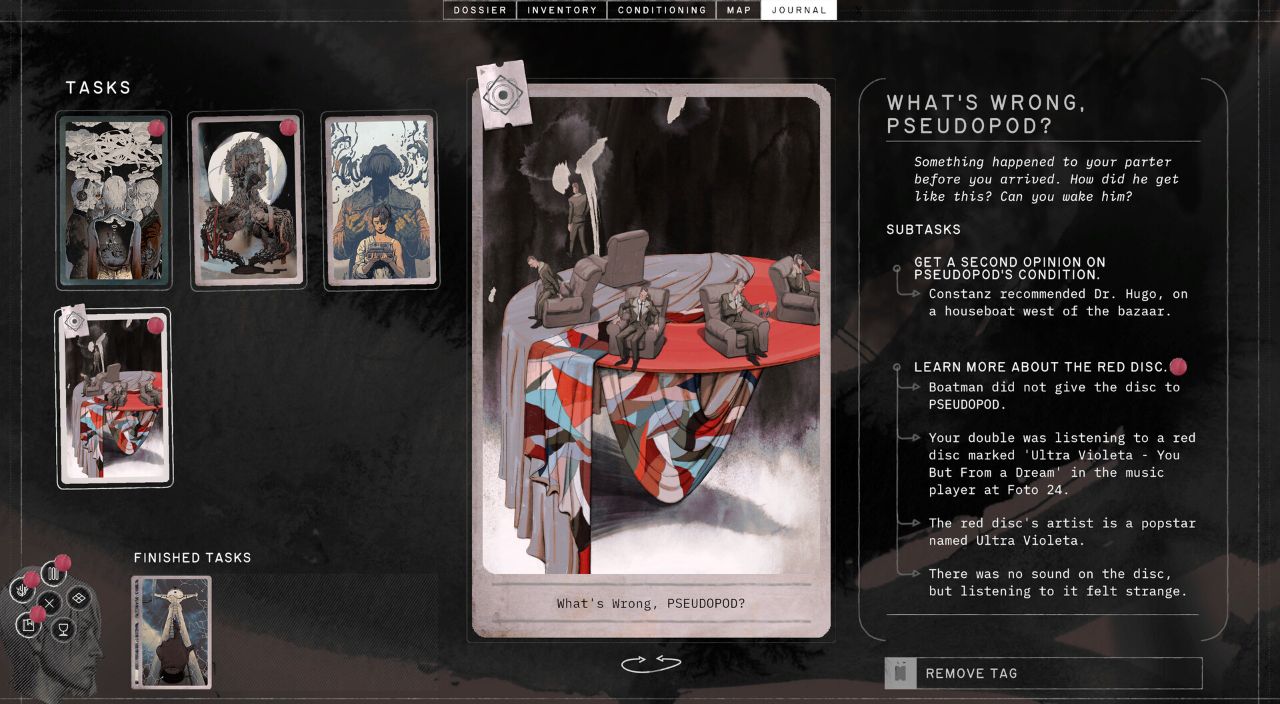
As with Disco, Zero Parades: For Dead Spies focuses on the human condition above all else. There’s no combat and very few explicit fail states, and the onus is on experimentation and exploration, with dice rolls determining your success in most endeavours. You build Cascade’s initial personality from a series of stats and loose specialisations, all of which can work in or against her favour later.
You can be strong, clever, or charismatic, but not all three at once, and you will have to sacrifice at least one of them to excel at another. This leads to a great deal of replayability, especially as you can’t easily save-scum your way through. And besides, it’s more fun in a ZA/UM game to accept the consequences of your cock-ups and roll with it. They’re rarely so devastating you can’t recover somehow.
What Zero Parades does better than most RPGs is immerse you in its world. You have almost no external context for anything, and so you must interact with everything, navigating by touch and advancing by prodding whatever you can – including Cascade’s own fragile psyche. It creates a very human protagonist with her flaws on her sleeve, and it presents a rare sense of achievement when you pass a skill check or successfully tie two elements together. You’re not a superhuman badass; you’re a broken individual dealing with stuff in the best way you can.
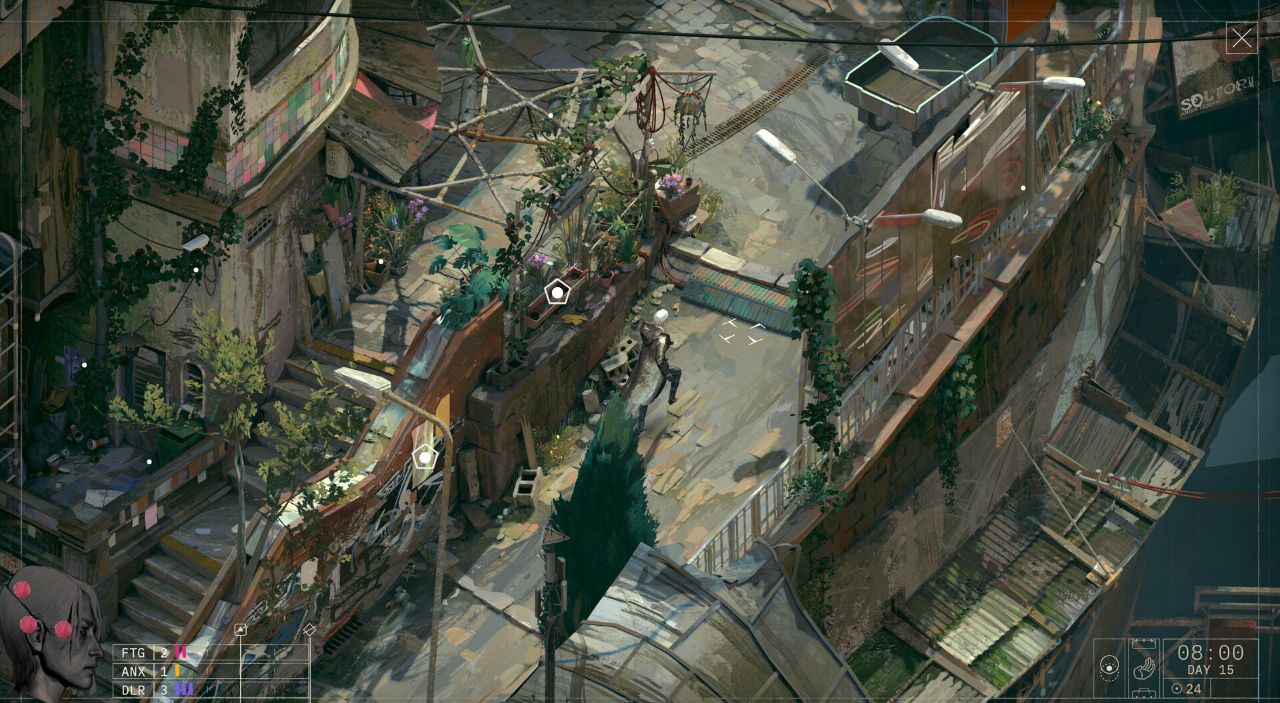
Zero Parades is not as effortlessly funny as Disco Elysium, intentionally or not. The story is more sombre, the setting decidedly more dreary. It’s not helped by the awful voice narrating Cascade’s inner monologue, which sounds like Jane Horrocks on Valium. I found it incredibly off-putting for the whole game, and eventually had to go into the menu and turn it off, which hurt the immersion but at least saved my patience.
Ultimately, this is a game about coming to terms with your own mistakes. Cascade is broken, sure, but she’s broken by failure that wasn’t down to incompetence, but rather a bad call – or series of bad calls – in the field. She’s not a drunken lout with stinking pits and one missing shoe; she’s a capable individual in a bad situation. Her time in the fictional city of Portofiro is spent actively following leads and trying to sort out her own mess, rather than trying to remember her own name.
It is, however, a decidedly less-forgiving experience than recent forays into the existential crisis genre like Esoteric Ebb. Cascade has three negative stats that balance out things like Grey Matter and Entanglement, which represent her base intelligence and intuition respectively. These are Fatigue, Anxiety, and Delirium, represented by meters that will take a hit when you fail anything – even picking the wrong dialogue option with her own mind. While they are effected by different factors, they’re functionally identical, and when you fill up the bar you must permanently lower the value of a related statistic. High anxiety, for example, will directly affect her intuition by making Cascade less sure of herself.
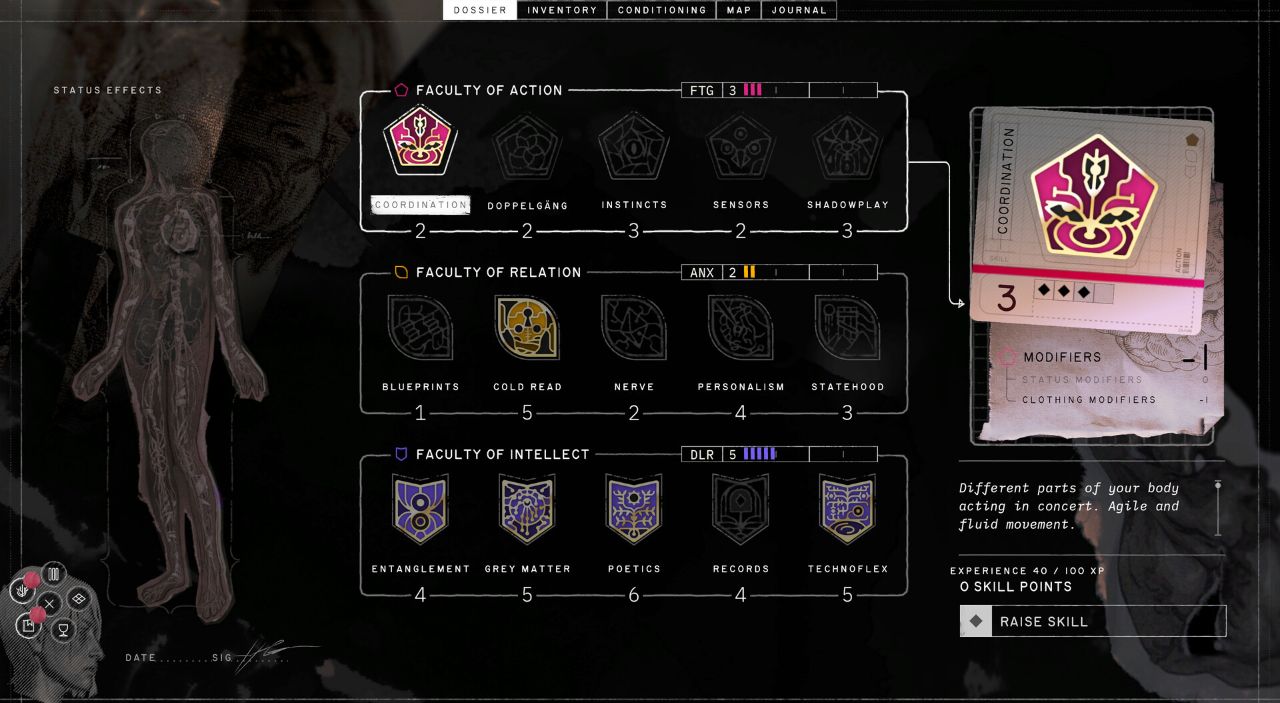
It’s a brutal but effective system, and of course there are ways to improve these stats, too, but if you want to stave off the effects of the negative sides you’ll need to make good decisions (harder than it sounds) or slam caffeine, smoke, or find somewhere to sleep. There are elements here of Rue Valley as well as Disco Elysium, as Cascade can choose a number of things to fixate on at a given time. These become her focused leads, and will open up new thought processes and dialogue options, or improve physical abilities like, say, being able to reduce anxiety easier.
Exploring the city, picking apart what she did and why, as well as trying to come to terms with the ramifications of her past, are the things that drive Cascade throughout Zero Parades: For Dead Spies. It feels deeply human at times, with a more anchored and centralised narrative than ZA/UM’s previous title.