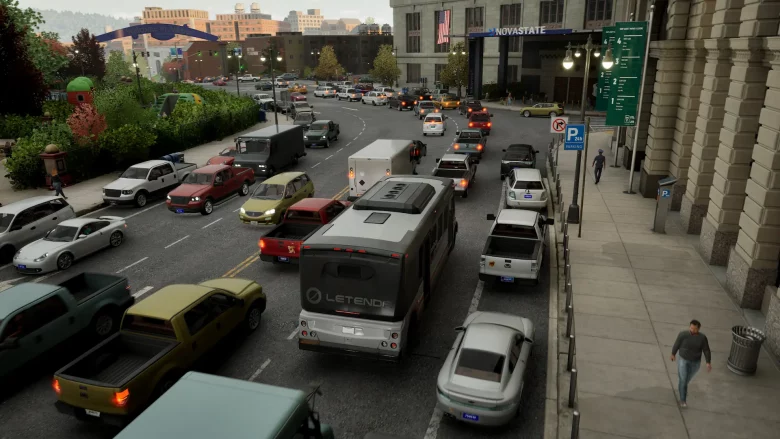
When I previewed Bus Bound I was impressed with how Emberville City felt like a genuine slice of America. Everywhere you look there was evidence of life: from front yard kids parties to cops doing traffic stops, there was always something happening.
With the game due to release in a few days, I was lucky enough to pose some questions to the team behind Bus Bound to learn more about the city and all the details that make it feel alive, as well as the vehicles and more.
Questions were answered by:
- Julian Mautner (Executive Producer on Bus Bound, CEO stillalive studios)
- Andrei Pandalescu (Game Director)
- Florian Friedrich (Game Designer)
- Tomáš Novák – (Bus Design & Implementation)
Can you tell us a bit about Emberville, its districts and its inspirations?
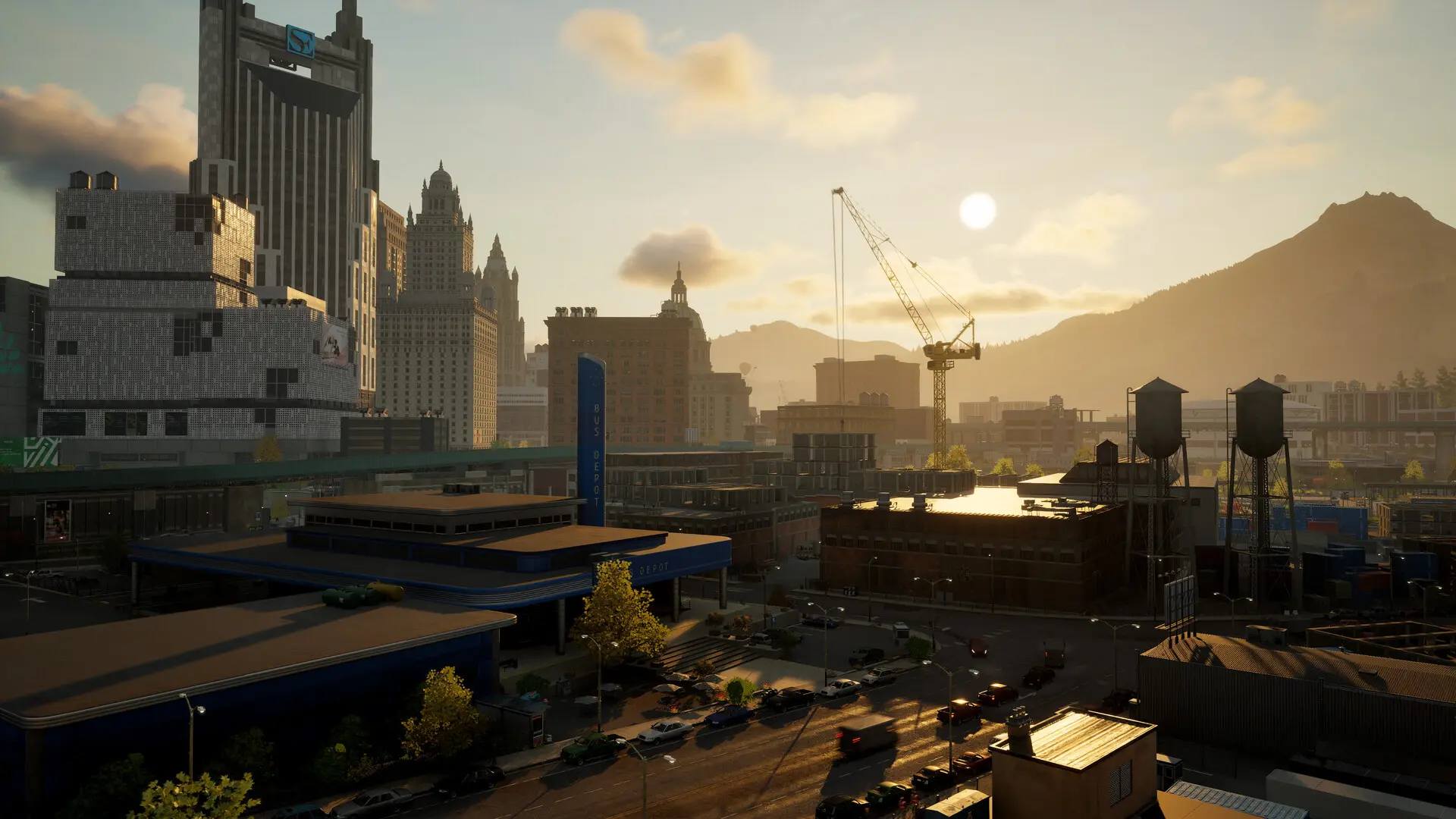
AP: The city you traverse in the game is a small town with big ambitions, somewhere in the South Appalachian region of the United States. It’s in the coal belt, so naturally it has some coal mining background, and the backstory even contains one major mining incident which changed the face of the city – you can hear bits and pieces about it sprinkled throughout the game. We looked at a mix of city vibes from that geographical area – a bit of Asheville, NC , for the setting, Knoxville or Gainesville for the architecture, Memphis and Nashville for the vibes. In the end we wanted to get to a clear Americana feeling without feeding into the tropes of the big familiar cities or, at the other extreme, into the rural “cowboy” imagery.
FF: The city’s environment starts out with lots of asphalt, big roads. And that gives us space that we can transform (or better, players can transform with their actions). All those big fields made of asphalt lanes become a little example of what could be if all those roads weren’t there and the city is for the people.
We made sure every district comes with its own character, to tell a different version of that story. One transforms the university campus to a big open square. The other opens a joyful music street to go out and have fun at. To make these transformations feel worthwhile, they have to convey a lot of charm and character, and we hope they do for players.
What kind of details have you included to help it feel real? During our preview I loved that, while stopped at a traffic light, I looked to my right and saw a kids birthday party taking place in someone’s front garden so would love to hear more little details like this!
AP: We noticed in our previous games but also as a real live city driving experience, on a familiar route – that there is a point in the timeline where you get so used to the route that you tune it out and are able to focus on the details outside of driving and you start looking out the window. We also realized that in games of this type, there’s generally little to draw your eye, or tell you a story – the backdrop is defined in broad strokes, of architecture and biome, but if you have the time to give it a closer look, it’s rarely more than that.
So for Bus Bound we wanted to change that and deliver the city’s micro-stories as you drive through it. They’re not the same every time, mind you – that kid’s party might not be there next time you drive past – or it could be a place that recurrently has some events that you can expect to happen – e.g. a big stage by the river might hold concerts from time to time. We put a lot of effort into giving these details to our players, which have the trait that they unfold for full effect, naturally, as you play more.
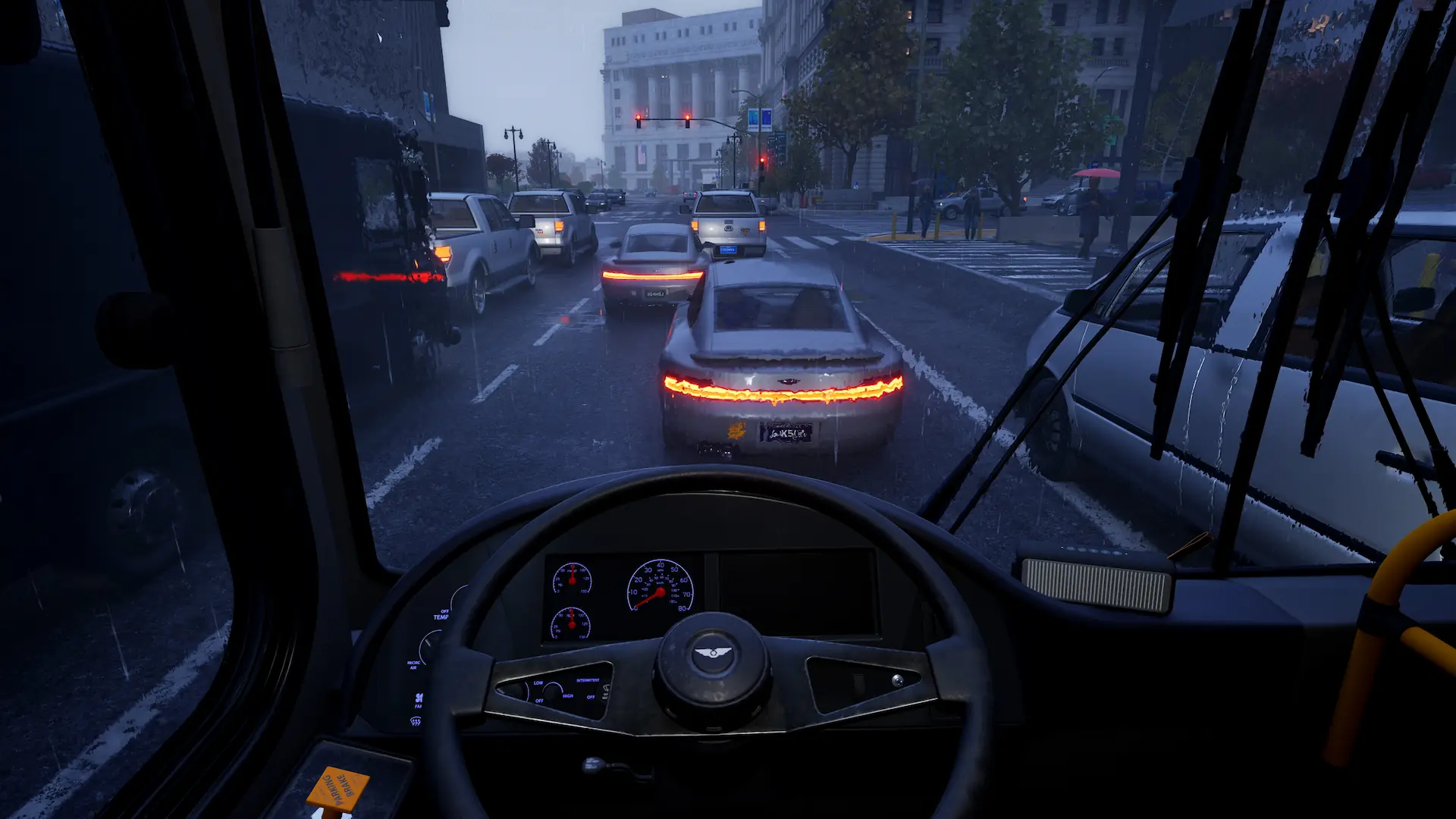
JM: The game is full of little details. Personally I love all the reactions the world has to my driving, like a car performing a full stop, because I cut them off, visibly straining their suspension, and complaining about it. A truck that drives more aggressively insisting on their right of way. Recognizable and repeating passengers boarding. People reacting to me crashing into something. But also technical details like the first person camera mimicking the natural movement of the head while driving such a big vehicle (subtle yet powerful), or all the simulation details that go into a bus (torque converters, drivetrains, engine-sounds, sound perception depending on open/closed windows and many more).
How important are licensed vehicles to the overall experience?
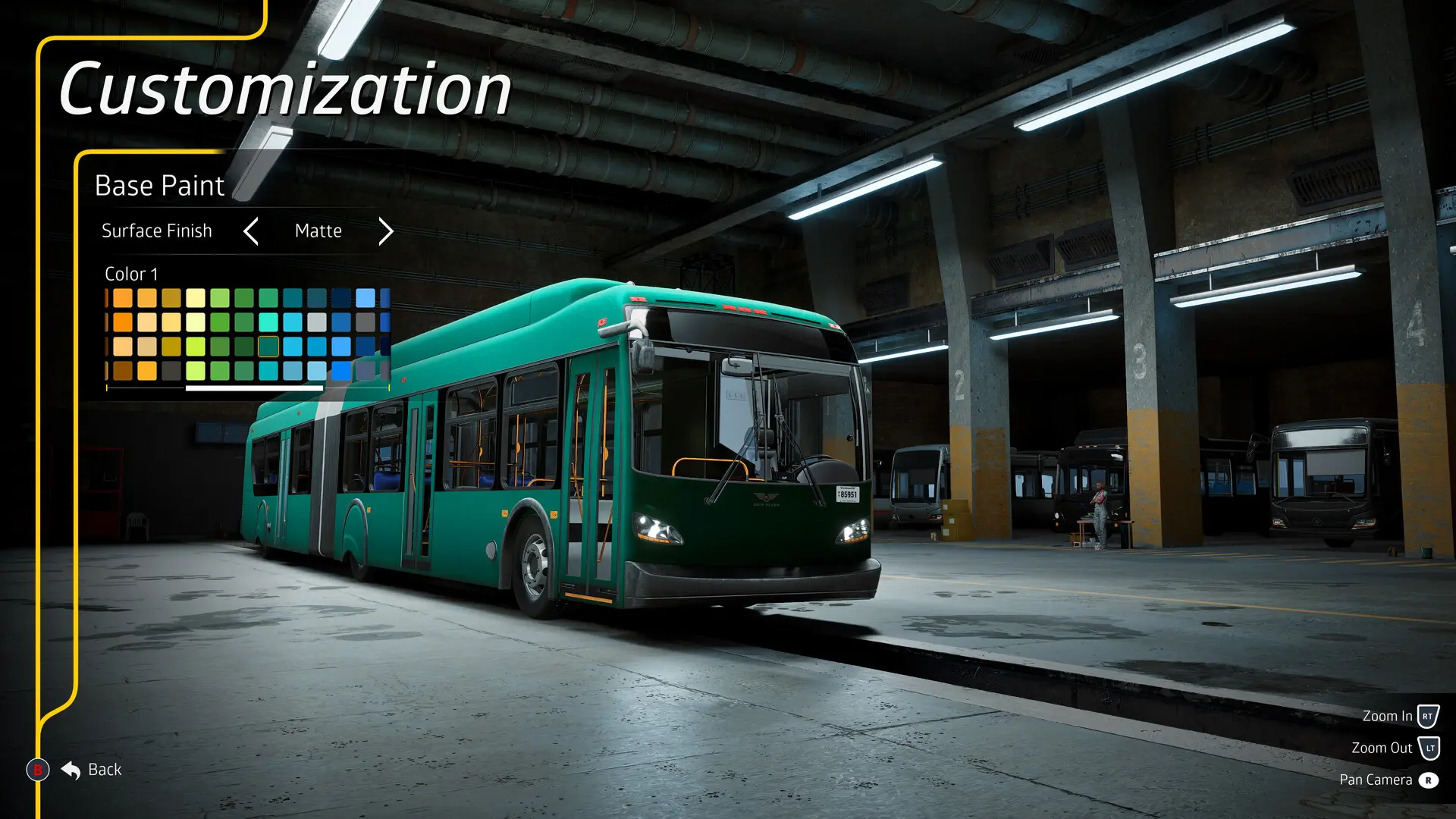
TN: It is always important to find a nice balance between delivering the most accurate experience, and delivering a broad lineup of different models. We have aimed for a mixture of having realistic New Flyer, Vicinity, Bluebird or Letenda models, and our own creations of Horizon models that are inspired by real life vehicles. In both cases we want to provide the best experience not only in visuals, but also by having accurate sounds.
From experience with your previous bus games, what are the most important elements to players in games like Bus Bound? Is it the licensed vehicles or the business systems, or just the sim-like experience navigating the world?
AP: I think there’s plenty of fantasies being fulfilled by other games “like Bus Bound” each with their own qualities. For Bus Bound especially, we wanted to focus on the “why” of bus driving, instead of the “what” (focusing on the technicalities of the bus) or the “how” (focusing on the transit system management). We do deliver on those lanes as well, but our biggest focus was on showing our players how the presence of public transport in a city is a force for good and how it can change everyone’s lives for the better, especially in today’s traffic-choked city environments. To answer directly your question though – the licensed vehicles are usually regarded as a must, as well as a high degree of realism/authenticity of the systems you play with and of the visual style.
How do you give a tactility to operating these vehicles without it becoming finicky to control? I love being able to control things like my indicators, or operating the ticket machine on the bus. Do you have to be selective about the level of control you give the player?
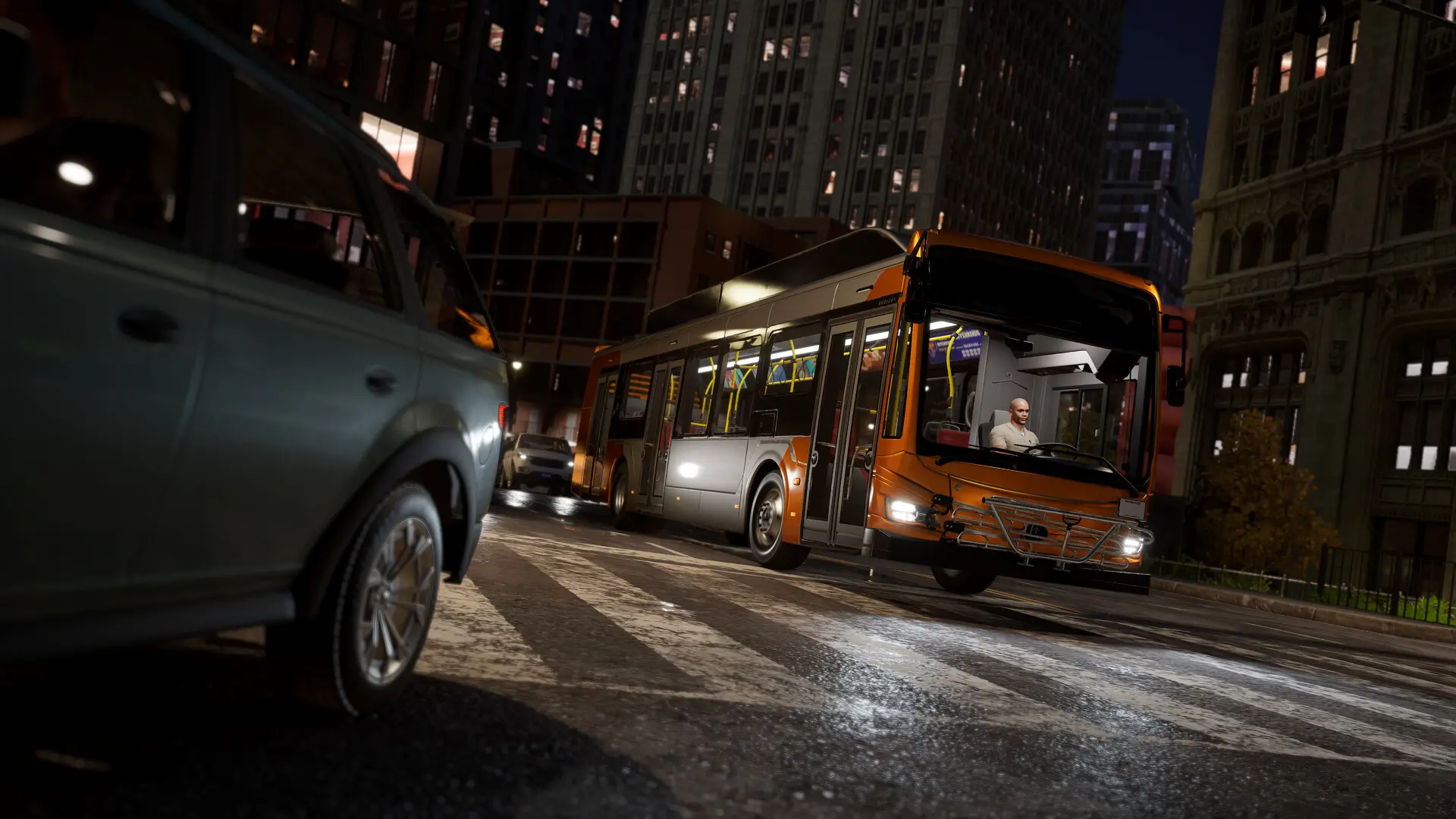
TN: We have made handling comfortable for various input devices, be it keyboard, controller or steering wheel, with the aim of having a nice glimpse into driving these big heavy vehicles around the city. Driving on its own is fairly simple at the start, but once we start adding all other features for advanced control, it can become challenging. Ultimately, it is up to the player whether they want to use just normal braking, or introduce advanced controls with retarder. This way we have a nice balance for everyone.
JM: We set ourselves the challenging goal to reach both deep bus enthusiasts as well as giving everyone a chance to get a taste of the world of bus-driving. One part of squaring that circle are the bus controls and cockpit interactions. We approached buses with the mindset of “easy to operate”, but at the same time “simulating reality”. So we have a lot of knobs and buttons the player can press and have an effect on the bus, from lights (passenger, cockpit lights, high beam, parking lights, etc.), to wipers, retarders, door knobs, sunscreen, ramps and many more there are a lot of options. At the same time though we made sure that many of these are optional to use. You can drive the bus without using the retarder, or ever changing the lights – and that is by design so all people can just enjoy driving. For our detail oriented bus fans though, all these options are available and provide a true immersive feeling of a proper simulation.
Can you elaborate on the business and route building elements? Are “likes” a measure of your company’s popularity in the city and their trust in giving you room to expand?
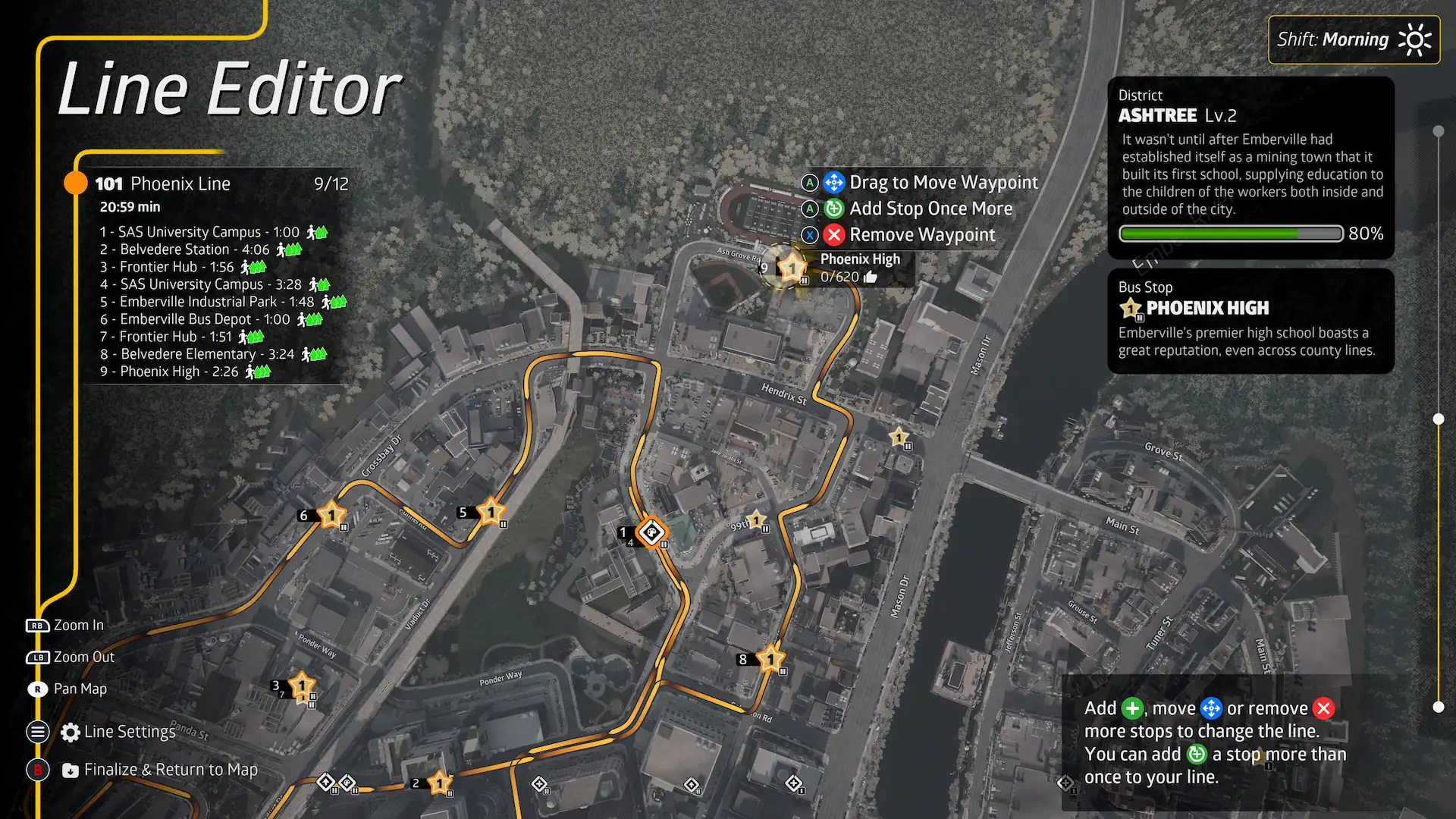
AP: We wanted to have Bus Bound as a bus driving game that is accessible to everyone, beyond our core audience of bus fans and simulation fans in general. For that we focused our efforts on the bus driving, bus model and the environment you drive in, while putting a limit on the more complicated (not necessarily complex) systems that drive the management layer usually – this is how we ended up with the current system. The aim was to have the feedback be given to the player in the most natural, organic way possible – no “eye in the sky’ popping you notifications when you did something wrong or right – but the actual people around you – passengers, drivers, pedestrians are the ones affected. We think about this as having pretty much the same functionality as a ride-sharing app – when you deliver a passenger to their destination, they will rate you on the service you provided. The difference is that their final rating is constantly updated during the ride, based on the quality of your drive (a pretty cool concept, that I’d appreciate if it took traction in real life too, to be honest).
FF: We wanted to give players the feeling that their actions matter to someone in the world. It’s not a game evaluating you, it’s the people you either make happy, or mad. With all the little details and stories you see on the sides of the road and various other elements of the game, the city should matter to you. Not just because we say so, but because you fall in love with the world.
With your bus driving and serving you contribute something to this society, and the “likes” are the interface telling you how it responds.
Bus Bound releases on PC, Playstation 5 and Xbox Series S|X on April 30