Jumping into Lunar Abyss straight off the back of Housemarque’s Saros feels a bit strange. While it is still very much a bullet-hell, Bonsai Collective’s FPS starts out as a much more sedate affair. It’s set in the titular Luna Abyss, a future prison that has its inmates neural-link to disposable avatars to explore the titular Abyss. It’s a cool concept, made even cooler when the player character Fawkes stumbles accidentally into some kind of higher calling, receiving an upgraded avatar and a lot more guidance from the otherworldly denizens of the Abyss.
Where Luna Abyss struggles is in maintaining the balance between casual and hardcore. The first few hours are pretty easy by the standards of the genre, with slower enemies spraying predictable patterns of pretty plasma all over the place, and even bosses having very simple and easy to learn movesets. Hell, there’s even cover everywhere. At a certain point this shifts into a much higher gear, particularly noticeable when you enter external areas with less cover, and it’s not a subtle, gradual shift really. All of a sudden there’s just a lot more going on, and I found later areas to be particularly busy, even for a bullet-hell shooter.
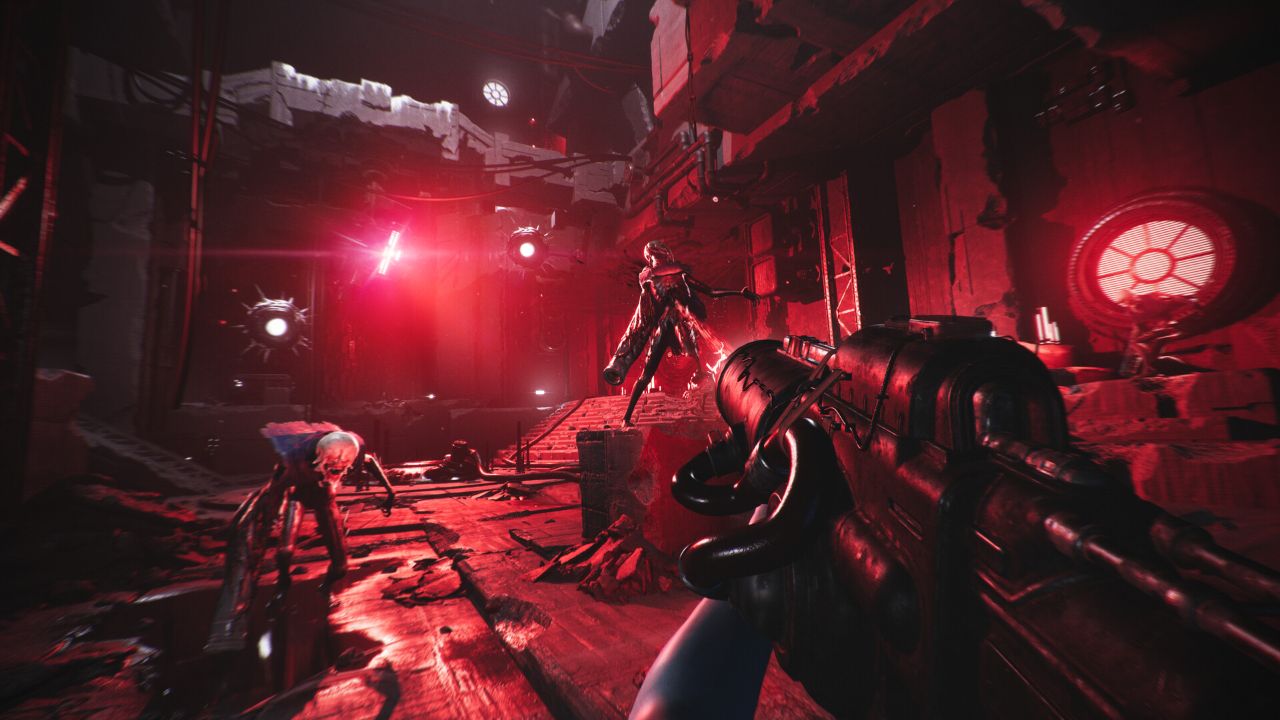
Yet, Luna Abyss remains pretty compelling all the time. This is a great example of an indie dev making the most of its budget and skillset, delivering a vast array of enemy types and making what feels like a limited arsenal really count for more than just blasting away at enemies. At times, Luna Abyss feels almost like a Metroidvania, as the four guns you unlock also function as keys, of a sort. For example, the second weapon you find, the Shield-Breaker, is a powerful shotgun that can also remove blue barriers, while you’ll need to unlock the third gun to break down more powerful purple barriers.
You heal by draining energy from near-dead enemies, a mechanic that combines with some very effective and considered enemy placement to create a genuine sense of push and pull in the combat. There’s an ebb and flow, as enemies will pop up with shields and require the shotgun, and then spawn at distance so you switch back to the first rapid-fire rifle. You’ll pull out the sniper to clean enemies out quickly, then slide back into cover to break up a volley of multi-coloured plasma. There’s a rhythm to it all that feels incredibly satisfying until the later stages, when the sheer volume of enemies and projectiles renders such precision a little too difficult to achieve.
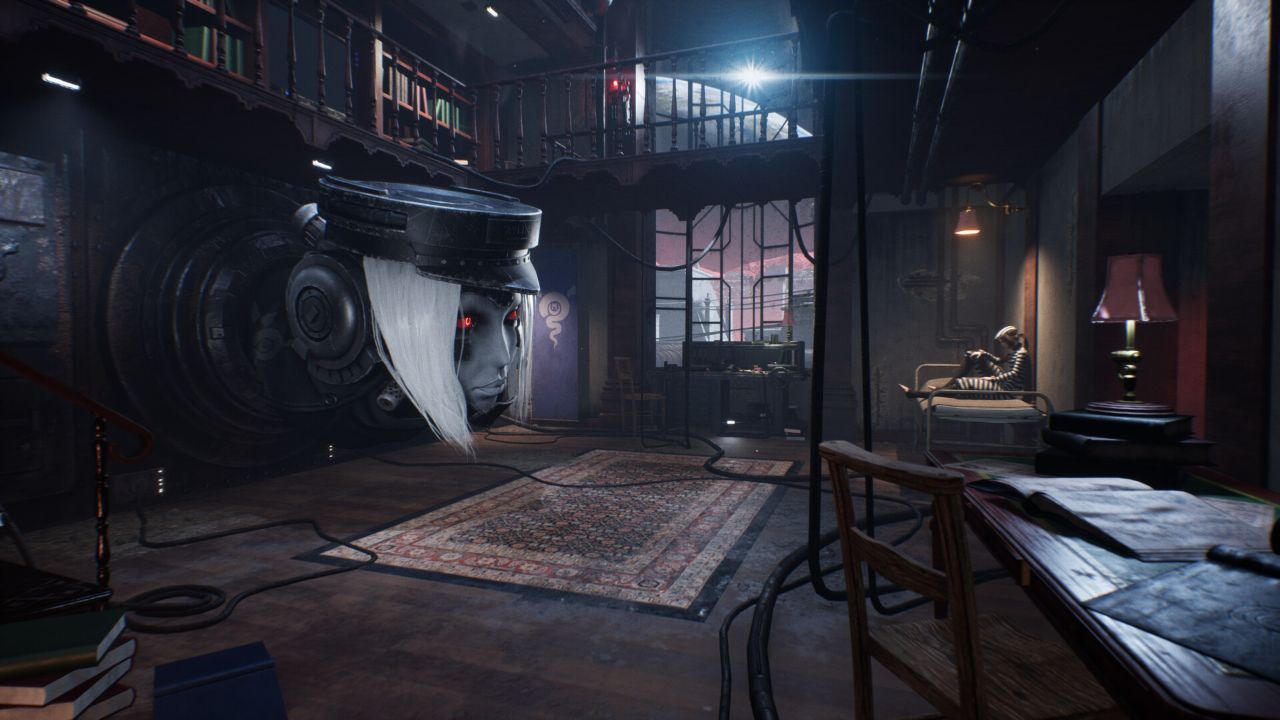
The world itself is interesting though, and although I don’t often pay much attention to text logs in games, the backstory told through the codex entries in Luna Abyss is dark and compelling, building on the bizarre sci-fi concepts to create a game-world that feels lethal and mysterious. The slightly terrifying warden is a huge mechanised head attached to the wall of your cell, while you’ll meet enormous animals and other anomalous entities in the Abyss itself.
Between the combat you’ll get to explore the Abyss in short chunks of platforming, usually used to link areas together. There’s not much space to go off the established path, and you’re mostly rewarded with health upgrades and text logs for your trouble. The jumping and sliding can feel a little imprecise at times, and there’s not really enough meat here to get your teeth into. A couple of special moves open up new ways to reach the next stage, like the ability to possess Watchers, large clusters of eyes that guard the prison. You can possess one, then blast yourself out of it, either into another one or onto a ledge to facilitate climbing. It feels fluid and fun, and it’s used sporadically enough that it doesn’t get boring.
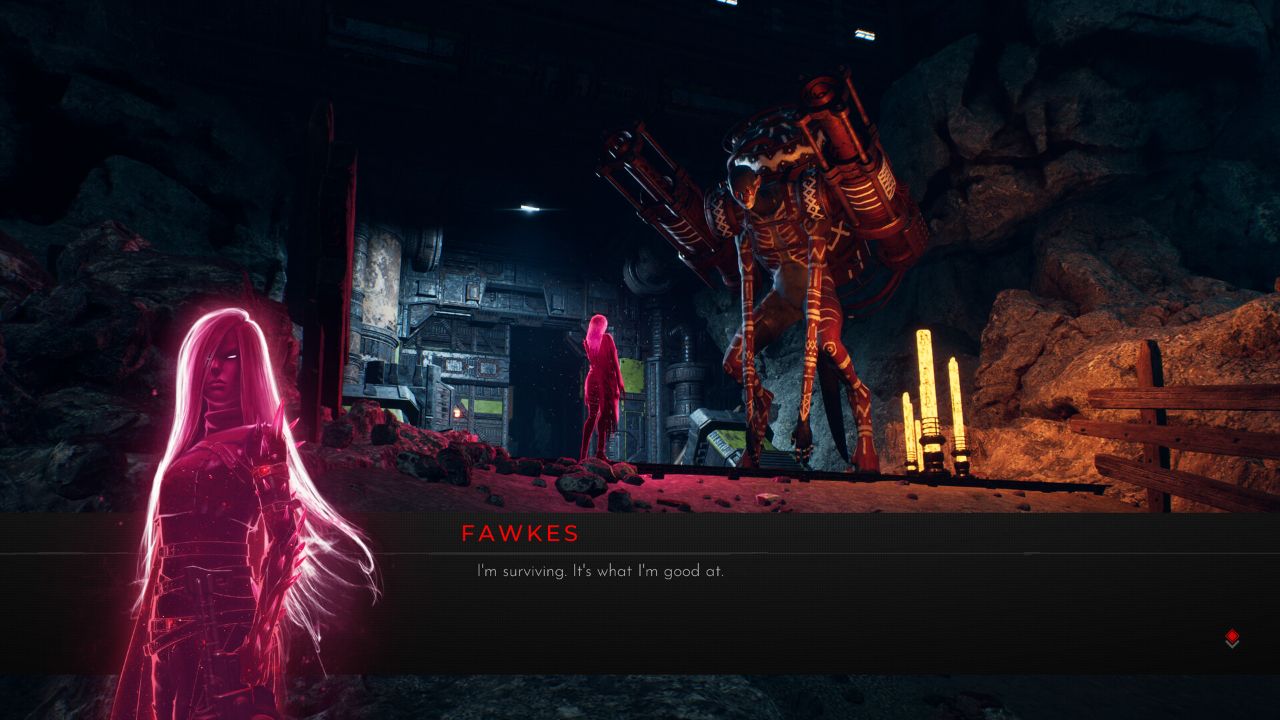
Luna Abyss surprised me a little at times, both with how intriguing its game world is and with how satisfying its shooting feels. Each gun feels distinct, and the impact is punchy and precise – especially with the Shield-Breaker. There’s a sheen of Japanese horror overlaying most of it, and it doesn’t feel like an aesthetic that gets used much. Oh, and it’s quite refreshing that this isn’t another roguelike, which it could very easily have been.
In fact, the concept of Luna Abyss fits the roguelike template so much I have to commend Bonsai Collective for their restraint. Despite some ropey platforming and some uneven pacing, Luna Abyss is a compelling debut from a new indie studio (from the UK, no less) that is well worth your attention.