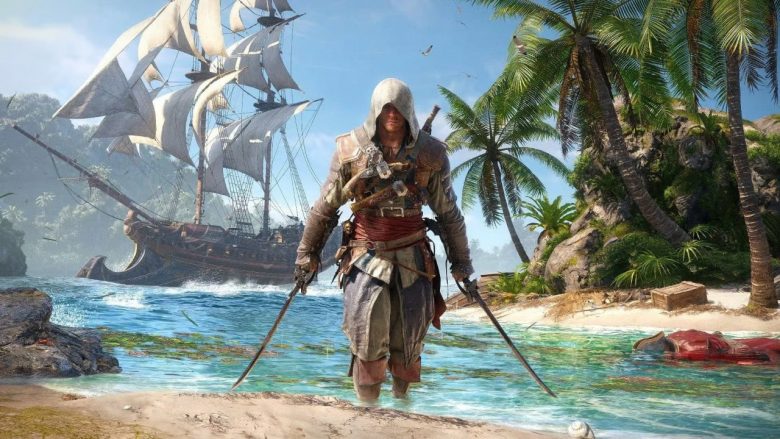
Let’s not beat about the bush, here: I was hyped for Assassin’s Creed Black Flag Resynced from minute one. The original is one of my favourite games of the last fifteen years, and I’ll freely admit to being a fan of the series overall, to the point that I’ve even largely enjoyed the ones considered particularly sub-par.
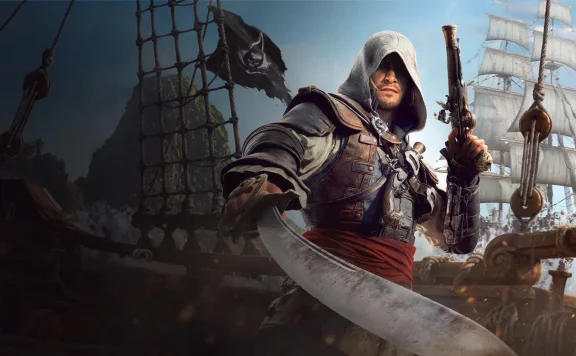
Maybe it’s the romanticised version of the Golden Age of Piracy in Black Flag (which itself was much shorter and less magical than several centuries of literature and media would have you believe); maybe it’s the protagonist, Welsh rogue Edward Kenway, whose Heath Ledger-looks and rakish charm make him a standout of the series; or perhaps it’s the lush Caribbean setting, which feels deeply authentic (again, to the myths of the era) and maintains a solid, palpable sense of place throughout the runtime. Hell, maybe it’s just the ship combat, which is the best version of such in any game outside of maybe Sea of Thieves. Thankfully, my excitement has been rewarded. Ubisoft’s remake of what is arguably the best game in their long-running franchise is simply fantastic, hampered in places by technical bugs and a dollop of Ubisoft jank, but supremely playable and addictive nonetheless.
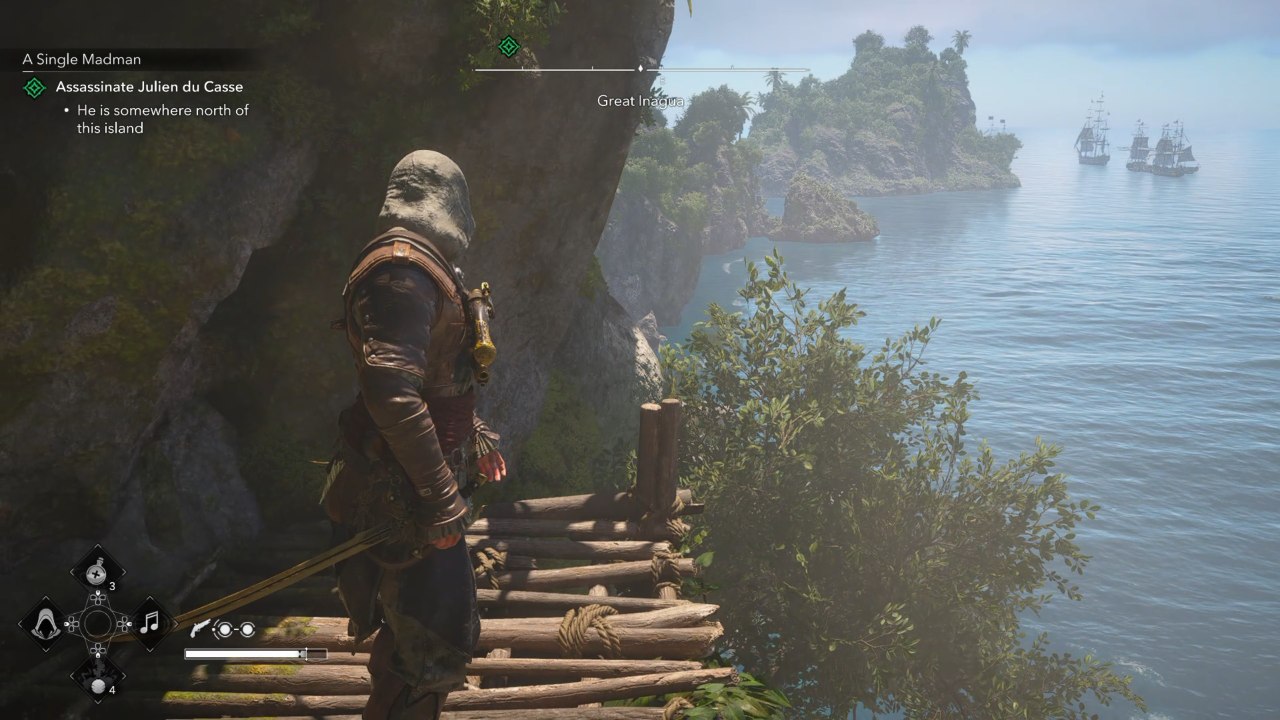
It follows Edward Kenway, an ambitious young privateer with a tragic enough backstory that you forgive him for being a bit of a dick to most of the people he meets. After quite literally running headlong into his destiny, Edward becomes an Assassin largely because he likes the coat worn by some dude he kills. He isn’t trained by the order or responding to some higher calling; he’s just a survivalist and an individualist who gets through by the seat of his pants. The resultant case of mistaken identity leads Edward into an adventure that spans the entire ocean, throwing him hip-deep into a conspiracy to find the fabled “Observatory”, which pits him against the ruthless Templar before he even knows who they are or what they’re about.
One thing Resynced does remove is most of the present day stuff that has bogged the series down since the end of Desmond Miles’ involvement. The ill-advised “day in the life of an Abstergo developer” stuff from the original has been snipped out completely, and the only ties to the Animus tech besides the menus are the Anomaly activities that are very much the same as normal activities, only they reward you currency to spend in the various battle-pass-like reward tracks, which you can choose to ignore completely.
The removal of this is, to my mind, no bad thing. The modern day stuff has been divisive since Assassin’s Creed 3, and I think a lot of that is down to Ubisoft not quite knowing what to do with it anymore. It means the story of Black Flag Resynced feels more Edward having his own adventure with the Assassins and Templars, rather than a clumsy attempt to tie it into the greater franchise lore. And what an adventure it is.
Assassin’s Creed: Black Flag Resynced is the remake of one of the last large scale AC games they made before moving fully into the realm of open world RPG with mounts, stats, and colour-coded loot. You get your own ship, crew, and hideout very early on, which allows you to upgrade and customise each with money, materials and collectibles earned out in the world. Immediately, every island becomes a checklist of secrets and challenges, ensuring that wherever you make landfall you’ll find something to do, whether it’s raiding warehouses, solving ancient puzzles, digging up lost treasures, hunting animals for claws and pelts, or simply climbing the lofty viewpoints to trigger that familiar eagle cry and get a stunning lay of the land.
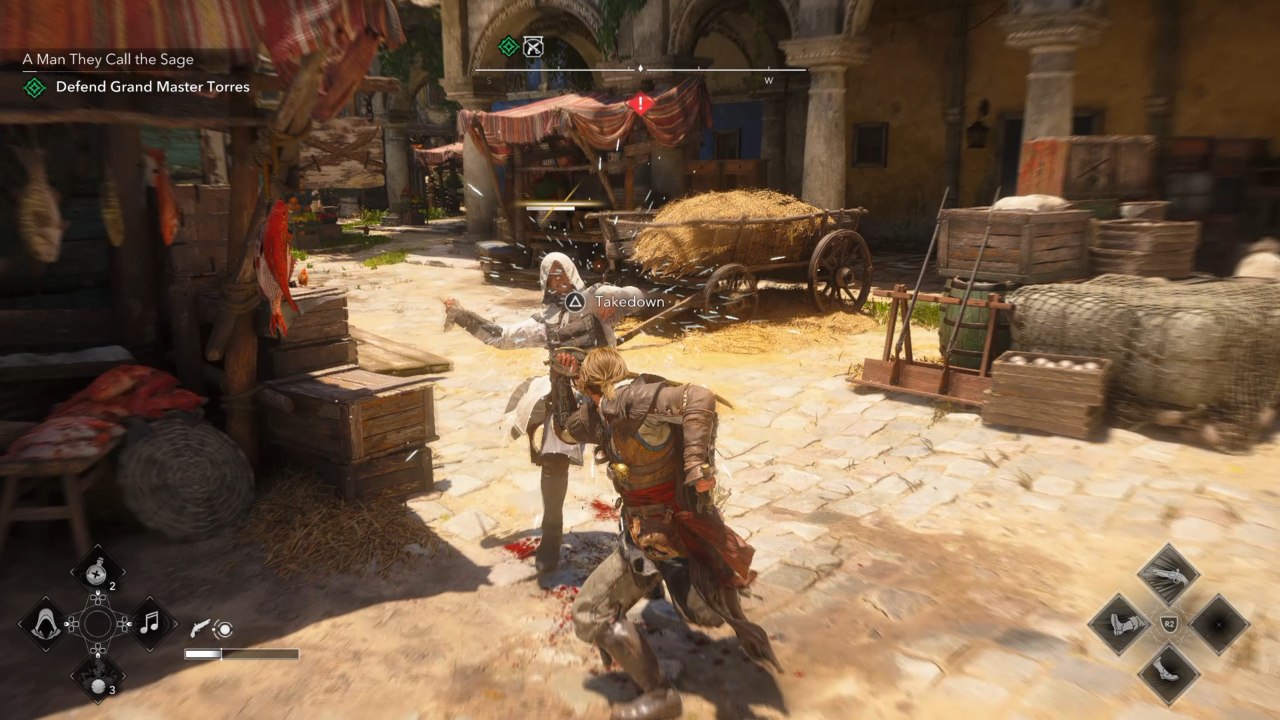
In addition to quality of life upgrades like the ability to crouch and sneak anywhere, or jump into the ocean at any point rather than only in set areas, some of the biggest changes are found in the combat. The system has been completely overhauled, replaced with a parry-centric system more in line with modern entries, that sees Edward reducing enemy poise to deliver lethal takedowns. And some of these takedowns are genuinely brutal to the point that you have to wonder if old Eddie’s getting enough R&R.
As you’re often fighting multiple enemies at once, being able to kick single opponents or sweep multiple guys over in one go comes in handy, and when mixed with the Rope Dart, dual flintlocks, and, of course, Edward’s hidden blades, it amounts to a responsive, exciting melee system. It’s not without fault, however, and the engine struggles with some of the collision physics now and then. It’s not enough to dull the experience for me, but your mileage may vary.
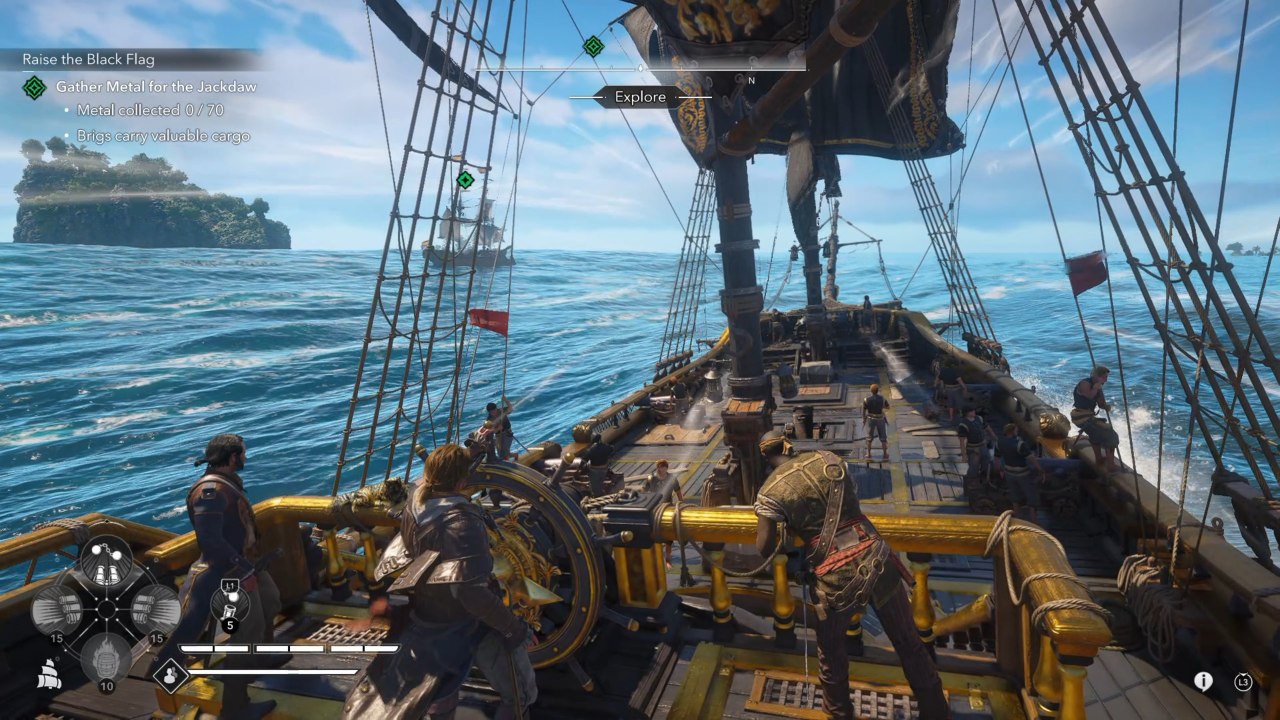
A feature that feels largely untouched, though, is the sailing. There’s something incredibly moreish about setting sail in Black Flag Resynced. This is a huge game-world and yet I rarely fast-travel, since there’s so much to stumble across en route anywhere, and the hypnotic bobbing of the Jackdaw coupled with the dynamic weather and the raucous singing of the crew generates an atmosphere quite unmatched. The sense of scale is astounding, and journeys are rarely uneventful. You might find a burning ship you need to loot before the powder magazine goes up, or marvel at a gigantic whale breaking the surface; dolphins race alongside you, or of course you might simply spot a ship on the horizon laden with plunder.
Ship combat is fast, responsive, precise, and brutal. Roaring about to target the enemy with your broadsides, launching mortar rounds, or hitting their magazine with your more precise mounted guns as they try to do the same to you feels like a dance, and when you scuttle them and pull them close for some deck-to-deck brawling the atmosphere comes alive. Swinging to the top of the yardarm to cut down the enemy flag, before choosing whether to strip it to make repairs to the Jackdaw or add it to Edward’s growing fleet is an experience that doesn’t get old.
Once you’ve established your own pirate sanctuary, you can undertake missions that allow you to send Edward’s fleet out on missions of their own, while you strike out in search of elusive Templars or buried treasure. You can advance the plot as quickly or as slowly as you like, and you’re rarely, if ever, penalised for just living the pirate’s life for hours on end. Oh, you’ll run afoul of pirate hunters if you commit too many crimes, but freedom and anonymity are never much more than a bribe away. If you can survive to reach port, that is.
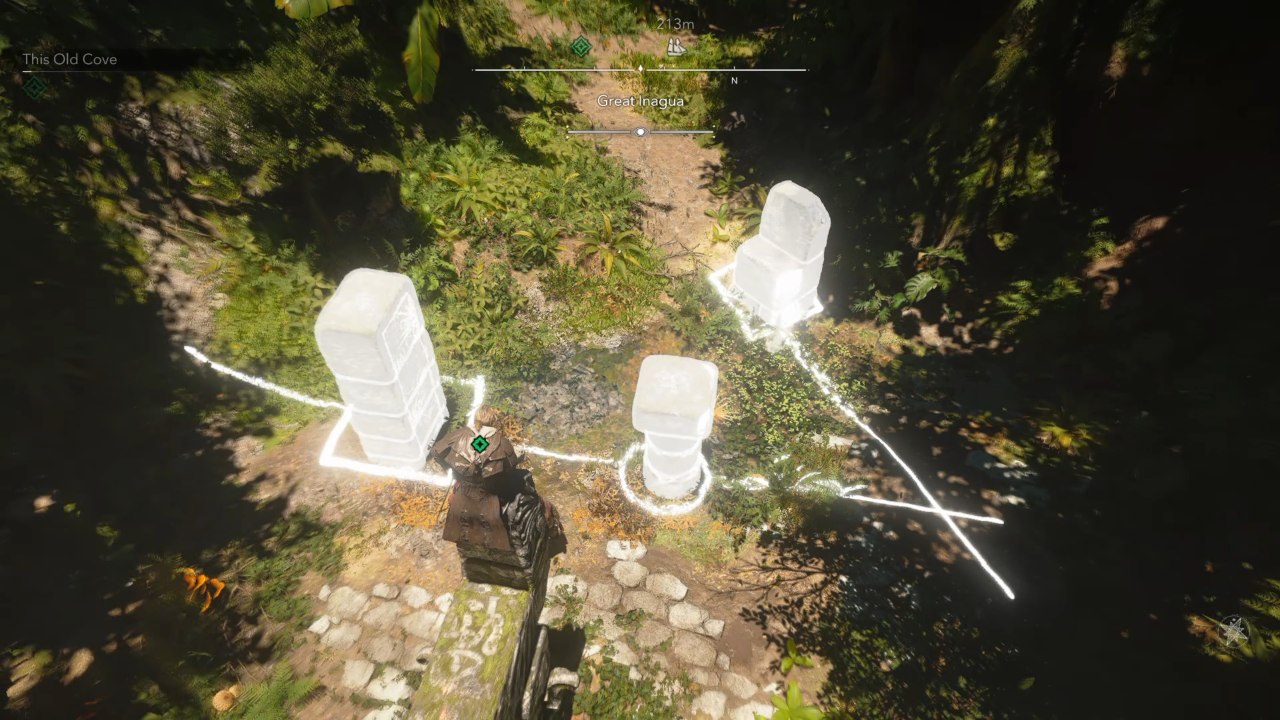
A number of new activities have been added to the map, as well as a trio of small questlines that see Edward recruiting new officers to serve alongside the ever-loyal Adewale. The writing stands out here at times as being… different to the original, but it was the only indication to me that I was playing new content. Hunting down a scheming barrister with my new Shipwright, Lucy Baldwin, was a quest that slotted effortlessly into the grander narrative without so much as a squeak. Of course, it helps that Assassin’s Creed: Black Flag Resynced has such a strong narrative to build into. Edward’s backstory is genuinely touching, his motivations relatable, and his rich rogue’s gallery of supporting players colourful and devious in equal measure. It takes liberties with history as Assassin’s Creed always does, but it does so with heart and verve.
Visually, Resynced looks exactly how the original looks in my mind’s eyes, which is usually the mark of a good remake. Side by side you can see the obvious improvements in animation and fidelity, but the beautifully rendered cutscenes and high-detail environments retain the feel of the original while sacrificing very little. I mean, sure, Ubisoft removed Edward’s water-running animation but I’m sure they had a good reason. At least, I hope they did. Small things like this may have been sacrificed on the altar of the enhanced aesthetics, but I didn’t notice many concessions. As I said before, the sense of place here is simply undeniable, with crystal blue waters and golden shores inviting you to dive right through the monitor. It’s hard to put into words just how beautiful some of the vistas are in this game; you need to see them for yourself.
Something I do wish they added is the ability to open treasure maps without having to go through the menu system first. Trying to pinpoint where some old Jack Tar buried his trinkets is annoying when you have to keep pulling out the map. Why can’t Edward just keep it in his hand? Maybe Ubisoft is going for the realistic depiction of Edward trying to find a scrap of soggy paper in the eight layers of cosplay he’s wearing, but it does get a little tiresome. Some animations could also do with a little variation, like the repeated “robbing the warehouse” cutscene, or the crew cheering whenever I upgrade the cannonball storage plate on the Jackdaw. And yes, I know how minor these complaints are, and that should give you some indication of just how into Assassin’s Creed Black Flag Resynced I am.
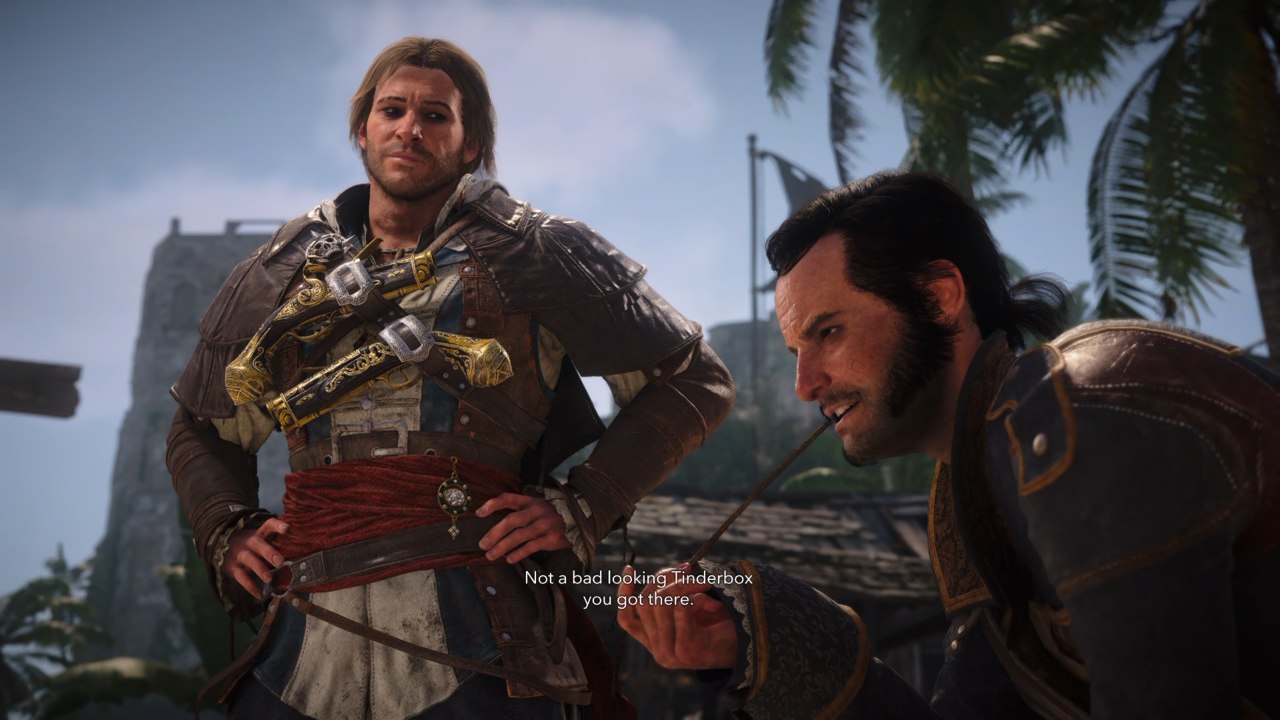
Arguably, Black Flag is the ultimate example of the Ubisoft checklist game. It was the pinnacle of their own design and perhaps the last time they really got away with doing it before everyone started to really hate it in Ubisoft games (but forgive it in most others, like Final Fantasy: Rebirth for example). But partly that may be because the checklisting feels natural here. You want to explore as many islands as possible, and you don’t feel forced to do so in order to chase arbitrary stat-boosts or clear level-gates. You do it because the world is gorgeous and exploration is its own reward. Even the music in Black Flag Resynced (not just the shanties, which are obviously great) is excellent, and quite possibly among the best in the franchise.
Assassin’s Creed Black Flag Resynced is a superb remake of an already excellent adventure game. The addition of things like stealth grass and improved combat only add to the experience, and navigating places like Nassau and Havana feel busy, authentic, and compelling. Besides that, the sailing and ship combat are peerless, and make the journey anywhere feel eventful and relaxing by equal turns. Some jank in the combat animations aren’t enough to hold this one back, and if you’re a fan of the original this is an absolute must-play. For those who missed the 2013 classic but who enjoy Assassin’s Creed in general, I’d go so far as to call this utterly essential.