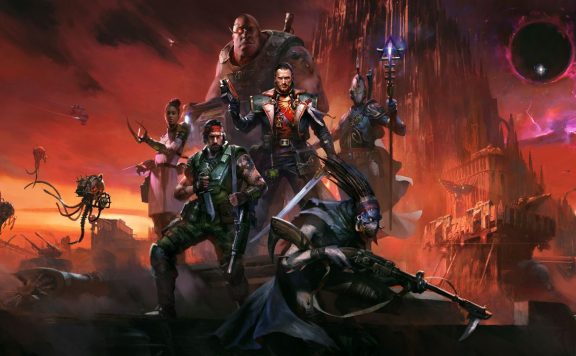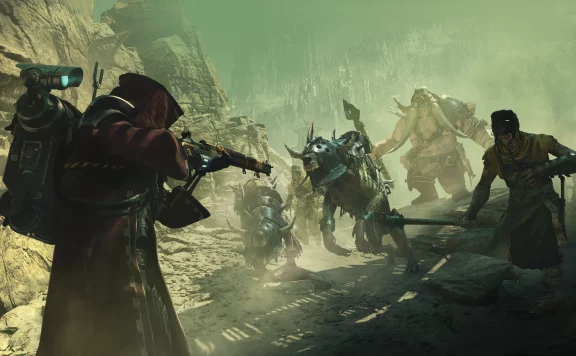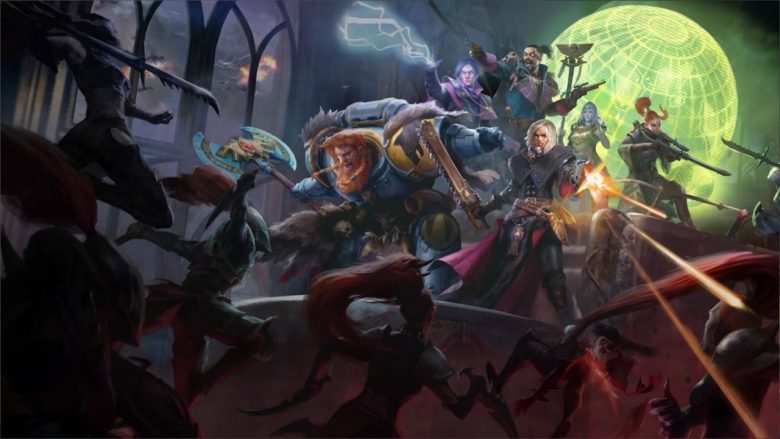
Warhammer 40,000: Rogue Trader is arguably the best representation of Games Workshop’s grimdark future ever created in a videogame – at least until Warhammer 40,000: Dark Heresy lands this year, which is unsurprisingly developed by the same team. Perhaps because it doesn’t focus on Space Marines or Sisters of Battle (both of which do feature; I mean, this is 40k, after all), it’s able to better showcase the inner workings of the setting from a more grounded, dare I say human standpoint, much the way Necromunda: Hired Gun and Darktide do, but on a much more macro level.
It pits you as a titular Rogue Trader, which in the Warhammer 40K universe is a kind of mercenary ship captain who holds the highest possible non-military badge of office next to an Inquisitor. A Rogue Trader’s role is one of exploration and progression, as they are often the only individuals permitted to not only travel beyond the galactic edge but also fraternise with xenos (aliens) and mutants should it be guaranteed to further the Imperium’s cause.
Rogue Trader (named for the original tabletop game from which the entire universe sprang) pits you as Insert Name Von Valencius, heir to the Voidship of a famous Trader who is betrayed by the forces of Chaos in the prologue, leaving you to take command of her Voidship (which you can name) and embark on a quest to uncover the traitors and defend the Imperium of Man from the insidious machinations of the Arch-Enemy.
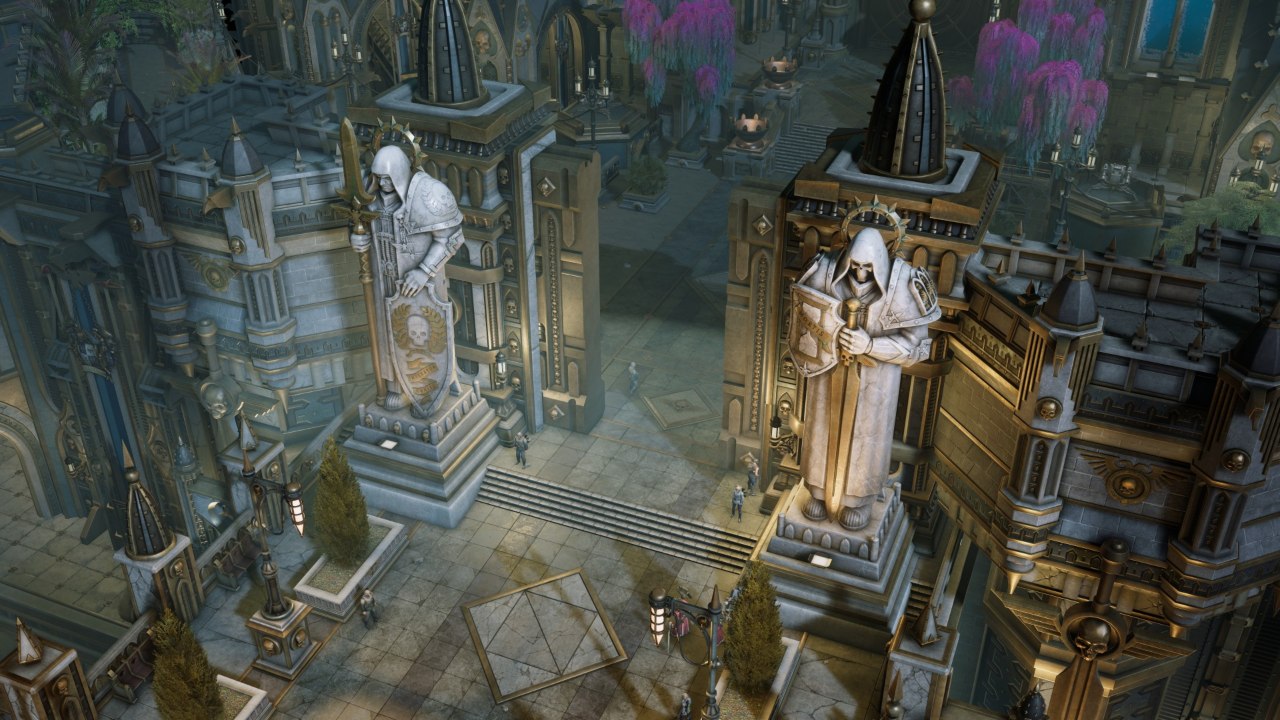
Which is to say, jump into a 100-hour campaign spanning a huge chunk of the Koronus Expanse, in which you’ll recruit a pretty sizeable roster of followers and engage in DND style roleplaying and stat-checking. Although there’s no dice roll graphic like in Baldur’s Gate, everything you do is dependant on chance, which uses your characters’ intrinsic modifiers to determine the outcome of pretty much everything you do from disarming traps to convincing an enemy not to kill you.
Rogue Trader’s 2023 release was overshadowed somewhat by the Baldur’s Gate 3 behemoth, which feels a little unfair considering how differently it approaches the same genre. Yes you’re still moving from place to place recruiting followers and failing dice rolls, but Rogue Trader has a more involved base in the Voidship, which itself is home to thousands of people for whom you’re responsible. From making mission-critical decisions on the bridge, to putting down peasant revolts in the lower decks, to preventing the energies of the Warp from mutating your senior crew, to even indulging in a little star-side romance, managing the ship and her inhabitants is among your primary concerns.
Playing on Nintendo Switch 2, with a package that includes all the previously released DLC and the three new playable characters they introduced, is a slightly odd experience. While it’s still a compelling game, massive concessions have been made to get it to run as smoothly as it does – which is not all that smoothly, at times. In docked mode it looks pretty awful, with low details, muddy textures, and some very noticeable artifacting. Even in handheld it’s not that much better looking, since Warhammer 40,000: Rogue Trader was always quite a drab game, eschewing colourful environments for an industrialised, often washed-out, palette. But hey, it mostly works for this universe. What’s more disappointing is the overall performance, that really takes a hit on Nintendo’s latest system.
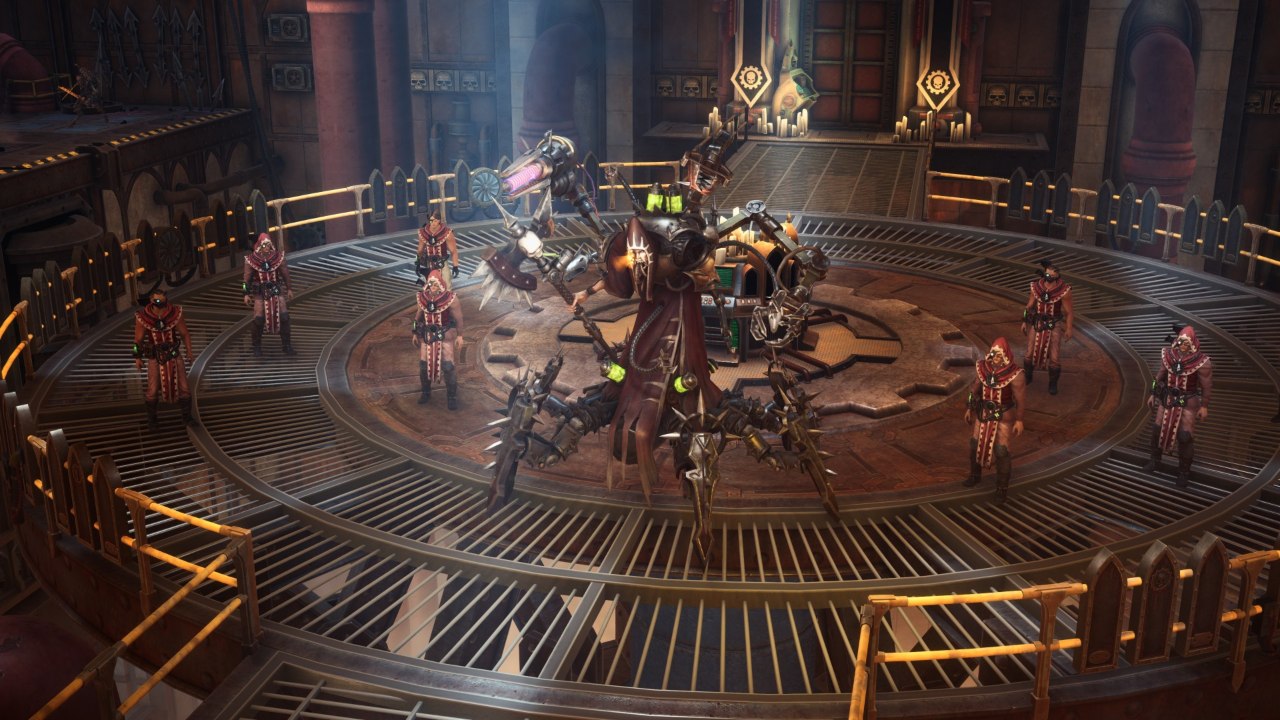
The story here is the main draw, though, as you navigate the often-lethal politics of the grimdark future, trying to not only make your way on the worlds you visit but also keep your party in one piece. You’ll never keep everyone happy, but as you can only take five companions with you at a time, you don’t really need to. And besides, it can be interesting when schisms arise between you and your party members.
Character management is very deep, as you’d expect, with the option to tweak your character’s background and personality during creation and then play one of many roles within the game itself, whether you choose Dogmatic, Iconoclast, or Heretic answers when you’re posed a question or given a moral choice to make. These present as stark personality traits and will influence the way others see you and even which quests you’re given throughout the game.
On Nintendo Switch 2, I did struggle with some of the menu navigation. It’s not super intuitive when you’re moving around menus and sub-menus with a stick cursor and multiple uses for triggers and face-buttons. The game as a whole kind of has that same issue, but after a few hours I got used to it.
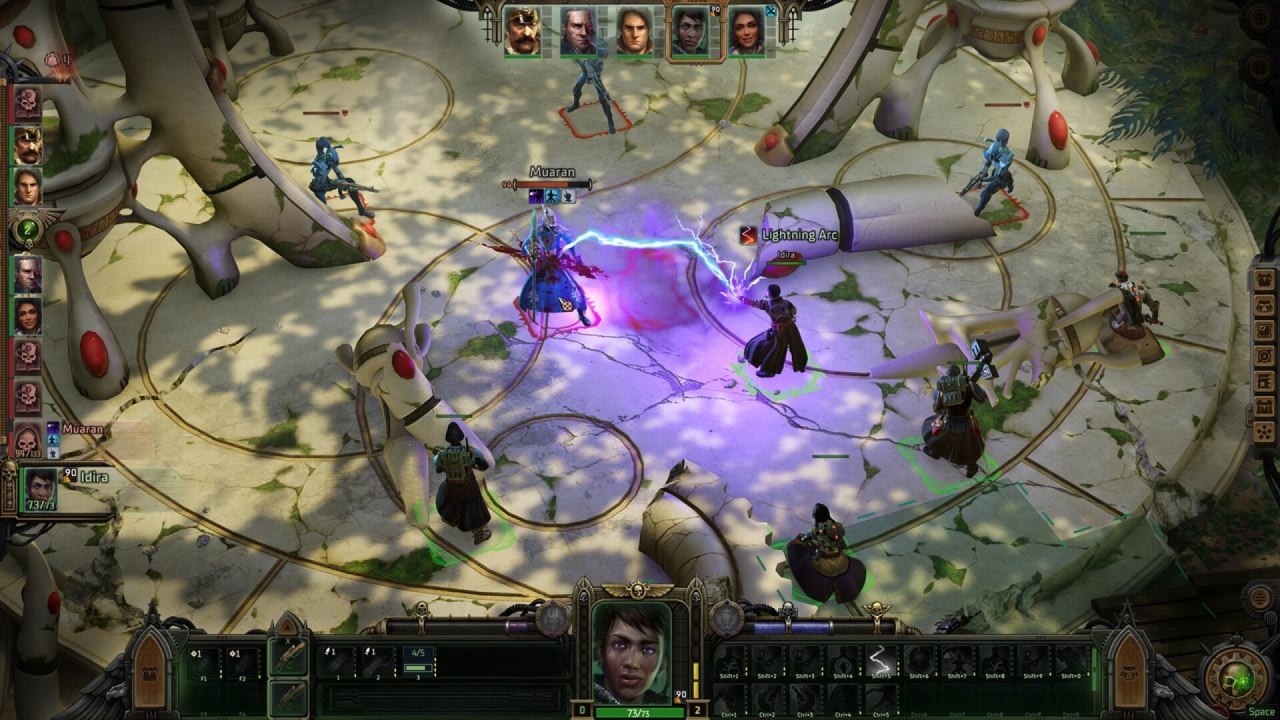
If this is your first time playing Warhammer 40,000: Rogue Trader, try not to let the performance and visuals put you off. It’s a fantastic CRPG with a deep and surprising narrative, a great cast of characters, and one of the most lore-rich universes to crib off. The original issues with difficulty have been addressed by adding sliders and options to tweak the challenge level, so the barrier for entry is lower if you just want to enjoy the story and role-playing without getting your arse kicked over and over (it is quite tough on the default difficulty).
Unfortunately, it’s difficult to ignore some of the glaring performance issues and how unattractive it is on this platform. While it runs fairly well minute to minute (and is a massive improvement since it launched), combat has a lot of judders as it transitions between characters and NPCs, and the loading times can be a little laboured. There are also a few issues with controls and you will occasionally get bogged down in the terminology and rules of the universe if you’re not very 40K-literate going in. Despite these issues, though, Warhammer 40,000: Rogue Trader is still a massive, colourful, compelling adventure on the Nintendo Switch 2, if you can handle the performance jank.