
Most of us here at Loot Level Chill love tactics games, and for me personally they’re just the right amount of taxing on the brain. Moving units around grids to try and out-think opponents has been popular since Chess, and adding video game elements like leveling up and wider varieties of warriors to command makes for a delightful experience. It’s the perfect way to simulate a battle between armies, but not a full on war. Brigandine Abyss changes this, with a sprinkle of grand strategy added to the traditional tactics.
The kingdom of Brigandine Abyss is made up of twenty four nations, with six you can choose from in story mode. This narrative led way to play follows the events after the murder of a great king, which sends this world into turmoil. It’s up to you what effect this’ll have on your story though, because every nation is different. My first playthrough followed the daughter of a great warrior nation, whose father died trying to strike down those regicidal maniacs. Then I played as a little amnesiac girl with two fairy allies, and moved on after that to play as a boy who was raised in a nation of science and experimented on accordingly. The story you follow will be totally different depending on your starting choice, but I enjoyed the ones I experienced.

After your starting cutscene you’ll be thrown into combat, and have to do some tactical battling. Your army is split into three groups with individual generals, and the beast warriors they lead. Each unit type has its own strengths and weaknesses, and it’s up to you to arrange them accordingly. With a hexagon shaped grid and damage boosts for pincer attacking enemies, planning how to outflank foes is a big part of winning a battle.
From the very start of the game you’ll have plenty of unit types to manage, which will help you overcome the odds. Wolves are fast and can move after attacks, Golems punch enemies backwards when they hit, and Unicorns can heal units who are struggling to survive. The generals have a wider range of skills too based on their classes, with knights buffing their attack and defence for a few turns, archers using ranged offence, and fairies buffing your armies to ensure you overwhelm opponents.
The real genre shift in Brigandine Abyss though is between battles, where you decide how to take over the continent. The world map is made up of nodes housing the other twenty three nations, and you can move your generals to any one connected to you to try and take them over in a tactics battle. The other nations will happily do this to you though, so if you spread your growing nation too thin then you’ll easily lose new territories. Each turn you’ll get to see the other nations fight too, and after one turn you’ll quickly see twenty four small nations turn into around sixteen bigger ones.
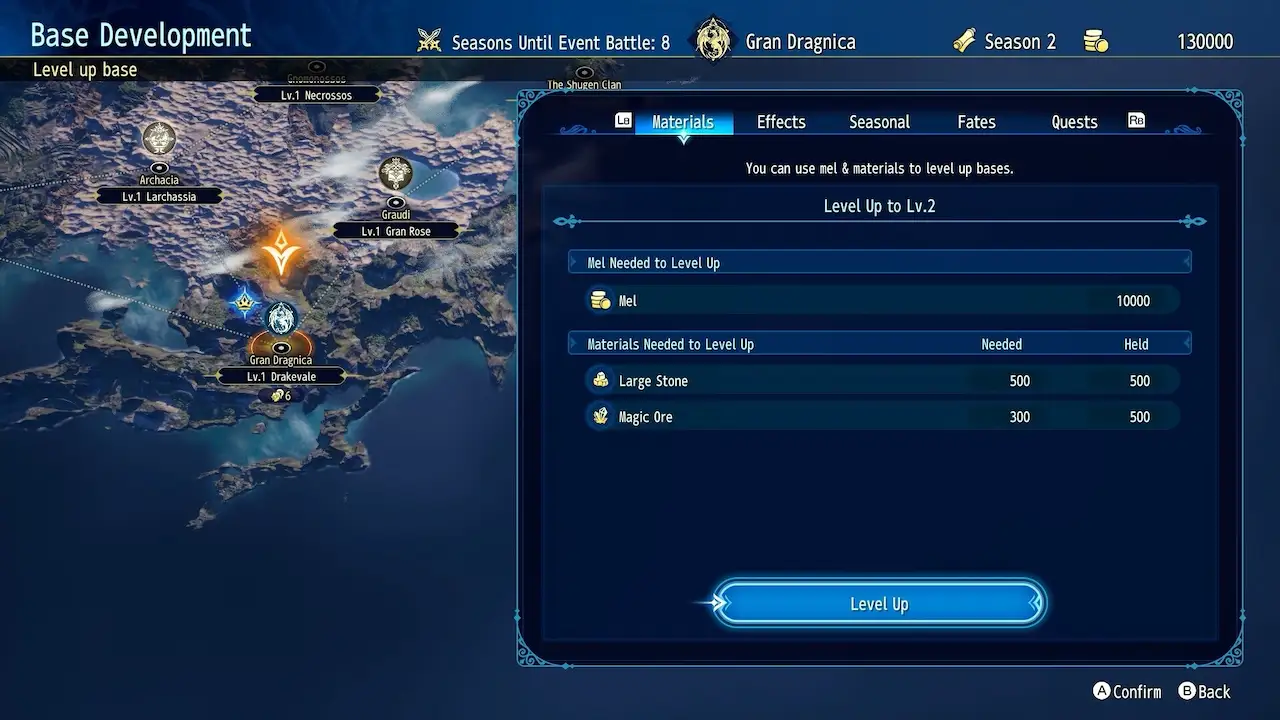
More nations conquered means more materials and currency, which you can use to recruit more units to defend all the extra areas you control. Previously defeated generals can be recruited for particularly powerful additions, and each area features different monsters to hire too. Building your forces is key because with only a few powerful armies you’ll always have weak spots in your empire, and I got in a whole lot of back and forth wars with opponents where we just kept swapping territory and getting nowhere.
It’s not enough to just grab a load of low level additions for the fight though, you’ll need to train and equip them. Every unit can equip a weapon, some armour and a couple accessories, and this can make all the difference between winning and losing a fight. They can also all be upgraded to new classes when you reach a high enough level, as long as you’ve got the materials to allow them too anyway. It’s really rewarding to watch your army grow stronger and stronger, and will be necessary if you want to rule the world.

There’s more complexity to Brigandine Abyss than I could really include in an interesting review, but it’s compelling to manage it all. For example each area you capture can be upgraded for loads of different bonuses, but to get the materials to do this you’ll need to send your armies on gathering missions instead of battles. You can also have units passively train to level up too instead of this, but using your armies for these purposes means no invading for a turn.
The story elements of a playthrough happen at set intervals, and usually involve nations you’re not allowed to invade until the narrative allows for a big climactic battle. You can also just play a full game in mission mode, which scraps the story entirely and allows you to play as any of the twenty four nations. Even one playthrough lasts as long as some full games, and if you want to succeed as each nation it’ll take you months or even years to do so.

There’s a lot to love about Brigandine Abyss is theory, but it has one main issue: the actual tactics battles are just okay, and fairly basic and slow going by modern genre standards. Fights always start with slogging dozens of units across the battlefield, and it gets a bit tedious after your tenth battle. There’s also the dreaded chance to hit percentage, and you’d better believe that an eighty percent accurate move will always miss when it’s important. Outside of these core issues there’s just not a lot of variety in the standard skills and abilities for units, which makes it feel like a pretty average tactics experience.
By blending tactics and grand strategy, Brigandine Abyss lets you live out your war fantasies in massive longform fashion. The sheer scale of each playthrough is amazing, and managing all the different elements of a continental takeover is a lot of fun. The actual tactics battle are more functional than fantastic, but as an overall package Brigandine Abyss really impressed me.