Dark Point games, the developer responsible for the Achilles titles, has had a good few years. The team is now branching out to make a new survival title, Brightfall. We spoke to Marcin Kamiński, CTO, Co-Founder of Dark Point, to get some information about this interesting looking take on the genre.
Brightfall doesn’t seem your usual colourful, happy-go-lucky survival crafting game. This is a game that is darker, and might just embodied that “survival” part of the genre’s name that people so love. We asked Marcin about those potential for a Steam Deck running the game, the themes on offer, co-op and balance, and of course, the survival itself.
Open world survival games mixing with darker thematic elements don’t seem too common. What prompted this angle for Brightfall, and why do you think it’s not as prevalent within the genre?
A lot of survival games eventually become centred around comfort. You build the base, learn the map, optimise the route, and after a while the world stops feeling dangerous. That can still be fun, of course! But with Brightfall we wanted to hold on to that feeling of tension for a while longer.
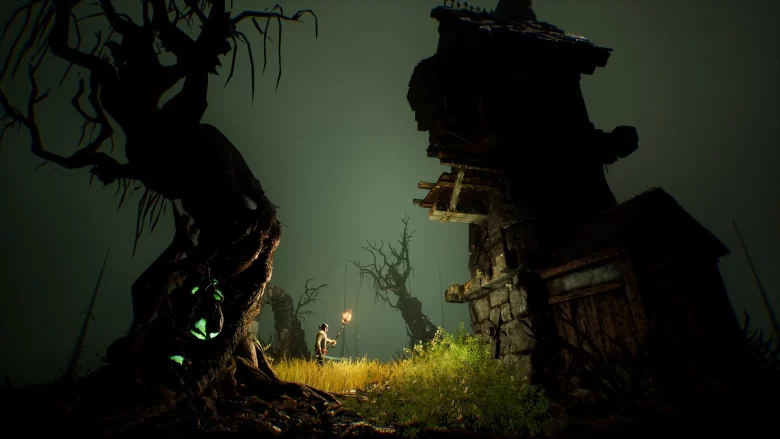
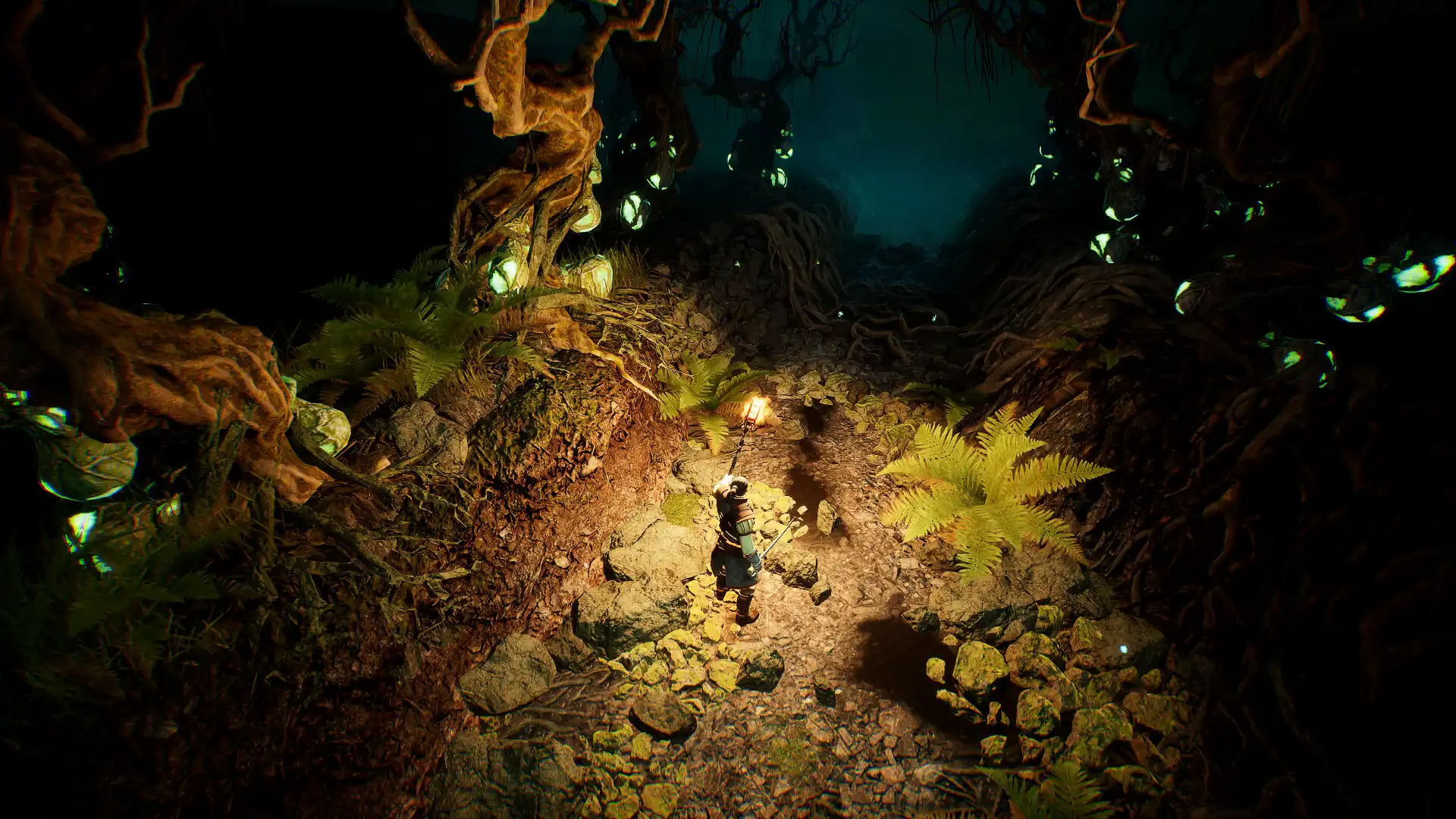
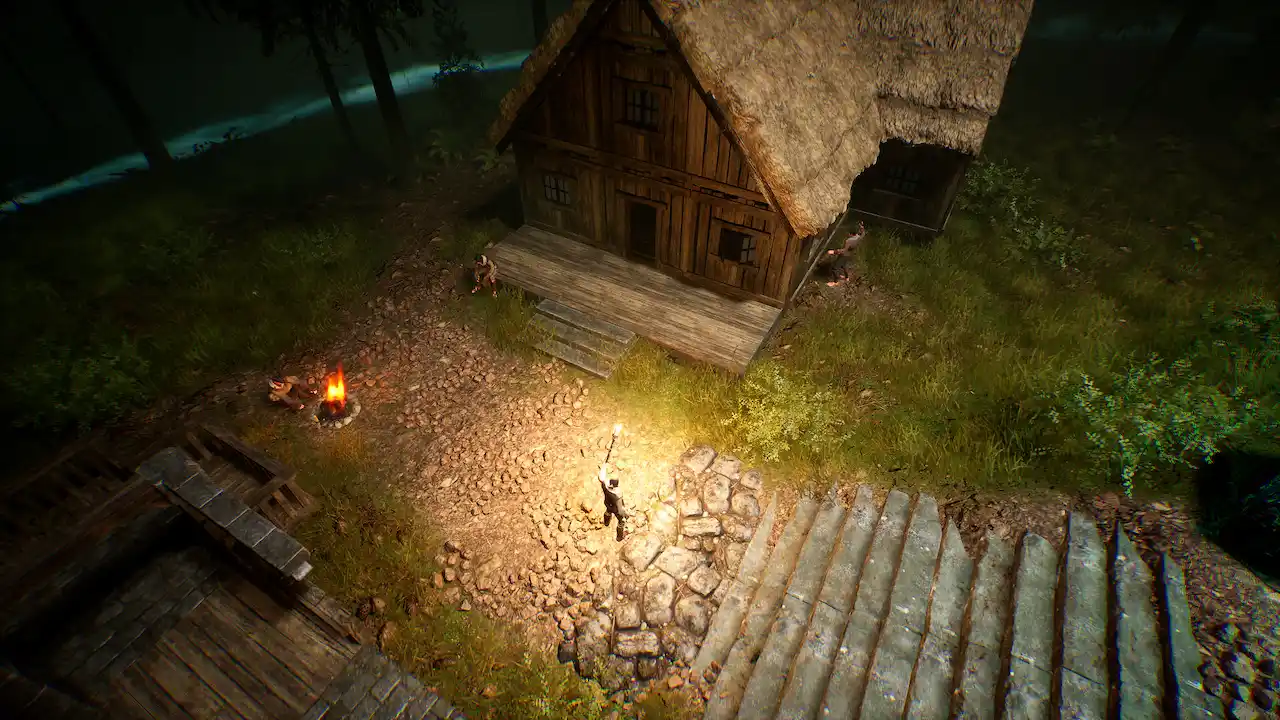
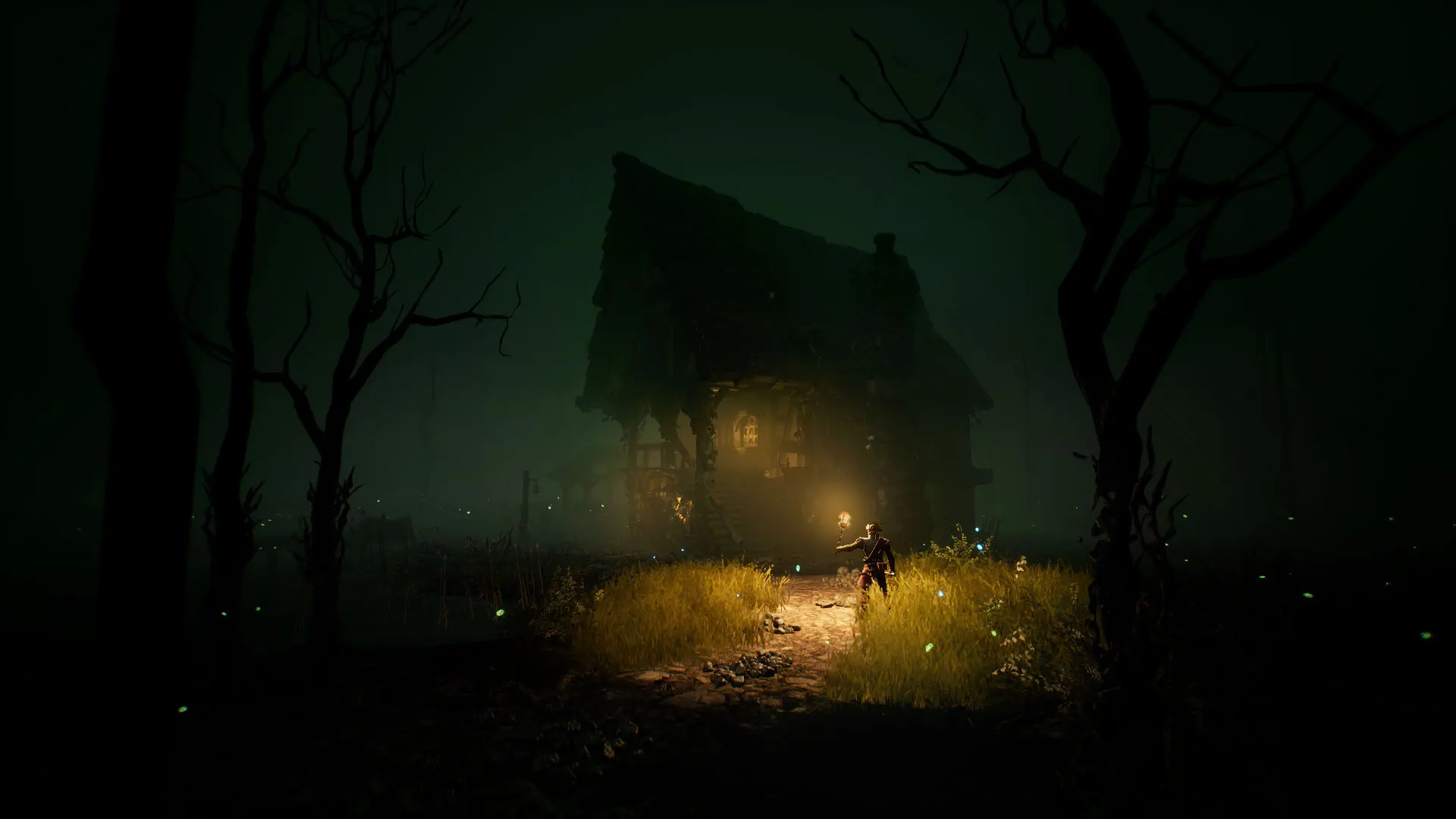
For us, the atmosphere should not just sit on top of the gameplay like a nice coat of paint – if the game is about venturing into the dark, then the dark should actually matter. In Brightfall, darkness can literally part before you when you push forward with a proper light source. Monsters react to light, some resources only appear in the dark, and stronger light lets you reach areas that would otherwise stay closed off.
These darker elements do not fit every game, and they should not. But if the core fantasy is about venturing into the unknown with limited light, scarce resources, and no guarantee of coming back, then a darker tone supports that experience and matches the identity of the game.
And I think that’s why it’s less common. It’s much easier to make darkness atmospheric than systemic, so to speak.
How difficult is it to survive in Brightfall? The Steam page suggests “every torch buys you a minute of sanity”, and we’re guessing that’s not a literal description?
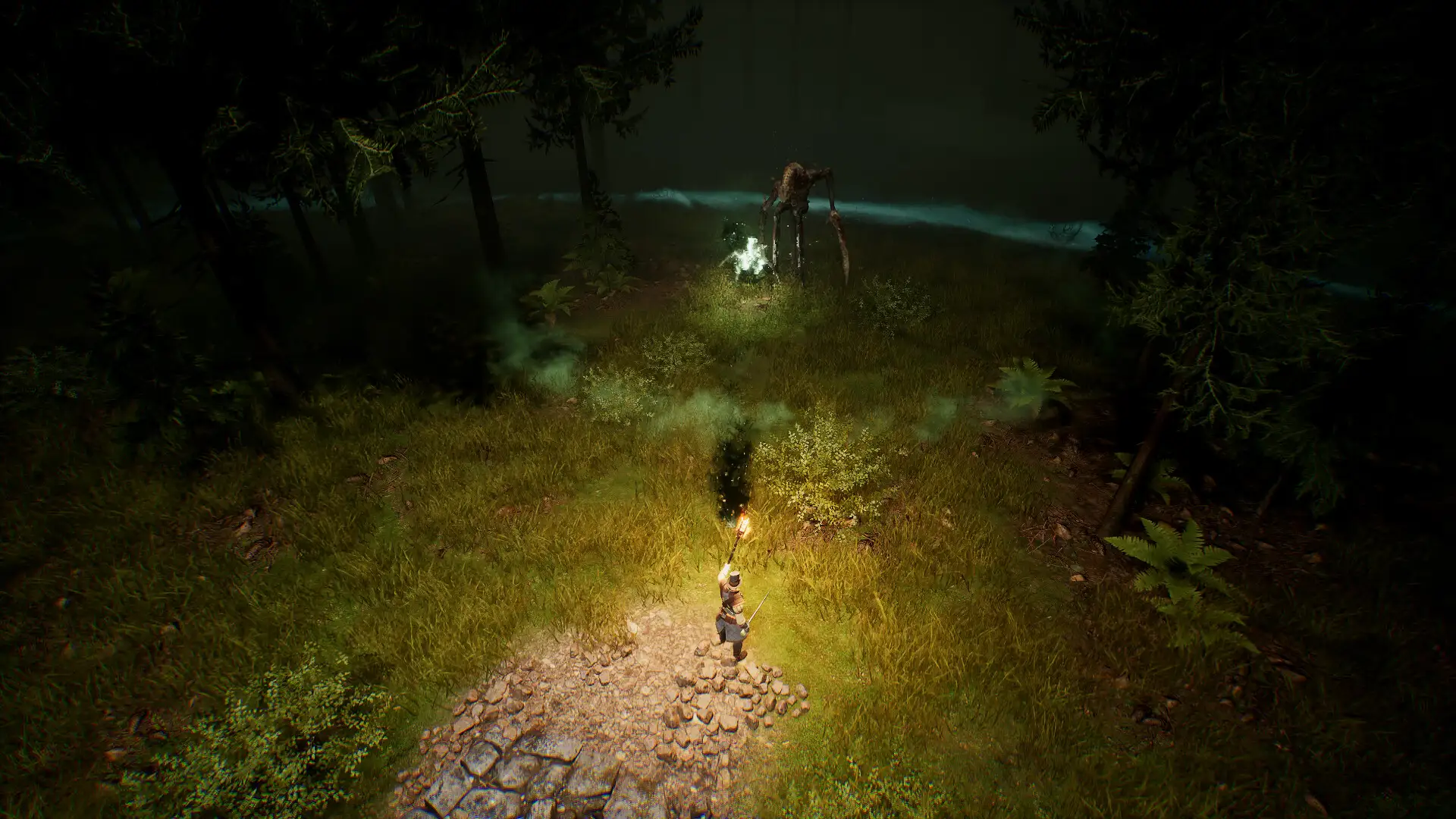
We did take a bit of poetic licence with that line, but it points at the heart of the game pretty well. Your light has limits, your supplies have limits, and the island gets worse the deeper you go. We want you to feel like you’re always one bad decision away from a very memorable disaster.
That doesn’t mean the game is trying to bully you every second. The idea is more that the pressure is always there. Every trip into the darkness costs something – fuel, food, time, your nerves.
This is also one of the areas we really want to shape together with the community, because tension is one of the hardest things to adjust in a game like this. On paper, it can look perfectly fair. In practice, one group will call it fine, another will call it exhausting. Players are good at telling you when it works and when it doesn’t.
With death a penalty, how easy is it to get a resurrection token to revive players?
We recently reworked that system so it’s tied much more closely to the game’s wider resource economy – especially energyand expedition planning.
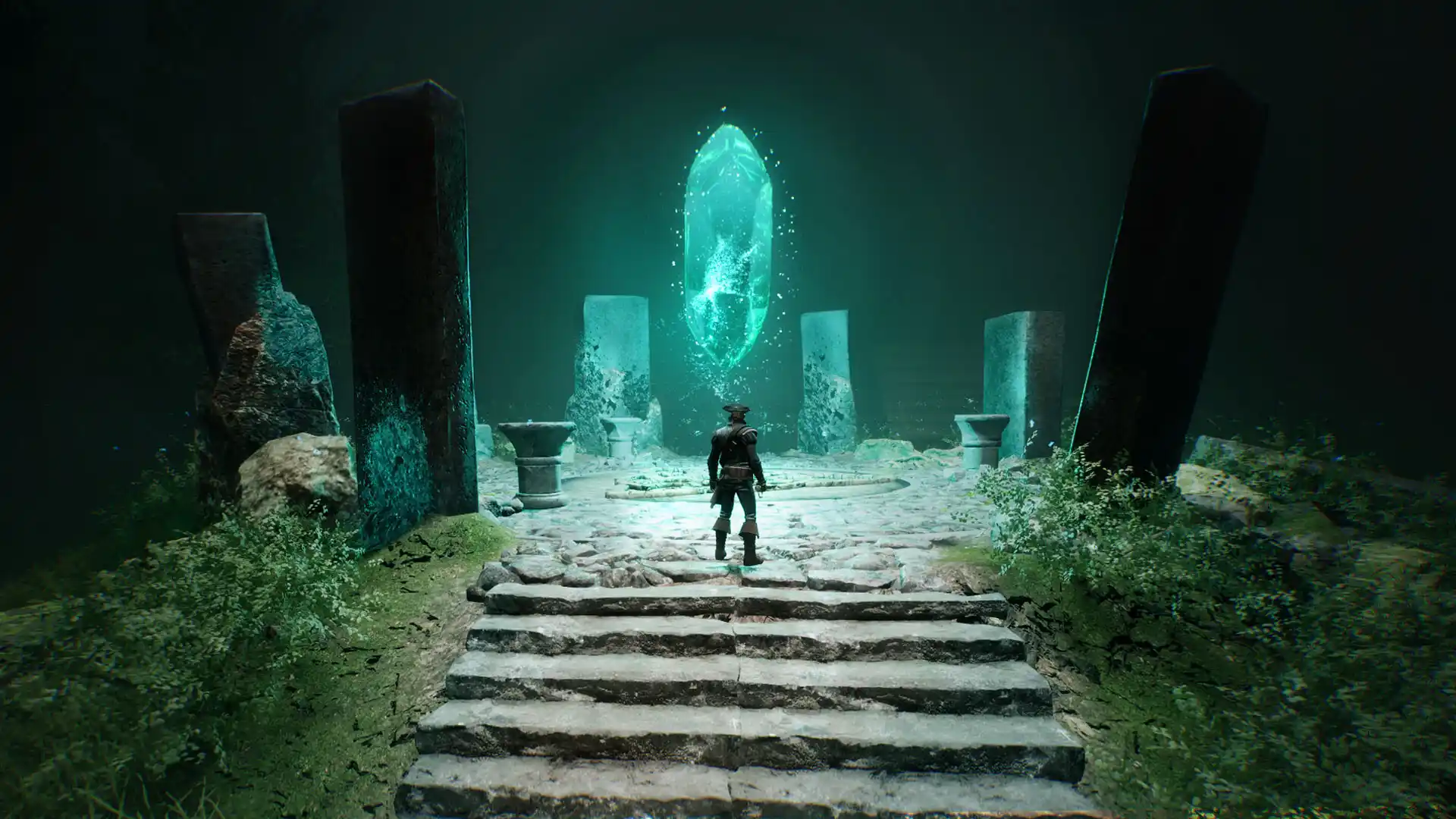
Right now, saving someone from Dark Madness costs the same precious energy that powers the crystal in the middle of your base. And that crystal is doing a lot of heavy lifting – it keeps your facilities running, keeps your safe zone alive, and fuels the torches that allow you to brave the dark. So when you choose to spend energy on saving someone, it’s not some abstract revive currency, but you’re actually burning a resource the whole group depends on.
No pressure! That was important to us, because reviving someone should feel meaningful.
So yes, bringing someone back is possible – but it competes with other needs.
Will the game be balanced for the co-op? Will it scale depending on how many people are playing?
Yes – that’s very much the plan. Brightfall is built to work both solo and in co-op, so balancing around different group sizes is not something we want to patch in later.
The challenge is to make the solution better than “more players = just add more enemies.” With extra people you have more hands to fight, more ways to carry resources and split quests among yourselves.
So some systems are planned to shift depending on party size, rather than just getting numerically harder. One idea we’ve been exploring is a druidic spirit companion that helps a lone player survive the island a little better, but whose abilities gradually fade as more players join the session – the idea being that the druid’s energy is spread thinner, and the group is expected to rely more on each other instead.
That said, I don’t want to overpromise features too early. Not everything we prototype will necessarily be there right at the start of Early Access. But in general, yes – we want Brightfall to acknowledge how many people are in the session, and to make that feel meaningful.
Likewise (and I appreciate you may have answered this in the balance question), if you’re playing solo, are there ways to mitigate failure so you don’t lose a “run” easily?
Definitely. The idea is to give solo players a bit more room to recover from bad situations without removing the stakes altogether. Some of that comes from tuning the overall balance, and some from external systems.
That’s where the druidic spirit I’ve mentioned earlier comes in.
A helpful companion like that can make a solo run feel survivable without making it too easy, and it fits the lore of the world as well.
Given that a total failure results in “game over” and a map reset, how many “maps” are there, or is it a procedurally generated thing?
During playtests we’re using a prepared map, because it helps us control the experience and learn faster from player behaviour. But beyond that, we are going to rely on procedural generation.
A big part of Brightfall’s identity is the joy – and stress – of exploration. Honestly, it’s my favourite part of any game with an open world – to venture into the unknown, never knowing what will happen. The island can shift, routes can change, and the shape of your next expedition should not feel completely guaranteed just because you’ve been there before.
So the short answer is: right now, more authored for testing; later, much more dynamic.
It seems as though the better you do, the more the island will try to fight back. Is that similar to how a game like Risk of Rain works, and thus, the longer you play, the higher the difficulty?
That’s a fair comparison in spirit, but Brightfall is more about how deep into the island you dare to go rather than a timer.
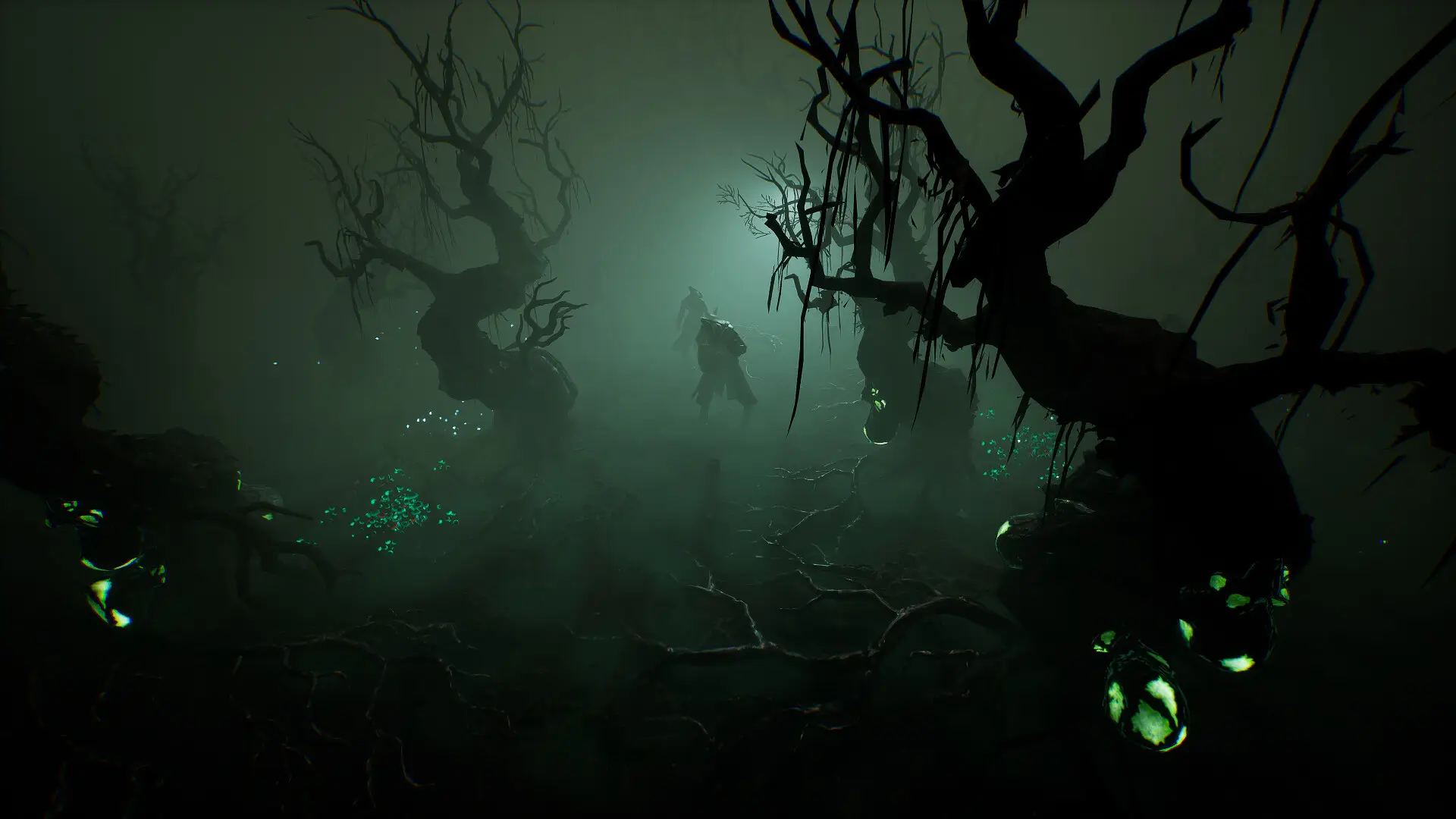
The darkness is divided into zones, and each one raises the stakes in practical ways – there are stronger enemies, encounters are tougher, and the pressure on your resources gets harsher. The further you push, the less your basic tools are enough. Weaker light sources stop carrying you, supplies keep running down, and the room for error gets smaller.
Success invites escalation – because you are stepping deeper into a place that was never meant to let you in.
Due to the map reset system, would you call Brightfall almost a survival open world roguelike?
Not really – at least not as the main label.
Brightfall is, first and foremost, a survival game. At its heart, it’s about exploration, resource management, building, and trying to stay alive on an island that is not interested in making you feel welcome.
It does have some roguelite DNA. If an expedition collapses, the island will shift, routes will change, and you will have to step into the unknown again. That part is very important to us, because it keeps exploration tense and stops the world from becoming too comfortable too quickly.
So yes, you can absolutely feel the roguelite influence in Brightfall – we’re huge fans of the genre at Dark Point Games 😀 But that being said, those elements are there to serve the survival side of the game, not replace it. Brightfall is very much its own thing.
Are there progression systems that you can upgrade and improve between runs?
Yes. Each character develops through a few different specialisations – tied to exploration, combat, life in the base, and light itself. You improve them with Knowledge Points, mostly earned in the darkness by exploring the world.
There are also multiple things you can find in the world: resources, blueprints for crafting, and even new outfits. You can use those blueprints to build and expand your base or look more handsome. Whichever you prefer.
Is there controller support, or Steam Deck support planned for launch?
Definitely, our entire control system was designed with both keyboard and controller players in mind.. We want to give players the flexibility they expect and want. Brightfall has a lot of moment-to-moment decisions, so controls need to feel natural whether you’re playing with mouse and keyboard or on a controller.
Steam Deck is very much on our minds too, but that’s something we’ll be focusing on a bit closer to full release.
Thanks to Marcin for answering our questions.
Brightfall is coming to PC early access on Steam.