I’ve come to realise that I will always pick up whatever Saber Interactive is putting down, especially when it’s a sim. From Roadcraft last year to Docked earlier in 2026, I’m a sucker for getting absorbed by digital renditions of realistic jobs I’d never be able to do. Bus Bound, developed by stillalive studios, is the latest in this (admittedly niche) category and possibly my favourite simulator in some time. With a smart mix of mechanics that prioritises giving you a reason for driving, it’s a relaxing, engaging and fulfilling game that I know I’ll keep coming back to.
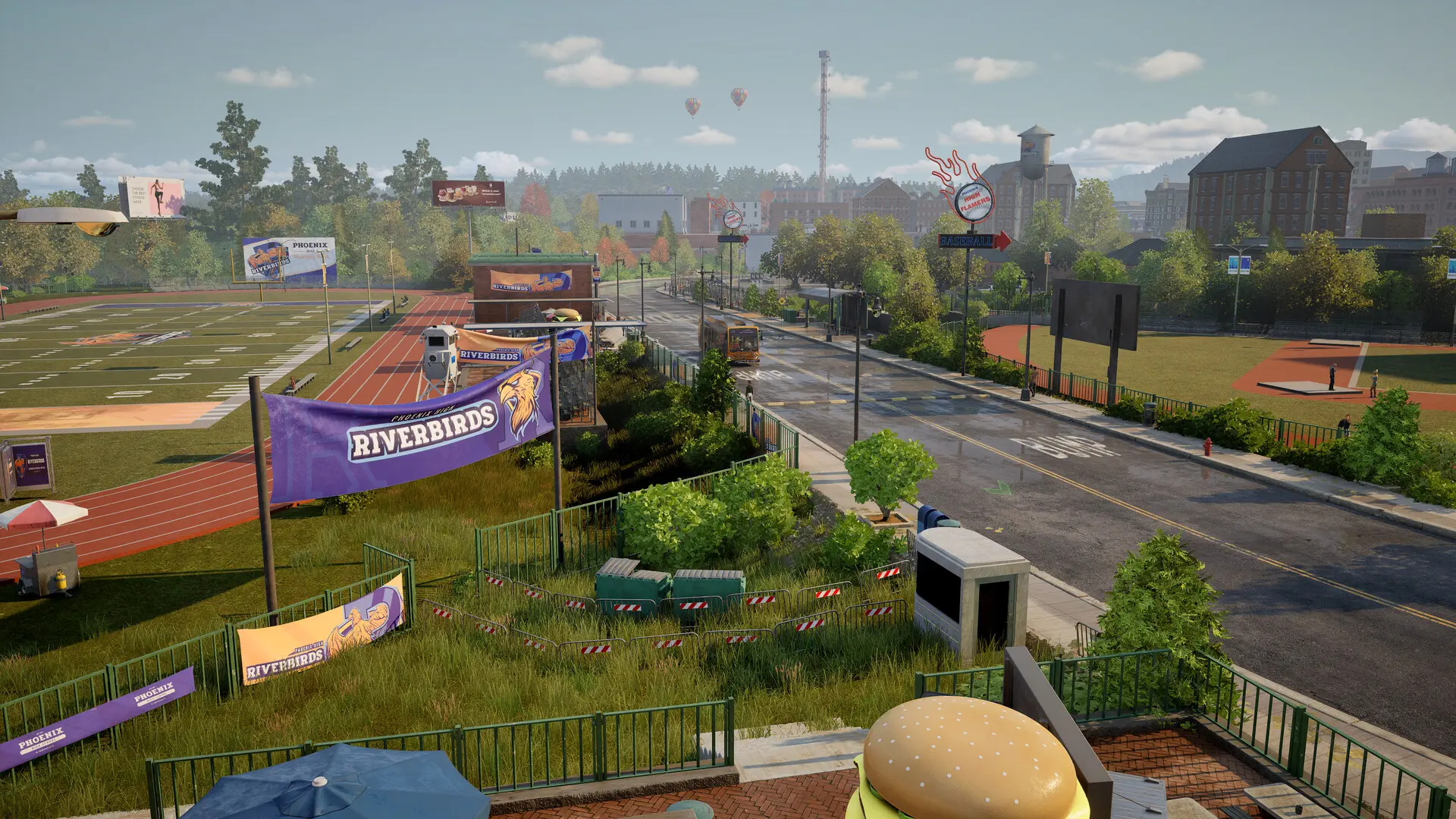
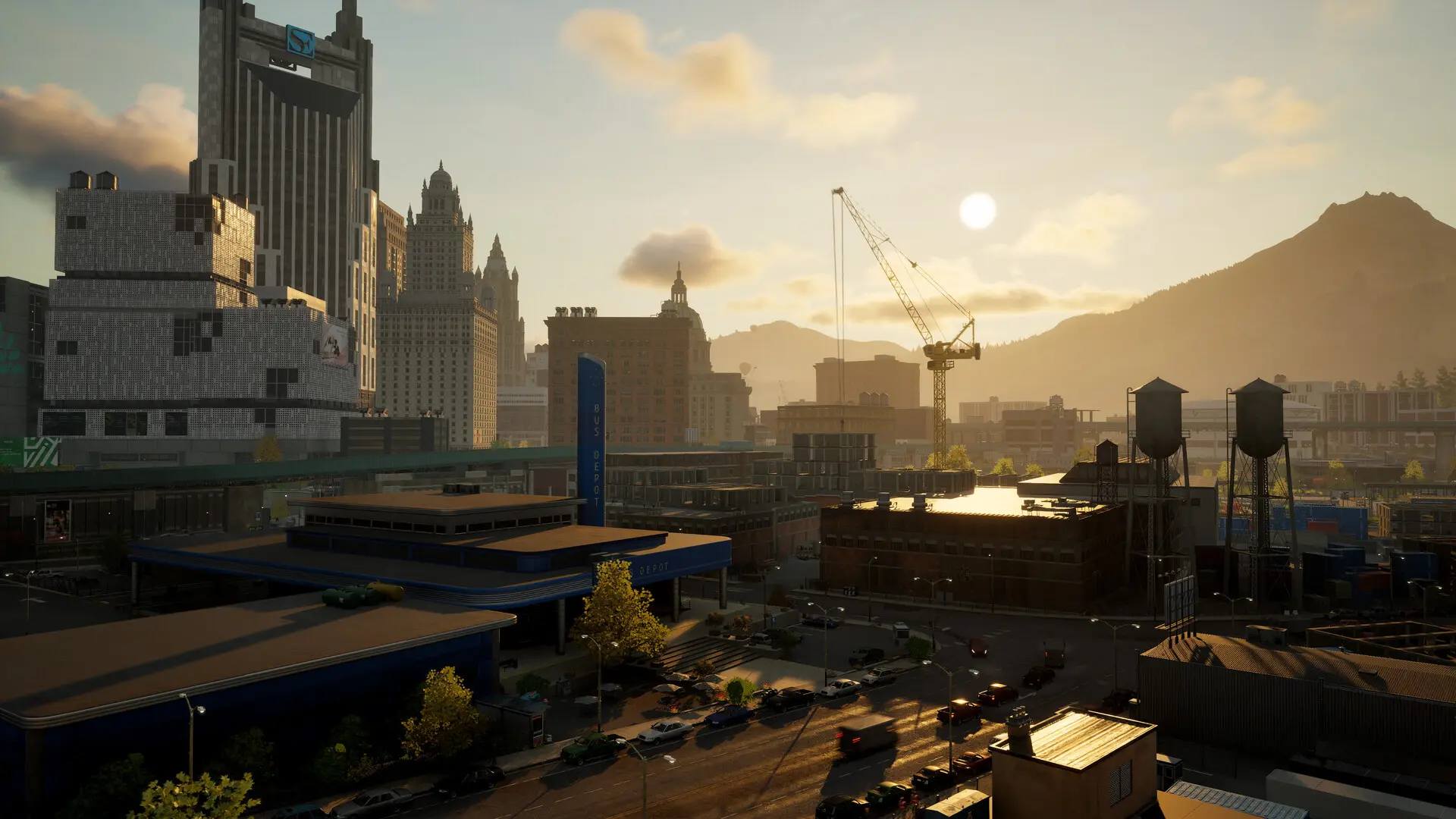
You may think the titular buses are the stars of the show here, but really it’s Emberville City, the fictional slice of Appalachia that I fell in love with. I can’t remember the last time an in-game city felt this real. With every corner you take and every route you drive you’ll see life taking place around you, whether it’s a brass band performing in the park, a glimpse of an elevated train travelling high across the city, or billboards for the local high school football team. The city is packed with details that prevent it from feeling generic and instead making it believable and lived in. It’s a city that tells stories through its architecture and structure, and you can feel its industrial heritage and post-industrial growth flow from district to district.
When you start the game, these districts are surviving but not thriving. Belvedere is supposed to be the heart of entertainment in the city but it’s choked by congestion, as are the other half dozen districts that service business, industry, schools and more. Luckily, Emberville City Council has, in a bizarre and utopian decision, made public transport absolutely free for all citizens. That’s right, instead of hopping on the bus and paying 4 quid for a 3-minute ride into the city centre, the Emberville Transit System is run entirely on customer satisfaction: the more that customers like the service, the more budget you’ll get to upgrade infrastructure. It’s an incredibly smart system that takes what could be quite a dry game and gives you a strong reason for actually wanting to drive a bus around a busy city at 20mph.
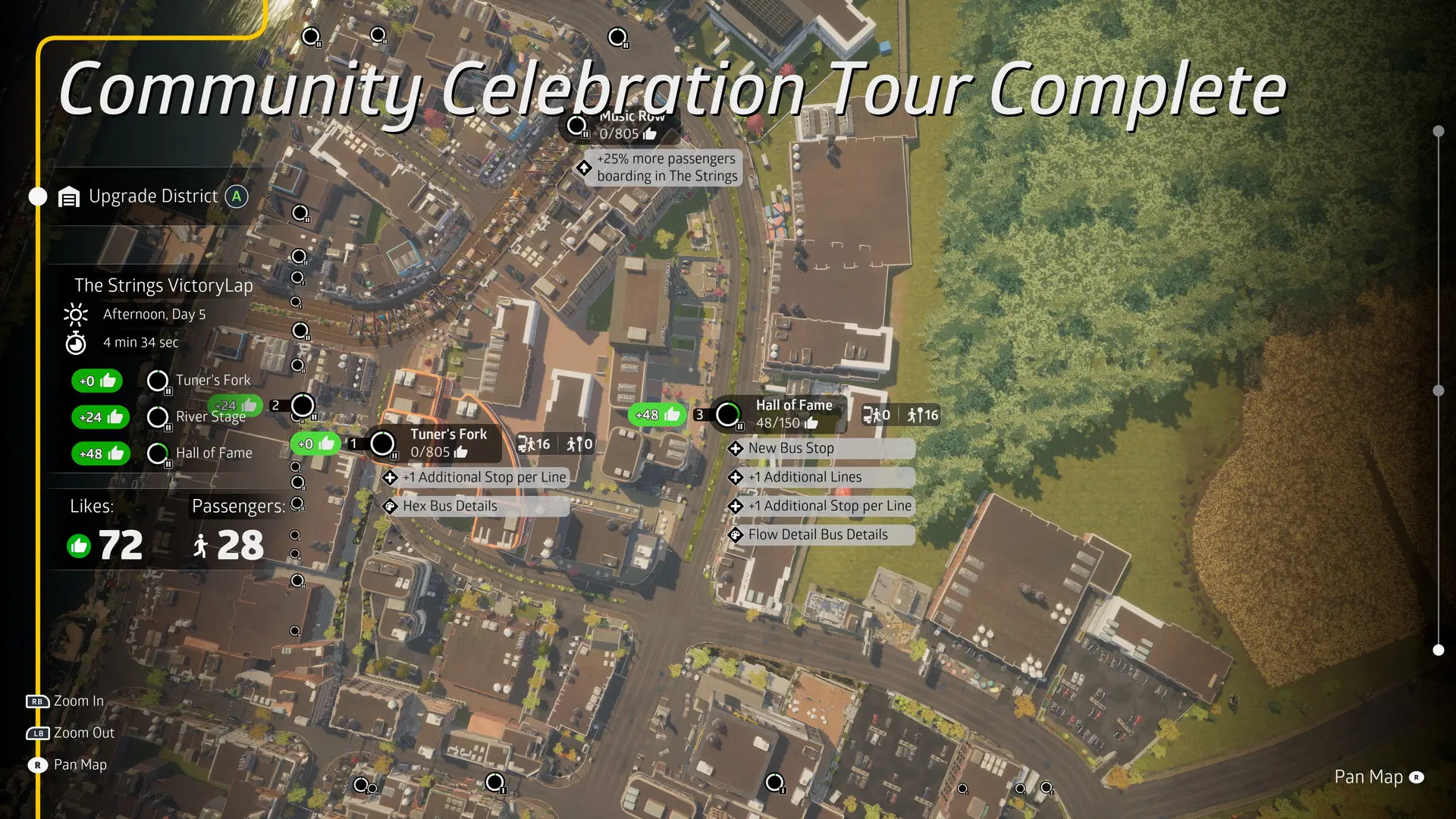
You generate likes from customers by picking them up and dropping them at their destination stops. Each stop has a specific number of likes you need before it upgrades, offering advantages like multipliers, new bus stops, unlocked bridges to new areas or just cosmetic tools to play with. Upgrade all the stops in a district and the district itself improves, giving you a neat little cutscene showing the introduction of new bus lanes, new buildings and infrastructure and some corny Tiktok style footage from happy citizens. It’s so silly but I love it: the citizens in Emberville City is so invested in their public transit that they’ll cheer you on every time you take a speed bump at 12mph or stop at a stop sign, and when a district upgrades they’re there for a celebratory lap around the new and improved area, exclaiming loudly how nice things look now.
Yes, it can be a bit repetitive at times trying to collect 200 likes for a specific stop , especially if you’ve not got many upgrades around it to apply multipliers, but you’ve got the flexibility to create your own routes to build optimal paths to the stations you’re trying to upgrade. Day and night shifts as well as different weather effects all help keep things as fresh as possible though and I very rarely found myself bored.
This is partially thanks to how wonderful the driving is in Bus Bound. A lot of simulators feel tailored to PC players, with complex controller maps and twitchy animations when turning, but Bus Bound feels built for console players. Controls are simple, with easy access to indicating, parking brake and door control and while buses handle differently from one another, they’re always smooth. You’ll be taking tight corners, sticking to speed limits and navigating hazards and traffic during rush hour and this was always fun regardless of the vehicle I was using. Obeying the rules of the road is important, with customers docking your multiplier if you speed through a stop sign or get into a fender bender, and the game throws plenty of dynamic events on each route to keep you entertained. My only minor gripe was that going any faster than 14mph over a speed bump resulted in angry customers, which slowed my routes to a crawl at times.
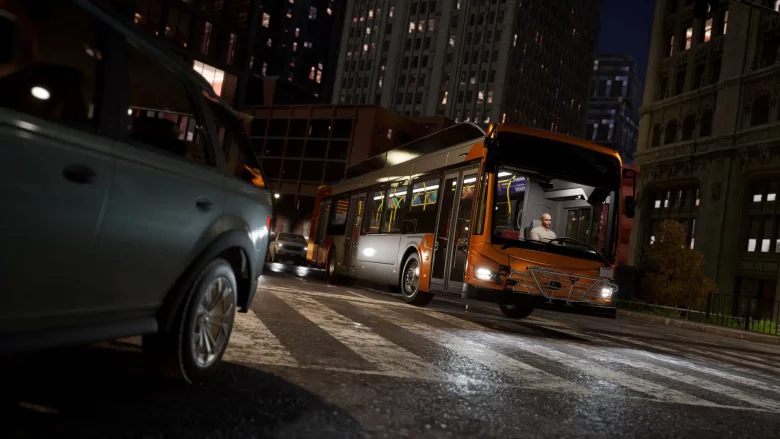
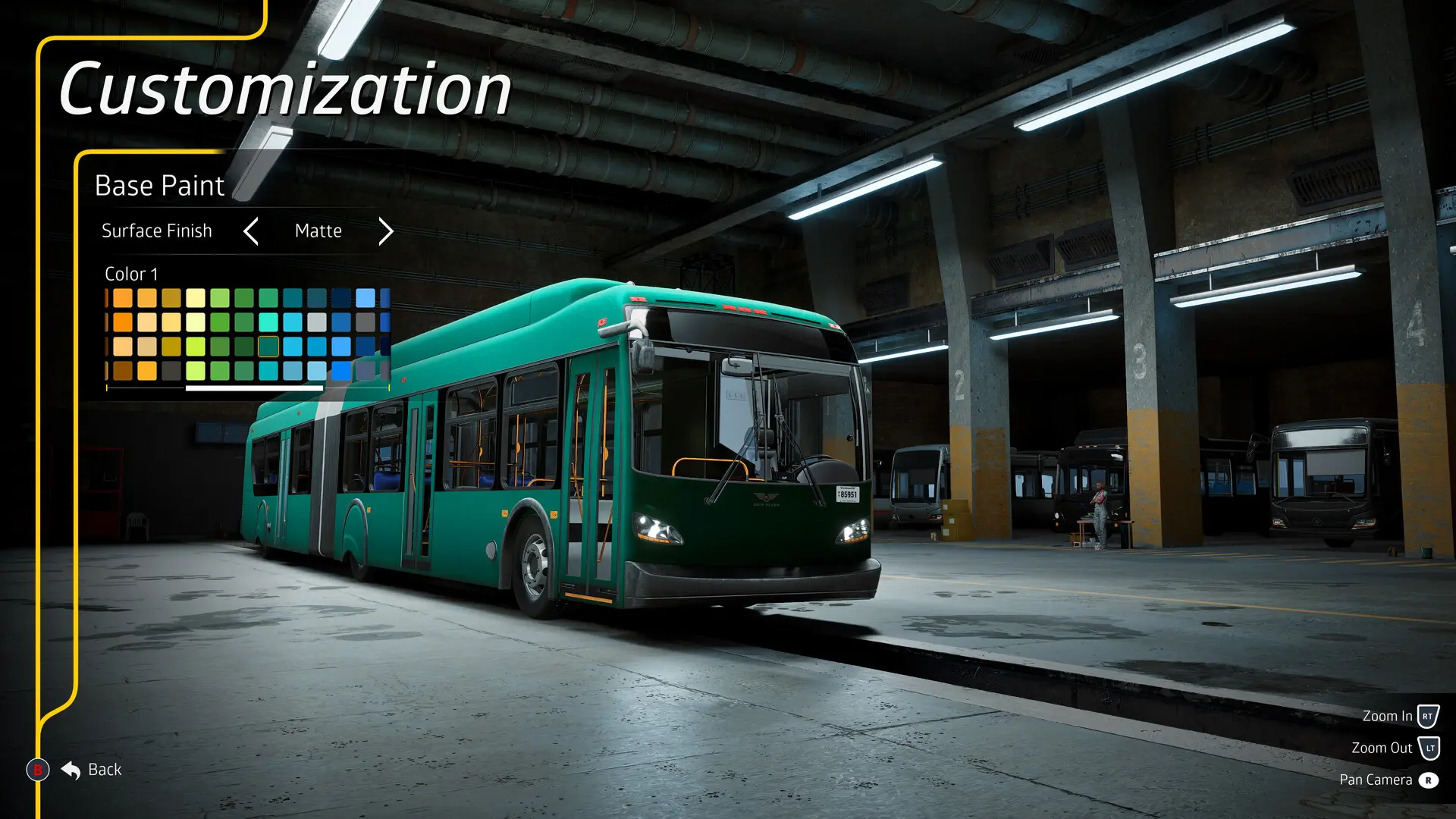
There’s a decent amount of variety in the buses, from standard 40ft ones to those weird bendy ones that require your undivided attention to make sure you don’t take out a lamppost and tank your approval rating as you round a corner. Each bus starts with a single challenge to generate enough likes while using it, which then unlocks 3 additional challenges. Completing these unlocks new modifiers you can use before heading out on a route, such as turning off the HUD, forcing a first person perspective or stricter conditions for bus stops that add new intricacies to well-travelled routes and rewarding you with even more likes. For those that want to customise their fleet there are a suite of livery options, although this isn’t something I spent much time with.
Upgrading all districts took me about 15 hours and I loved my time in Emberville City. Even after doing this though, there are multiple stops that need to be upgraded, along with bus challenges to finish. Unusually for a simulation game, it’s something you can turn on for 15 minutes here and there, drive a route and make some progress, then switch it off again. As it’s family friendly, I’ve found myself playing it while my toddler’s pottering around and he’ll often sit and watch the buses drive around too.
It’s an attractive game, and although it’s not necessarily going to win any awards for its visuals, they perfectly serve the realistic tone of the game and help sell the city as a believable slice of Americana. Music is unfortunately not as good, with generic country rock constantly humming in the background but never really doing much. This seems to be a common problem with sims, and I really think if they could nail the music then it’d elevate the experience for those of us who play these games to unwind.
Bus Bound feels like a sim for people who don’t necessarily like sims. Rather than bogging you down in busy work and business management, it focuses on making driving fun and purposeful, and sticking to the speed limit in a game has never been more enjoyable because of it. It’s a simulation game with purpose, and seeing Emberville City grow as you breathe life into it is more of a reward than you’ll often find in this genre.